- Home
- Media Kit
- MediaJet
- Current Issue
- Past Issues
- Ad Specs-Submission
- Reprints (PDF)
- Photo Specifications (PDF)
- Contact Us
- PRIVACY POLICY
- TERMS OF USE
Loading

ONLINE

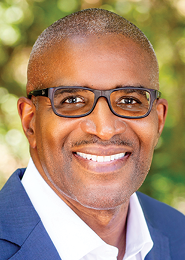
Kevin Brown
Adaptability At Scale
Editors’ Note
Kevin Brown has decades of leadership expertise across operations, technology and procurement. Brown manages a global supply chain across 180 countries and 25 manufacturing sites, ensuring the delivery of products to over 4.2 million customers annually. He leads an organization of approximately 7,700 team members with a procurement budget exceeding $100 billion. During his tenure at Dell, Brown has occupied leadership positions, including Chief Procurement Officer. He played a pivotal role in establishing manufacturing operations in both the United States and Asia. Brown serves on the Board of Directors for The Kroger Co., and the John F. Kennedy Library Foundation. He is a member of the Board of Trustees at the Hotchkiss School and The George Washington University. He is also a life-member of the Council on Foreign Relations. Brown holds a BS degree in mechanical engineering from the University of Massachusetts at Amherst and an MS degree in engineering management from George Washington University.
Company Brief
Dell Technologies (dell.com) helps organizations and individuals build their digital future and transform how they work, live and play. The company provides customers with the industry’s broadest and most innovative technology and services portfolio for the AI era.
You have spent more than 25 years at Dell, leading across procurement, operations and manufacturing functions across the supply chain. What experiences have most shaped your leadership philosophy, and which principles have remained constant throughout your career?
Before joining Dell, I spent ten years in shipbuilding, where I held leadership roles in reactor plant engineering, construction management, and facilities. This experience taught me the value of paying attention to detail and creating an environment where people feel responsible for raising issues early.
I began my Dell career in manufacturing operations as a factory leader. That experience reinforced that leaders have to be present, see the constraints firsthand, listen to the people closest to the work and provide clear direction.
As my responsibilities expanded across manufacturing, procurement, logistics and planning, I learned another leadership lesson: personal involvement does not scale. As Chief Supply Chain Officer, success increasingly depended on the judgment of the leaders on the team. My role evolved from decision-maker to decision architect, establishing clear principles, decision rights, metrics and governance while trusting leaders to own outcomes. The real measure of leadership is whether the organization can continue making sound decisions when you are not in the room.
As Executive Vice President of Global Operations (GO) and Chief Supply Chain Officer, what are your top priorities today, and where are you focused on driving the greatest impact?
My top priority is ensuring GO continues to deliver the speed, quality and reliability customers expect as technology cycles accelerate and solutions become more complex. Whether we are supporting traditional infrastructure or emerging AI deployments, our Dell team is focused on bringing innovation to customers quickly and reliably.
To support this outcome, we are continuing to modernize the supply chain by simplifying processes, creating consistent data foundations and reimagining end-to-end workflows for greater speed, visibility and agility. The real opportunity goes beyond digitizing existing processes. It is about rethinking how decisions are made and how work flows across the organization.
We are also working to prepare our workforce for an AI-enabled future. AI can improve how organizations predict, decide and execute, but its greatest value comes from its ability to enhance human judgment, improve coordination and give teams more time to focus on strategic decisions.
Ultimately, the greatest impact will come from bringing technology, process and people together. Technology alone does not create transformation. Sustainable advantage comes from combining modern digital capabilities with simplified processes, strong governance and talented teams.
“Organizations must be able to reconfigure the supply chain as technology, markets, regulations and customer needs change, without losing the discipline and reliability customers depend on.”
How would you describe Dell’s culture, and what do you expect from the leaders around you?
Dell’s culture is captured in our Culture Code: Customers, Winning Together, Innovation, Results and Integrity. These values provide a consistent foundation across businesses, functions and geographies.
Within GO, I bring this culture to life through five guiding tenets for leaders. Leaders are proactive and predictive, looking around corners to anticipate challenges and identify opportunities before they emerge. They raise issues early and create visibility into potential risks that may impact customers or the business. Leaders also act with urgency, moving with purpose and speed to meet commitments and drive meaningful outcomes. At the same time, they understand the appropriate level of detail, focusing on the information that enables sound decisions and effective execution. Finally, leaders hold themselves and others accountable, taking clear ownership of actions and results, both individually and as a team.
When these behaviors are demonstrated consistently, particularly during challenging times, culture becomes a true competitive advantage.
Dell operates one of the world’s largest and most complex technology supply chains. What principles have enabled the company to balance efficiency, innovation and resilience at a global scale?
Balancing efficiency, innovation and resilience requires viewing them as complementary objectives rather than competing priorities. In an environment of this scale, there are always trade-offs, so our focus is not on optimizing a single metric in isolation. Instead, we evaluate decisions based on the total value they create for the business and our customers. That means considering factors such as cost, quality, speed, working capital, continuity, customer experience and risk together. A component may appear to be the lowest-cost option, but if it introduces quality concerns, increases design complexity or creates a single point of failure, it ultimately diminishes overall value.
A second principle is designing for flexibility. We rely on modular architectures, common interfaces and standardized building blocks that allow us to achieve scale and consistency while enabling technologies to evolve without requiring complete system redesigns. This approach is most effective when engineering, procurement, manufacturing and our strategic suppliers align early on system architecture and key dependencies. In areas such as AI infrastructure, where compute, networking, power and cooling must work as an integrated solution, that cross-functional collaboration is especially critical.
Finally, we take a targeted approach to resilience. Rather than adding redundancy everywhere, we invest based on risk and focus our efforts where disruption would have the greatest impact on customers or the business. This allows us to build flexibility and continuity into the supply chain while maintaining the efficiency and discipline necessary to remain competitive.
Ultimately, the key is creating a supply chain that can adapt as technologies, markets, regulations and customer needs evolve, while continuing to deliver the reliability, quality and execution our customers expect.
Over the course of your career, you have led teams through disruptions ranging from component shortages to geopolitical shifts and global crises. How do you make decisions amid uncertainty while maintaining momentum and accountability?
Managing uncertainty begins with having the right decision-making frameworks in place before disruption occurs. These frameworks are built on a few core principles.
First, we make decisions based on the best available information rather than waiting for perfect information. That requires being clear about what we know, what we do not know, our level of confidence in the data and the cost of delaying action.
We also establish tiered decision authority, empowering frontline leaders to respond to operational disruptions within defined parameters while ensuring strategic-level crises are escalated quickly.
Another important principle is distinguishing between reversible and irreversible decisions. Reversible decisions should be made quickly and monitored closely, while irreversible decisions warrant greater deliberation. Accountability is maintained through structured communication rhythms, with increased frequency of interactions during periods of disruption to enable rapid decision-making and alignment. Once the disruption has passed, we conduct after-action reviews to capture lessons learned and strengthen organizational resilience.
Ultimately, my role during times of uncertainty is to create the conditions that allow teams to act decisively, adapt quickly and remain focused on the priorities that matter most.
How are AI and advanced analytics changing the way supply-chain organizations make decisions, serve customers and create competitive advantage?
AI and advanced analytics will enable supply chains to shift from reacting to problems to anticipating them. Connected signals across the supply chain help spot risks before they impact customers.
At Dell, we always start with the ideal end-to-end workflow: what decision must be made, what information is required and where delays occur. We then simplify and standardize that workflow before applying AI. Digital twins, predictive models and AI agents are building blocks within that design rather than the starting point.
Our use of AI across GO has enabled us to serve customers better through greater availability, more reliable commitments, faster responses and fewer disruptions. We do not measure competitive advantage by the number of AI pilots we have or by efficiency alone. The real measure is whether we can make better decisions faster and execute them consistently at scale.
What will distinguish the most successful supply-chain organizations over the next decade?
If I had to pick one defining capability for the next decade, it would be adaptability at scale. Organizations must be able to reconfigure the supply chain as technology, markets, regulations and customer needs change, without losing the discipline and reliability customers depend on.
In practice, this means moving beyond supply chains designed primarily for repeatability, periodic planning cycles, functional handoffs and relatively stable networks. The most successful organizations will operate more dynamically, connecting product design, sourcing, manufacturing, logistics and services so the entire system can adjust as conditions change.
Supply chain leadership will also increasingly focus on orchestrating ecosystems, not simply managing supplier relationships. In areas such as AI infrastructure, internal teams, suppliers and customers need to engage earlier, share information and work in parallel. Competitive advantage will come from how effectively that ecosystem coordinates.
Finally, the best organizations will get better every time they encounter something new. Every product launch, disruption and operational challenge should improve the processes, data and decision-making the organization relies on going forward. AI can help capture and embed that knowledge into workflows, but the real differentiator will be the discipline to standardize and scale what the organization learns.
How do you develop future supply-chain leaders who can think across functions, make difficult trade-offs and remain accountable for their decisions?
Breadth of experience, real ownership and candid feedback are essential. My responsibility is to create opportunities for people to have all three.
Future supply chain leaders must have intentional cross-functional exposure at every level, from early-career roles through executive development. Those experiences help leaders understand how the operating system fits together and how a decision that benefits one area can create cost, risk or complexity somewhere else. That perspective is essential in preparing leaders to make enterprise-level trade-offs.
But exposure is not enough. Leaders must also be given meaningful responsibility. Through stretch assignments, leaders learn to define the approach, align stakeholders, make difficult decisions and own the outcome. Candid feedback then helps turn those experiences into lessons they can carry into the next challenge.
The supply chain leaders of the future will be those who can think across the enterprise, navigate difficult trade-offs and remain accountable for results.