- Home
- Media Kit
- MediaJet
- Current Issue
- Past Issues
- Ad Specs-Submission
- Reprints (PDF)
- Photo Specifications (PDF)
- Contact Us
- PRIVACY POLICY
- TERMS OF USE
Loading

ONLINE

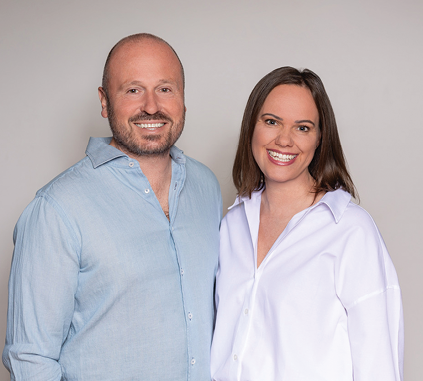
Andreas Heigl and Ramona Roemer
Understanding The Human System
As A Whole
Editors’ Note
Ramona Roemer and Andreas Heigl are pioneers in longevity and regenerative medicine, and the founders of a private clinic devoted to a deeply individualized approach to health and renewal. For more than two decades, they have worked privately with individuals and families worldwide, combining advanced diagnostics and regenerative therapies with cognitive, emotional, and energy-based methods. Their integrative model developed through years of refinement in clinical practice. Known for their precision, discretion, and integrative perspective, they continue to guide people who seek more than lifespan extension toward a way of living that is connected, Intentional, and fully alive.
Company Brief
VIMED CELL (vimedcell.com) is a leading boutique medical clinic specializing in advanced regenerative medicine and individualized integrative health strategies. With more than two decades of experience, the clinic has earned the trust of individuals navigating demanding personal and professional lives who are seeking exceptional care and personalized treatments. VIMED CELL’s team combines decades of medical expertise with cutting-edge science to offer a transformative health experience, addressing unique needs with precision and care.
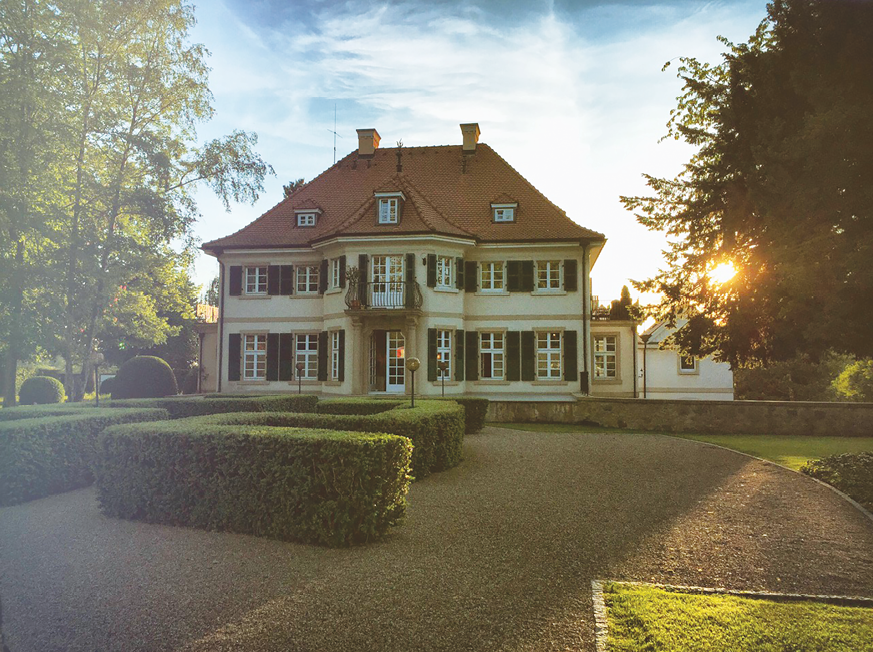
VIMED CELL in Basel, Switzerland
Will you discuss your career journeys?
Our professional journey evolved gradually through years of clinical observation, regenerative medicine, and highly individualized work with people facing very different health challenges. While longevity became an important dimension of our work over time, VIMED CELL was never built solely as a longevity clinic. From the beginning, we worked across a wide range of chronic and aging-related conditions, including regenerative support, chronic pain, fertility-related challenges, systemic inflammation, and complex cases where conventional approaches alone often reached limitations.
What shaped our perspective most was the growing realization that health could not be understood through the body alone. Over time, we observed how biology continuously reflected deeper patterns connected to emotional burden, environment, cognitive orientation, relationships, and the overall direction of a person’s life. This gradually expanded our understanding of health beyond biology alone. While we always focused on identifying and addressing underlying causes rather than simply managing symptoms, over time we increasingly recognized how emotional patterns, stress adaptation, environment, relationships, and overall life direction continuously interact with physical health.
Over nearly two decades, this perspective continued to evolve. We observed not only the increasing fragmentation within medicine, but also the growing commercialization and over-optimization within modern health culture. Many interventions being promoted as breakthroughs were not fundamentally new, and in some cases, excessive or poorly individualized approaches were beginning to create new problems rather than solve existing ones.
That growing tension eventually became one of the driving forces behind Unlongevity, both the integrative model that shapes our work and the title of our new book.
How do you define VIMED CELL’s mission?
VIMED CELL’s mission is to help individuals move beyond fragmented approaches to health toward a more coherent understanding of the human system and the deeper patterns that shape long-term well-being. Our work is built around precision, discernment, and coherence. Rather than applying standardized protocols, we focus on understanding the unique biological, cognitive, emotional, and contextual realities of each individual.
We believe that true longevity is not simply about extending lifespan or managing biology. It is about living in greater alignment with oneself so that the body no longer needs to continuously compensate for deeper forms of imbalance.
At its core, our mission is to create an environment where advanced medical insight and a more integrated understanding of human health can work together intelligently and responsibly.
Will you provide an overview of VIMED CELL’s work?
VIMED CELL is a private clinic based in Switzerland and Germany focused on highly individualized regenerative and integrative medicine. Our work spans a broad range of areas including aging-related conditions, chronic pain, regenerative support, fertility-related challenges, recovery processes, and complex chronic cases where conventional approaches alone may not fully address the underlying dynamics. Everything begins with deep and multi-layered diagnostics. Beyond laboratory analysis and medical imaging, we place strong emphasis on extensive anamnesis and understanding the biological, emotional, environmental, and lifestyle context surrounding each individual. Based on this, we develop highly individualized approaches designed to support the body’s self-healing and regulatory capacity while helping individuals better understand the broader patterns and imbalances that may have contributed to symptoms emerging in the first place.
Rather than focusing primarily on isolated symptoms or standardized protocols, our work centers around understanding where coherence has been lost within the system and how greater alignment, adaptability, and responsiveness can gradually be restored.
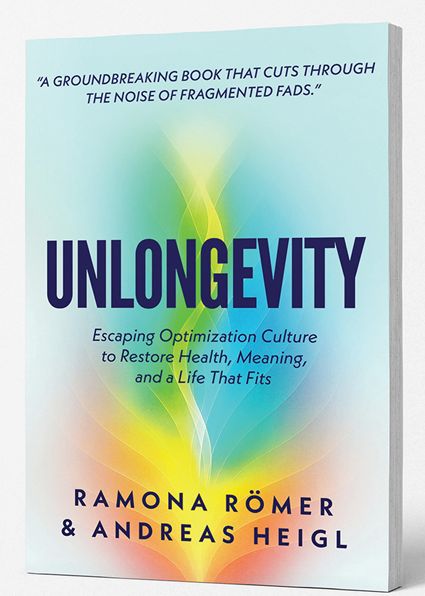
What interested you in writing the book, Unlongevity?
The book emerged gradually from patterns we could no longer ignore. It emerged from years of observing a growing contradiction within modern health and longevity culture. On one side, there has been an explosion of biohacking, tracking technologies, optimization protocols, and commercialized health offerings promising increasingly extraordinary outcomes. On the other side, we were seeing more and more individuals who were deeply invested in these approaches yet still felt exhausted, overwhelmed, anxious, misaligned, or trapped in cycles of constant self-management. We also recognized that many of the ideas currently being presented as revolutionary are not necessarily new. Variations of these approaches have existed for years, often without producing the kind of sustainable long-term outcomes now being promised.
At the same time, we became increasingly concerned that parts of the industry were moving toward excess. In some cases, people were layering interventions, supplements, tracking systems, and experimental approaches without sufficient personalization, context, or understanding of long-term consequences. We felt it was important to contribute a more grounded and experience-based perspective shaped by nearly two decades of observing how deeply health is influenced by the way people live, think, relate, adapt, and move through life.
Unlongevity is not anti-science or anti-innovation. It is an invitation to step back and reconsider whether health is becoming fragmented through constant optimization and whether a more coherent, individualized, and sustainable approach is needed.
What are the key messages you wanted to convey in the book?
One of the central ideas in Unlongevity is that more intervention does not automatically create better outcomes. Modern health culture often encourages people to continuously optimize themselves without asking whether the pursuit of health itself is becoming increasingly fragmented.
We wanted to challenge the assumption that longevity is purely a technical or biological problem. The book explores how health is continuously shaped by the coherence of a person’s life and the extent to which someone is living in alignment with who they truly are.
Another important message is that personalization is still widely misunderstood. Many approaches appear individualized on the surface, yet still apply highly standardized thinking underneath.
Ultimately, the book invites a more coherent and sustainable approach to longevity rooted in discernment rather than excess.
What do you feel are the most important aspects of longevity?
We believe the most important aspect of longevity is coherence. A person can have excellent biomarkers and still feel internally disconnected or chronically exhausted. We increasingly see that symptoms often emerge after long periods of inner misalignment, over-adaptation, or disconnection from one’s deeper rhythm and direction. In this sense, the body is often the final messenger, not the starting point. This includes biological resilience, cognitive clarity, emotional flexibility, energetic rhythm, meaningful relationships, and a sense of direction and purpose.
We also believe timing is critically important. The right intervention applied at the wrong time can become disruptive rather than supportive. Longevity requires understanding not only what to do, but when to do less, when to pause, and when to allow recovery and integration.
In many ways, longevity is less about controlling the body and more about developing the awareness to recognize when something is no longer aligned before the body is forced to communicate it more strongly through symptoms.
What has made the partnership between the two of you work so well?
Our partnership works because we approach this work from complementary perspectives while sharing the same underlying philosophy. Over many years, we developed a strong ability to continuously refine ideas through observation, discussion, and practical experience. We challenge each other intellectually, but we are also aligned in our long-term vision and values. Both of us are deeply interested in understanding the human system as a whole rather than through isolated disciplines. That shared curiosity has allowed our work to evolve organically over time.
We also believe trust and long-term perspective are essential. Building anything meaningful, whether a clinic, a body of work, or a life, requires patience, adaptability, and the willingness to evolve together.
What are your priorities for VIMED CELL as you look to the future?
Our priority is not expansion for its own sake, but continued refinement and evolution. Over the years, we have learned that medicine, longevity, and regenerative health are changing rapidly, both scientifically and regulatorily. We remain open and adaptive regarding where this evolution may lead. What will remain constant is our commitment to highly individualized thinking, deep diagnostics, integrative understanding, and helping individuals recognize patterns of imbalance before they fully manifest physically.
We are particularly interested in continuing to contribute to a broader shift toward more coherent, systems-oriented approaches to health rather than increasingly fragmented or purely protocol-driven models.
Through both VIMED CELL and the integrative model developed through our work over nearly two decades and presented in Unlongevity, we hope to help create a more thoughtful and responsible conversation around health, resilience, aging, and human longevity.