- Home
- Media Kit
- MediaJet
- Current Issue
- Past Issues
- Ad Specs-Submission
- Reprints (PDF)
- Photo Specifications (PDF)
- Contact Us
- PRIVACY POLICY
- TERMS OF USE
Loading

ONLINE

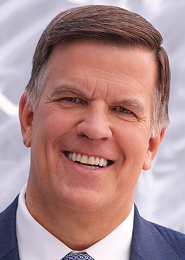
Dr. Brian G. Donley
Redefining What’s Possible In Medicine
Editors’ Note
Dr. Brian Donley was named President and Chief Executive Officer of NewYork-Presbyterian in January 2026 after having served as Executive Vice President and Chief Operating Officer since January 2023. He joined NewYork-Presbyterian from Cleveland Clinic, where he served as chief executive officer of Cleveland Clinic London. Donley has extensive expertise in clinical medicine and hospital operations. He joined Cleveland Clinic as an orthopedic surgeon in 1996, and held numerous leadership positions within the health system, including Chief of the Clinical Enterprise. Previously, he served as President of the Cleveland Clinic regional hospitals and family health centers and as Vice Chair of the Department of Orthopaedic Surgery. In his most recent position as CEO of Cleveland Clinic London, Donley led the development and opening of Cleveland Clinic’s first hospital in Europe. He served as a professor of surgery at the Cleveland Clinic Lerner College of Medicine and fellow of the Royal College of Surgeons, England. Donley attended the University of Notre Dame, graduating Phi Beta Kappa. He graduated with distinction from the University of Michigan Medical School and completed his residency in orthopedic surgery at the University of Michigan. He also attended Harvard Business School, completing the Advanced Management Program.
Institution Brief
NewYork-Presbyterian (nyp.org) is one of the nation’s most comprehensive, integrated academic healthcare systems, encompassing 10 hospitals and nearly 350 locations including primary and specialty care clinics and medical groups with world-class doctors from Columbia and Weill Cornell Medicine, and an array of telemedicine services. (In collaboration with physicians from ColumbiaDoctors and Weill Cornell Medicine, NewYork-Presbyterian provides care at 450+ locations.) A leader in medical education, NewYork-Presbyterian Hospital is affiliated with two renowned medical schools, Columbia University Vagelos College of Physicians and Surgeons and Weill Cornell Medicine. This collaboration means patients have access to the country’s leading physicians, the full range of medical specialties, latest innovations in care, and research that is developing cures and saving lives.
Founded 255 years ago, NewYork-Presbyterian Hospital has a long legacy of medical breakthroughs and innovation, from the invention of the Pap test to pioneering the groundbreaking heart valve replacement procedure called TAVR. NewYork-Presbyterian’s 45,000 employees and affiliated physicians are dedicated to providing the highest quality, most compassionate care to New Yorkers and patients from across the country and around the world.
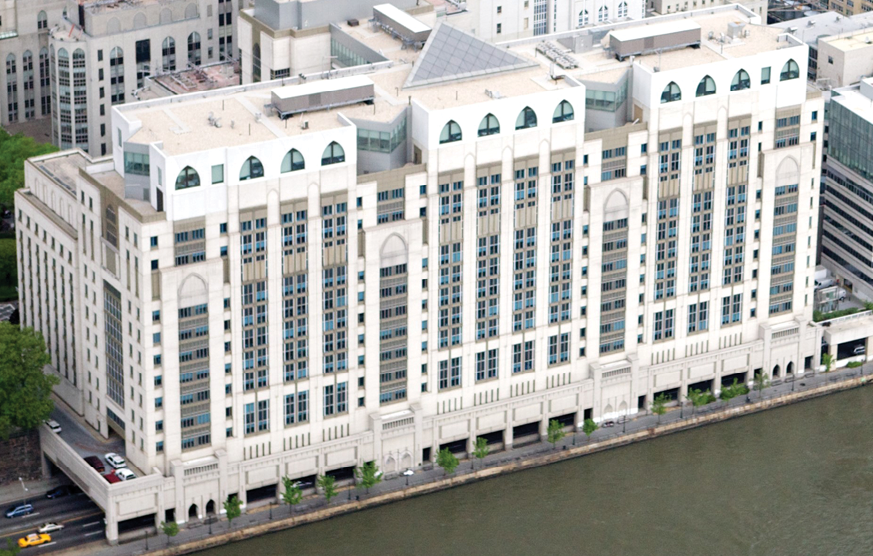
NewYork-Presbyterian/Weill Cornell Medical Center
Will you discuss your career journey?
My path into healthcare was shaped by a deep sense of service. I grew up in a family where caring for others was simply part of daily life: my mother was a nurse, my father a pharmacist, and I saw firsthand how meaningful it is to help people in the moments that matter most. That experience instilled in me the values that ultimately led me into medicine and leadership.
Over time, my career evolved from focusing on individual patient care as an orthopaedic surgeon to leading complex health systems at scale. Along that journey, I’ve had the opportunity to lead clinical programs, drive innovation, and build teams where people can thrive. My experience also includes working across healthcare systems in the U.S., Europe, and the Middle East, which broadened my perspective on how care delivery models can be designed to better serve patients and caregivers alike, with a focus on culture.
What excites me most about being at NewYork-Presbyterian is the opportunity to build on a 250 year legacy of service while continuing to evolve – so that when people look back, they can say we improved care, expanded access, and helped our teams have more fulfilling careers.
How do you describe NewYork-Presbyterian’s culture and values?
The culture at NewYork-Presbyterian is one of our greatest strengths. It is grounded in empathy, teamwork, and a deep sense of purpose. Our people are our most important asset, and that belief guides how we invest in our workforce, from career development to well-being and leadership opportunities. To empower people to do their best every day, we focus on connecting each team member to the meaning and purpose of our work, while creating opportunities for every NewYork-Presbyterian team member to learn, grow and thrive.
With more than 45,000 employees and affiliated physicians, sustaining a strong, unified culture requires intentional focus. We are deeply committed to creating an environment where every team member feels valued, supported, and heard, with an emphasis on safety, inclusion, and engagement.
At its core, our culture reflects values like humility, curiosity, integrity, and empathy. Those values show up in how we care for patients and how we support one another. We are also strengthened by our partnership with two world-renowned medical schools which creates an environment of constant learning, innovation, and collaboration. Across the organization, there is a shared commitment to continuous improvement and delivering something better for patients every day.

NewYork-Presbyterian/Columbia University Irving Medical
Center on New York City’s Riverside Drive
What have been the keys to NewYork-Presbyterian’s industry leadership?
Our leadership starts with our mission and our people. NewYork-Presbyterian has built a reputation as the hospital of choice through a sustained commitment to clinical excellence, innovation, and compassionate care. Our integration with the doctors from two leading academic institutions fuels groundbreaking research, education, and discovery. This allows us to care for some of the most complex cases while continually redefining what’s possible in medicine.
What distinguishes NewYork-Presbyterian is the breadth and complexity of the patients we serve, from communities across New York to highly specialized referrals from around the world. At every level, we maintain a relentless focus on quality, safety, and outcomes. That commitment, combined with a strong culture and continuous investment in innovation, enables us to deliver extraordinary care at scale.
How is AI impacting the way NewYork-Presbyterian operates?
AI is already transforming how we deliver care, and we’re seeing meaningful impact across both clinical and operational areas. Across NewYork-Presbyterian, we have more than 100 AI initiatives underway, spanning everything from administrative efficiency to advanced clinical decision support. One of the most exciting applications is in diagnosis and early risk detection. Tools like EchoNext can analyze EKG data to identify structural heart disease, insights that may not be detectable even by highly trained clinicians, and that capability is already leading to lifesaving interventions.
We are also leveraging AI to reduce administrative burden which allows clinicians to spend more time with patients. At the same time, it is critical that AI is implemented responsibly and with strong clinical oversight, rigorous validation, and a focus on equity so these technologies enhance care without introducing unintended bias.
As powerful as AI is, I believe the true differentiator in healthcare will remain the human experience – how patients feel, how we connect with them, and how we deliver care with empathy.
What do you see as the biggest challenges facing leading health systems and hospitals?
There are several major challenges ahead for health systems and hospitals. One is the growing strain on the healthcare workforce. Burnout, safety concerns, and the challenge of attracting and retaining talent are real issues across the industry.
At the same time, we are operating in an increasingly complex financial environment, with rising costs alongside growing expectations for access, quality, and patient experience. We are navigating evolving reimbursement models and regulatory complexity which require health systems to rethink how value is delivered and measured.
Another key challenge is ensuring that innovation, whether it is AI, new therapies, or care delivery models, translates into meaningful improvements in patient outcomes and access.
Ultimately, the organizations that succeed will be those that keep the patient at the center of every decision, stay anchored in quality and safety, invest in their people, and remain agile in how they deliver care.
What is your vision for the evolving role of the hospital as health systems grow their ambulatory and outpatient footprint?
The role of the hospital is evolving, but it remains central for the most complex and acute care. We also understand the need to meet patients where they are, whether that is in outpatient centers, their communities, or even their homes. We are investing in ambulatory care and innovative models such as Hospital-at-Home, which allow us to deliver hospital-level care outside traditional settings. Patients today also deserve and expect greater convenience, accessibility, and transparency, which is shaping how we approach care delivery.
Looking ahead, success will depend on how well we integrate these settings into a seamless system. Patients should be able to move easily between outpatient care, virtual care, and inpatient services while maintaining strong, continuous relationships with their care teams.
What do you tell young people about careers in the medical profession?
Healthcare offers an incredibly wide range of opportunities, far broader than many people initially realize. While physicians and nurses are essential, we also rely on researchers, technologists, data scientists, administrators, and many other professionals working together to deliver care.
What I emphasize is that healthcare is ultimately about purpose. It’s about being part of something bigger than yourself and having the opportunity to make a meaningful difference in people’s lives every day.
I also encourage young people to stay curious, embrace teamwork, and recognize the growing importance of interdisciplinary collaboration, particularly at the intersection of medicine, technology, and data. There are many paths into healthcare, and each one plays a vital role.
When you look to the future of healthcare, what excites you the most?
What excites me most is the opportunity to combine innovation with human connection in ways we have never been able to before. Advances in science, technology and data, from gene therapies to AI-driven insights, are transforming what is possible. We are also moving toward a more proactive model of care, one that identifies risk earlier, intervenes sooner, and improves long-term health outcomes.
At the same time, we have an opportunity to rethink how care is delivered, making it more accessible, more personalized, and more deeply connected to the communities we serve. What truly inspires me, though, is our people. When we empower them to be at their best and provide the tools and environment they need to succeed, there is no limit to what we can achieve for our patients and for the future of healthcare.