- Home
- Media Kit
- MediaJet
- Current Issue
- Past Issues
- Ad Specs-Submission
- Reprints (PDF)
- Photo Specifications (PDF)
- Contact Us
- PRIVACY POLICY
- TERMS OF USE
Loading

ONLINE

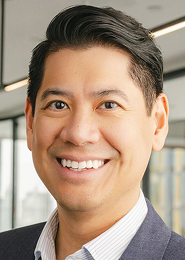
Neil Vohrah
Creating Places
Where People Build Their Lives
Editors’ Note
Neil Vohrah is the President of High-Rise Residential North America at Great Gulf, where he leads acquisitions, revenue strategy, and project execution across Canada and the United States. Vohrah has more than 20 years of experience in real estate development and construction. Prior to joining Great Gulf in 2022, Vohrah held senior leadership roles including Chief Operating Officer at TAS, Vice President, Project and Development Services at Canderel Group, and Director of Business Development at Multiplex. Vohrah has worked on projects including Canary Wharf in London, Atlantis in Dubai, and Porta Nuova Garibaldi in Milan. He holds a bachelor of science and a postgraduate bachelor of architecture from Cardiff University in the United Kingdom.
Company Brief
Established in 1975, Great Gulf Group (greatgulfgroup.com) has spent over five decades shaping exceptional places across Canada and the United States. Its integrated platform includes residential development through Great Gulf, U.S. homebuilding through Ashton Woods, and commercial development through First Gulf, supported by construction management and advanced building technologies. From award-winning low-rise communities and landmark high-rise residences to sustainable commercial and industrial developments, its work reflects an enduring commitment to thoughtful design, quality and precision.
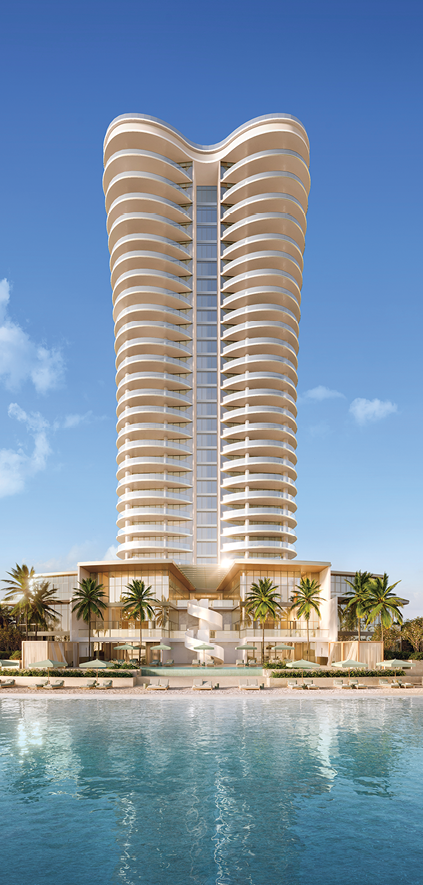
Renderings of Mandarin Oriental Residences,
West Palm Beach (above and opposite page)
Will you discuss your career journey?
I trained as an architect in the UK – this shaped the way I view things: not just from an aesthetics standpoint, but also from a functional/practical way. Good design contributes not only to the bottom line of developers, but also to the communities they belong in. I knew early on that I did not want to stay an architect – I wasn’t satisfied just being a “consultant.” I hungered for more than just being involved in the design side of things, and I wanted to really understand how a building is put together beyond the blueprints – what it feels like to take the initial concepts and bring them to life: to experience the underwriting and financing of a project, to really be involved in the investment thesis of a new development, to actually physically build it, to market and sell the product, and to asset manage it and, when necessary, to dispose of an asset. Being a real estate developer does not just stop with the design or underwriting, but it involves having a good grasp on all these things: acquisitions/dispositions, investments/underwriting, design, construction, sales and marketing, asset management, and customer care. I sought out these experiences early on in my career and strategically worked in roles that exposed my curiosity to these different but related disciplines.
I also spent years working in the construction industry at a general contracting firm, Multiplex Construction, where I spent time on site, and this was an immeasurable experience. What was very eye opening to me was to see how initial concepts conceived at the drawing board with a developer’s vision and an architect’s pen are brought to life. It also gave me a deep appreciation of the men and women who spend days on end in all types of weather working tirelessly on our construction sites to build these monuments that define cities. Without them, we would not have these amazing city skylines.
I’ve been fortunate to build my career around complex, high-profile real estate developments across the globe, gaining experience in every stage of the development process – from strategy and planning to execution and delivery. I’ve also been fortunate to have lived in three continents, experiencing the different ways of life and ways of doing business in these diverse locations. Early in my career, I had the opportunity to work on landmark international projects such as Canary Wharf in London, Atlantis Dubai, and Porta Nuova Garibaldi in Milan, which gave me exposure to how projects are conceived, underwritten, financed, and executed in different countries. For example, most large construction projects are procured through a construction management – GMP type arrangement in North America. This allows the developer to fully control the design and specifications of a project, but the design risk is held by the developer. In the UK, a lot of projects (but not all) are contracted through a design-build process where the design and coordination risk is held by the builder who works on a detailed project brief from the developer in executing the project vision.
Over the past 20 years, I’ve worked across development, construction, and operations, holding leadership roles that have allowed me to see the industry from multiple perspectives. Those experiences shaped my approach to real estate: successful projects are built by bringing together strong teams, understanding the market, and maintaining a clear focus on quality and execution. I joined Great Gulf in 2022 as President of High Rise Residential North America, where I now lead the growth and operations of the business platform across Canada and the U.S. My focus is on identifying opportunities, building thoughtful strategies, and supporting our teams in delivering exceptional residential communities that stand the test of time.
How do you define Great Gulf’s mission?
Great Gulf was established in 1975, and our business then looked very different from where we are today. However, one thing remains consistent: that we are in the business of creating spaces that inspire people to live greatly, and I think that’s an important distinction. We’re not simply building residential towers or master-planned communities; we’re creating places where people build their lives. Every project begins with people. We think about how residents will experience a building every day, how it contributes to the surrounding neighborhood, and how it will perform over the long term. That means investing in thoughtful design, strong partnerships, innovation, and quality at every stage of development. Our mission has remained remarkably consistent for more than 50 years. Markets evolve and buyer expectations change, but our commitment to building exceptional places with integrity, craftsmanship, and a long-term perspective has never changed.
Will you provide an overview of Great Gulf’s capabilities?
Great Gulf has been building communities across North America for more than 50 years, and one of the things that sets us apart is the breadth of our expertise. We have experience across residential, commercial, and mixed-use development, as well as construction management, manufacturing, architecture, and hospitality, with projects spanning 26 markets across North America. A key advantage for us is that we’re involved throughout the entire development lifecycle. From identifying the right opportunities and understanding the market, to planning, design, construction, sales, and delivering the customer experience, we take a hands-on approach at every stage. That integrated model allows us to maintain consistency, make better decisions, and ultimately deliver communities that are thoughtfully designed and built to stand the test of time.
Our development portfolio extends across residential (both high-rise and low-rise), commercial (through First Gulf), hospitality and construction, where we self-perform in many markets. In the United States, our low-rise business operates as Ashton Woods, recognized in 2022 by Home Builder Executive as the number 1 private homebuilder in the country based on closings. And in 2025, it was named on Newsweek’s list of most trustworthy companies in America. Ashton Woods is headquartered in Atlanta and operates primarily in the Sun Belt states. Together, our residential platforms have delivered more than 120,000 homes across North America, averaging approximately over 9,000 homes annually. This combination of scale, expertise, and an integrated approach across housing segments allows Great Gulf to serve a wide range of buyers while continuing to create communities that respond to evolving market needs.
Our resort division is another growing area of the business. We have an upcoming resort community in Muskoka, Canada, as well as a 1,095-acre development in Killington, Vermont, planned to include more than 2,700 private residences and condominiums across 10 distinct neighborhoods. Both projects build on our experience creating thoughtfully planned communities that respond to their natural surroundings and support a true four-season lifestyle.
How do you focus your efforts leading High-Rise Residential?
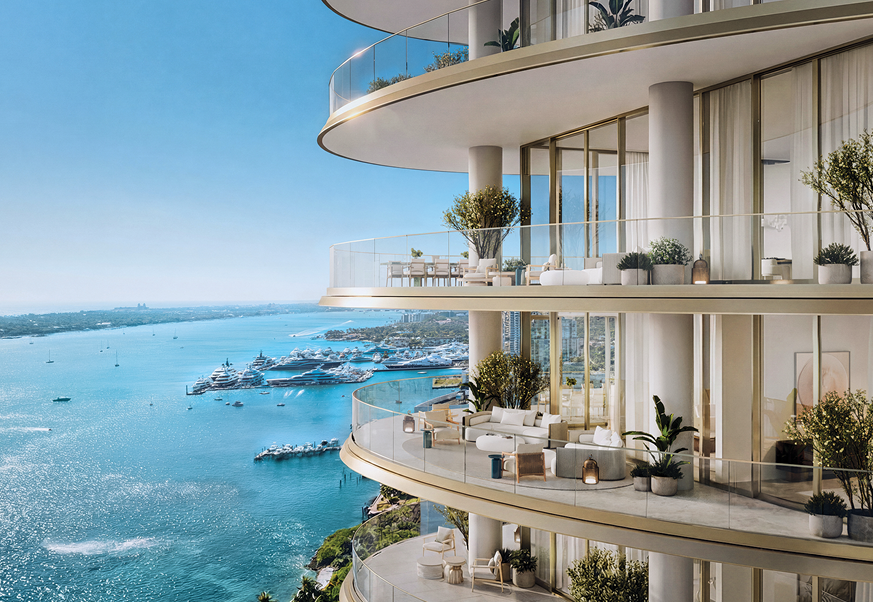
A big part of my role is making sure our teams stay focused on delivering projects that exceed expectations while remaining disciplined throughout every stage of development. While every market and project is unique, our approach is consistent: understand the market, anticipate evolving buyer expectations, partner with world-class brands and designers, and create residences that stand the test of time. That philosophy has shaped some of our most significant developments, including One Bloor and Forma in Toronto, the Frank Gehry-designed residential towers that are redefining the city’s skyline. These projects reflect Great Gulf’s commitment to thoughtful design, exceptional quality, and creating destinations that become part of a city’s identity. We’re bringing that same mindset to Mandarin Oriental Residences, West Palm Beach, where we saw an opportunity to introduce a new standard of luxury living in one of South Florida’s fastest-growing markets. As Mandarin Oriental’s first standalone residential project in Florida, the development combines Great Gulf’s expertise in creating landmark destinations with Mandarin Oriental’s legendary hospitality, personalized service, and wellness-driven lifestyle. With just 87 private residences designed by Safdie Architects, led by Moshe Safdie, the project offers a highly curated residential experience that reflects the sophistication of today’s global luxury buyer while embracing the unique character and lifestyle of West Palm Beach.
Will you highlight Great Gulf’s commitment to supporting the communities it serves?
We believe in supporting the communities where we build, at every level. Locally, that means co¬sponsoring kids’ sports teams, backing neighborhood street festivals, and investing in the everyday moments that bring a community together. We also believe in supporting arts and culture in the cities where we operate. In Toronto, this includes our sponsorship of the annual Italian Contemporary Film Festival (ICFF) Architettura & Design program, which brings architects, designers, and cultural leaders together to explore how design shapes our cities. Through the Great Gulf Charitable Foundation and volunteer initiatives, we also support a range of causes including healthcare, the environment, affordable housing, education, children’s welfare, mental health, and food insecurity.
What do you feel are the keys to effective leadership?
For me, leadership starts with trust. You build trust by being consistent, listening to your team and following through on your commitments. I’ve also learned that the best leaders don’t try to have all the answers. They surround themselves with talented people, encourage collaboration and create an environment where everyone feels empowered to contribute. When people feel invested in a shared goal, that’s when great things happen.
There are many talented staff members on the Great Gulf team, and I prioritize empowering them with decision-making authority within limits. You own your decision and stand by it. People make mistakes – that’s ok. That’s how you learn, and you bounce back stronger. Empowerment leads to more satisfied teams, which leads to better results all around.
What advice do you offer to young people beginning their careers?
Stay curious and don’t be afraid to ask questions. Some of the most valuable lessons you’ll learn early in your career come from listening to people who have different experiences and perspectives. It’s also important to be patient. Careers aren’t built overnight. Focus on doing good work, being dependable and building strong relationships. If you consistently show up prepared, work hard, and treat people well, opportunities have a way of finding you. Be prepared to pivot. I did. I pivoted from design to construction to investments/underwriting and to management, all within the first 10 years of my career, but it was deliberate – so I could learn. I am still learning.