- Home
- Media Kit
- MediaJet
- Current Issue
- Past Issues
- Ad Specs-Submission
- Reprints (PDF)
- Photo Specifications (PDF)
- Contact Us
- PRIVACY POLICY
- TERMS OF USE
Loading

ONLINE

Marc D. Miller
A More Connected Model Of Care
Editors’ Note
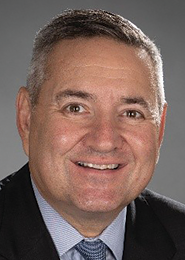
Marc Miller is President and Chief Executive Officer of Universal Health Services, Inc. (UHS). He was named CEO in January 2021 and has served as President since 2009. He is a member of the UHS Board of Directors, serving on the Executive Committee and the Finance Committee. Miller began his career at UHS in 1995 and over the years has held various positions of increasing responsibility at hospitals and at the corporate office. Prior to assuming executive leadership roles at the company’s Corporate headquarters in King of Prussia, Pennsylvania, Miller served in various operating roles at several UHS Acute Care hospitals. Among his regional and divisional management roles, he served as Group Director responsible for the company’s acute care operations in Pennsylvania, South Carolina, and Florida; Eastern Region Vice President of the Acute Care Division; Senior Vice President and Co-head of the UHS Acute Care Division; and President of the Acute Care Division. Miller is also a member of the Board of Directors of Universal Health Realty Income Trust, a real estate investment trust that has investments in 76 properties located in 21 states. In 2025, Miller was selected to serve as Chair of the Federation of American Hospitals (FAH). Additionally, he served as a member of the Board of Directors of Premier between 2015 and 2025. He is frequently featured as a thought leader and provides industry perspective for national publications. Miller holds an MBA degree in healthcare management from The Wharton School of the University of Pennsylvania and a BA degree in political science from the University of Vermont.
Company Brief
Headquartered in King of Prussia, Pennysylvania, Universal Health Services, Inc. (uhs.com) is one of the nation’s largest and most respected providers of hospital and healthcare services, with annual revenues of approximately $17.4 billion during 2025. Through its subsidiaries, UHS employs more than 102,000 employees and operates 30 inpatient acute care facilities, more than 380 inpatient behavioral health facilities and approximately 170 outpatient and other facilities, national virtual behavioral health services, an insurance offering, a physician network and various related services with physical locations in 40 states, Washington, D.C., Puerto Rico, Ireland and the United Kingdom. Since its founding in 1979, UHS has grown steadily into a premier Fortune 500® corporation perennially recognized by multiple esteemed national rating entities.
UHS recently announced significant news that generated a multitude of headlines, with its acquisition of Talkspace. Will you provide an overview of Talkspace?
Talkspace (uhs.com/talkspace) provides online care, allowing users to access mental health support from anywhere in the U.S. using a phone, tablet or computer. This is a convenient alternative to in-person care – and provides an opportunity to many who otherwise would not have access to therapy at all. Talkspace offers individual therapy, couples therapy, psychiatric and medication management services. Its network of therapists and psychiatric providers have specialization in 150+ conditions. It is flexible, easy to use, and covered by most major insurance plans including TRICARE® and Medicare.
Talkspace is the perfect complement to UHS’ existing portfolio of healthcare services, which traditionally has had an inpatient-care focus. Together, we’re creating a broader network of accessible, high-quality care that’s a game changer for the industry – and for patients.

Marc Miller addresses UHS leaders and employees
to discuss the Talkspace acquisition
What does UHS’ acquisition of Talkspace mean for the future of behavioral healthcare?
We see this as an opportunity to rethink how behavioral healthcare is accessed and delivered and to create a more connected experience for patients. Over the past 40+ years, UHS has grown its network of locations and clinical capabilities across inpatient, residential, outpatient and community-based settings. Talkspace brings a leading virtual platform and proven approach to making behavioral healthcare more accessible and convenient. It expands the ways people can engage with care, including providing an option for those who may not require in-person treatment.
With Talkspace, UHS is now the first, and currently only, company in the U.S. to offer the full continuum of behavioral healthcare. That gives us a unique opportunity to think about behavioral healthcare not as a series of settings, but as a continuous journey. People’s needs can change over time, and the right level of care may look very different at different points in their lives. Our goal is to make those transitions more seamless and ensure patients have a clear path to the support they need.
By bringing Talkspace’s virtual capabilities together with UHS’ nationwide behavioral health, acute care hospital and physician group networks, we have an opportunity to create a more connected model of care – one that expands access, strengthens the connection between mental and physical health, and ultimately helps more people get the right support at the right time.
“With Talkspace, UHS is now the first, and currently only, company in the U.S. to offer the full continuum of behavioral healthcare. That gives us a unique opportunity to think about behavioral healthcare not as a series of settings, but as a continuous journey.”
You have described UHS and Talkspace as offering a full continuum of mental health services. What does that actually mean for patients?
For patients, it means having more options and a clearer path through care. Behavioral health needs are not one-size-fits-all, and they can change over time. Someone may benefit from virtual therapy, while another person may need a structured in-person outpatient program, and someone else may need crisis intervention followed by a hospital stay. Someone who initially needs more intensive support may eventually transition to outpatient or virtual care.
Historically, those experiences may have felt fragmented. Together, UHS with Talkspace now has an opportunity to make those transitions more seamless and more connected.
That’s what we mean by a continuum. It’s not just about having more services. It’s reaching people earlier, creating more pathways into the healthcare system, and making it easier for people to move between levels of care as needs evolve.
Why is now the right time to rethink how mental healthcare is delivered?
The demand for quality mental healthcare continues to grow, while people’s expectations for how and where they access care are changing. People increasingly expect services to be easily accessible, convenient and readily available through the channels that fit their lives.
Virtual care can help remove some of the barriers that prevent people from seeking support as well as better enable continuity of care after a higher acuity episode. However, convenience alone isn’t enough. Mental health is deeply personal, and clinical quality and human connection must remain at the center of the experience.
The opportunity is to combine the accessibility and convenience that technology can provide with the clinical depth and human connection that patients need. That’s a key reason the combination of UHS and Talkspace is so compelling.
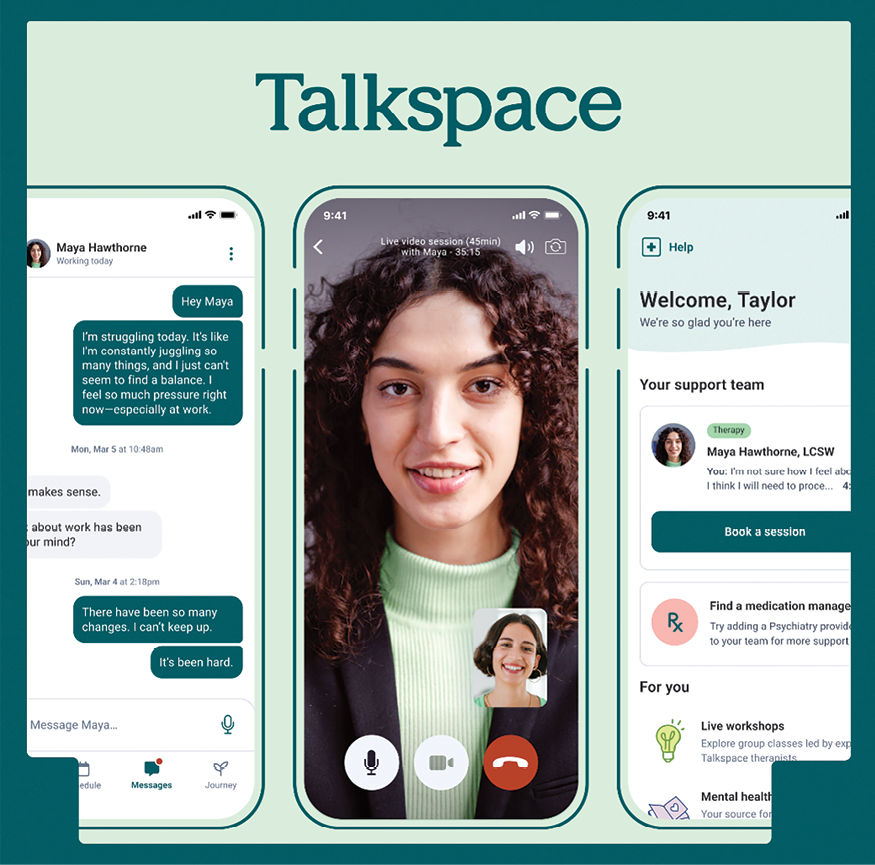
On August 17, 2026, UHS completed its acquisition of
Talkspace, which offers virtual therapy through a
network of approximately 6,000 licensed therapists and psychiatrists
What do you think is missing from the way the healthcare system has traditionally approached mental health?
The industry has often thought about mental health too much in terms of individual points of care rather than the entire patient journey. Mental health needs don’t begin and end at the door of a hospital or outpatient facility. They can emerge at any point in a person’s life, and the level of support someone needs can change over time.
We need to make it easier for people to enter care earlier, access the appropriate level of support, and move between different types of care without losing continuity. But I also think we need to broaden the way we define outcomes. The goal shouldn’t simply be to improve a mental health measure in isolation. It should be to help people achieve better overall health and quality of life.
Mental and physical health are deeply interconnected. We know, for example, that depression is associated with increased risk of chronic conditions such as diabetes, heart disease and stroke. And for people with severe mental health conditions, physical health disparities can be particularly profound. The World Health Organization estimates that people with severe mental health conditions have a life expectancy that is, on average, 10 to 20 years shorter, with most of that gap attributable to co-occuring physical health conditions.
We need to stop thinking about mental and physical healthcare as two separate systems. By connecting behavioral health with primary care, acute care, outpatient services and virtual care we can support the whole person and, ultimately, generate more favorable outcomes.
Ultimately, I think the future of healthcare is about treating the person, not just the condition or the episode of care. When mental and physical health are connected, there is greater opportunity to improve outcomes across both.
“We need to stop thinking about mental and physical healthcare as two separate systems. By connecting behavioral health with primary care, acute care, outpatient services and virtual care we can support the whole person and, ultimately, generate more favorable outcomes.”
How does Talkspace change the way UHS can provide care for people who might not otherwise seek behavioral healthcare?
One of the most exciting aspects of Talkspace is the ability to reach people in a different way. There are people who may not walk into a behavioral health facility or know where to begin, but who may be willing to engage with a therapist virtually, on the Talkspace platform. That creates an important new front door to care.
And we know that preferences are changing, particularly among younger consumers. For example, research from the American Psychological Association found that 59 percent of adults ages 18-34 had sought professional mental health care, but only 43 percent said they were able to receive it. At the same time, younger adults are increasingly comfortable engaging with technology around mental health creating an important opportunity to meet people earlier and in the ways they are increasingly comfortable engaging with care.
Talkspace has been a leader in care through texting and studies have shown it to be as effective as other forms of online therapy, with 90 percent of teens choosing this option. It is also covered by most of the major payors.
In addition, Talkspace recently launched Tee, an AI tool, which provides people with a private, accessible way to get support around everyday challenges while creating a pathway to human care when additional support is needed. Tee was designed by mental health experts, developed to meet HIPAA privacy standards and is intended to complement – not replace – care from licensed professionals. A large language model-based tool, Tee is different than chatbots in that it is specifically built for mental health support, having been trained on de-identified clinical data. It operates with clinician oversight and clinical safeguards, effectively helping people navigate mental health challenges – day or night – from the convenience of their phone, tablet or laptop. It’s an exciting example of what’s possible when technology and clinical expertise come together.
Overall, once someone takes the first step toward seeking help, our responsibility is to make the path forward clearer and more connected. For some people, virtual care may be exactly what they need. For others, it may be the beginning of a journey that requires a different kind of support over time.
Bringing together the reach of Talkspace with the depth and scale of UHS, we can fundamentally change how people experience behavioral healthcare – making it easier to access, easier to navigate, easier to stay connected to care, and ultimately more responsive to the way people live their lives.
What does the combination of UHS and Talkspace mean for the role of technology in behavioral healthcare?
Technology can make healthcare more accessible, but it should always serve the care experience rather than become the focus of it. Talkspace has built exceptional technology capabilities, but what makes the platform particularly compelling is the way that technology is paired with a strong clinical foundation and a deep understanding of behavioral health. Talkspace has demonstrated how technology can make it easier for people to connect with mental health professionals and engage with care in ways that fit into their lives.
I do believe we have to be thoughtful about innovation in healthcare. Technology, including AI, can help improve access, support clinicians and make care more connected – but it must be used responsibly, with appropriate clinical oversight, privacy, security and governance.
The goal is not technology for technology’s sake. It is to leverage technology where it can genuinely improve the care experience – to remove barriers, strengthen connections between people and their care teams, and give clinicians better tools to support the people they serve. That’s where I believe the combination of Talkspace and UHS will have real impact.
How do you see UHS with Talkspace changing the patient experience over the next several years?
I think the biggest change will be greater connection – care meeting people where they are, helping them live better and supporting them more holistically through physical and mental challenges. Patients shouldn’t have to understand the organizational structure of healthcare to get the care they need. They shouldn’t have to think about whether a service is provided by a hospital, an outpatient facility, or a digital platform.
We have an opportunity to build a model where virtual and in-person care complement one another rather than operate in separate worlds. That is a very different way of thinking about behavioral healthcare, and I believe it can ultimately improve access, continuity and outcomes.
What is your broader vision for UHS as healthcare becomes more connected and consumer-focused?
Our company mission, penned upon the founding of UHS in 1979, is to provide superior quality healthcare. And our vision is to build a healthcare experience that is connected, accessible and responsive to the needs of the people we serve. The traditional boundaries between hospitals, outpatient care, physicians and virtual care platforms are becoming less meaningful to consumers. They simply want to be able to get the care they need in a way that works for them. For UHS, that means building on the clinical capabilities and operating expertise that have defined the organization for decades while continuing to embrace new models of care. Talkspace is an important part of that evolution.
Ultimately, I believe the future is not about choosing between digital and in-person care. It is about bringing the strengths of each together to create a more complete healthcare experience. That is the future UHS and Talkspace are working to build together.