- Home
- Media Kit
- MediaJet
- Current Issue
- Past Issues
- Ad Specs-Submission
- Reprints (PDF)
- Photo Specifications (PDF)
- Contact Us
- PRIVACY POLICY
- TERMS OF USE
Loading

ONLINE

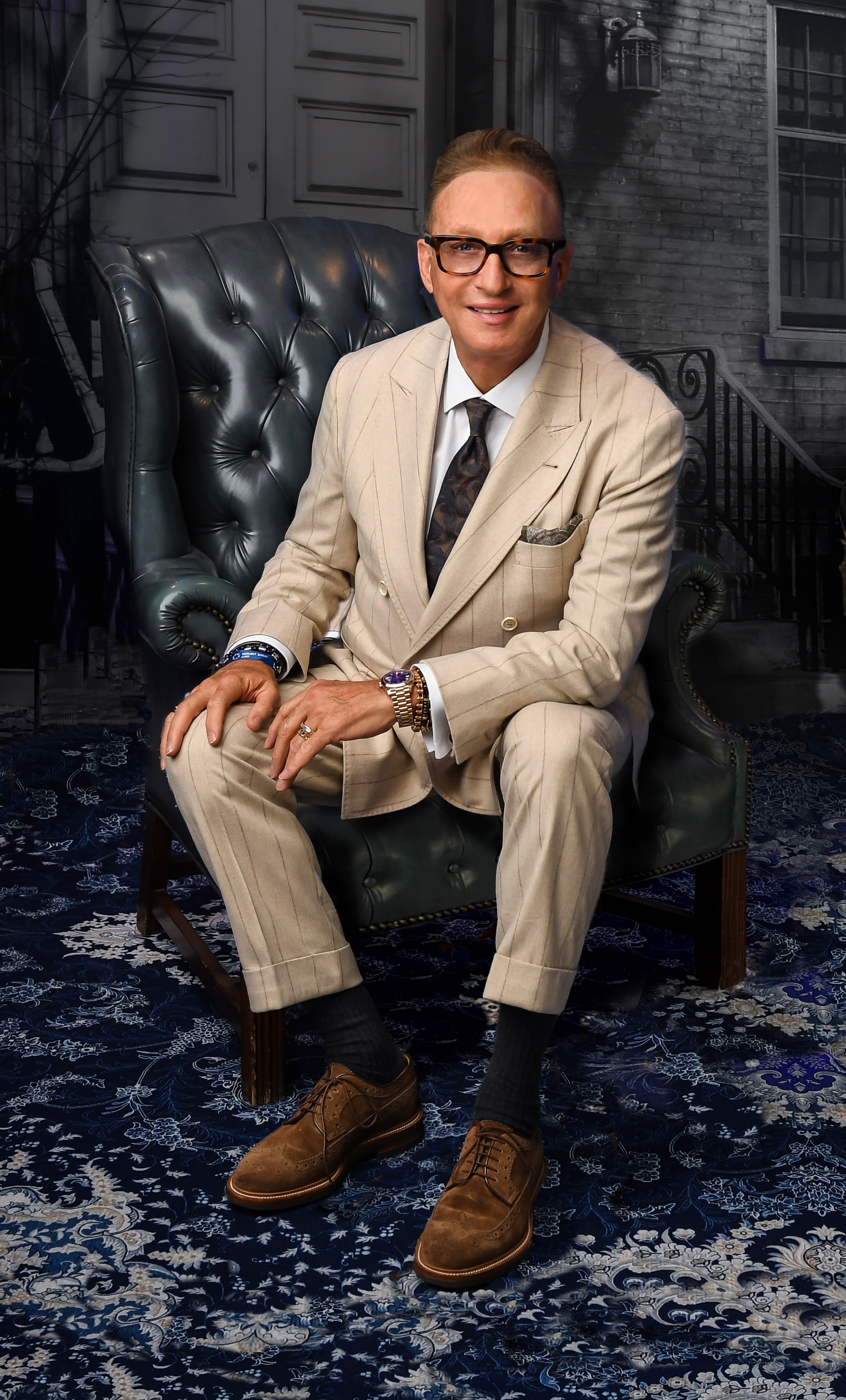
Miles S. Nadal
Professional Partnership
Editors’ Note
Miles Nadal (milesnadal.com) is an international entrepreneur and philanthropist. His belief in the importance of investing in passion and empowering people to pursue their highest goals has framed his approach to both business and philanthropy. Under Nadal’s ownership, Peerage Capital’s residential real estate business has grown into a Top 10 North American real estate services company with a focus on the luxury market. Peerage Realty Partners invests in the passion of entrepreneurs and their teams to accelerate their growth. Peerage Capital is also a leader in the Canadian self-storage business and in the independent wealth management and investment banking business in Canada and in the U.S. Nadal has been a consistent force with his ongoing support of many community-focused philanthropic initiatives. These include the Miles S. Nadal JCC, an inclusive urban community hub in Toronto; the Miles Nadal Heart Centre with the Sinai Health Network; the Miles S. Nadal Management Centre at the Schulich School of Business; and the Miles and Kelly Nadal Youth Centre. He is an active supporter of local food banks, summer camps, and programs for young, aspiring entrepreneurs. In Israel, Nadal’s support extends to the Miles S. Nadal Institute for Technological Entrepreneurship at Tel Aviv University and many other community causes including Yad Vashem, Duvdevan and United Hatzalah. Nadal has been nominated for Canada’s Top 40 Under 40 and was the recipient of Ernst & Young’s Entrepreneur of the Year Award. Among his awards are the Harold Lederman Award for Philanthropic Leadership, Jewish National Fund Negev Honoree, Toronto Chapter of the American Marketing Association Marketing Hall of Legends, Executive of the Year by MEDIA Magazine, and Damon Runyon Cancer Research Foundation honoree. Nadal was awarded an Honorary Doctorate of Philosophy degree from Tel Aviv University, and was recognized for contributions to Harlem RBI, an initiative for youth playing, growing, and learning. He is a member of the Board of Governors of Tel Aviv University where he endowed a home for technological innovation and entrepreneurship, as well as serving on the International Board of Governance of The Peres Institute.
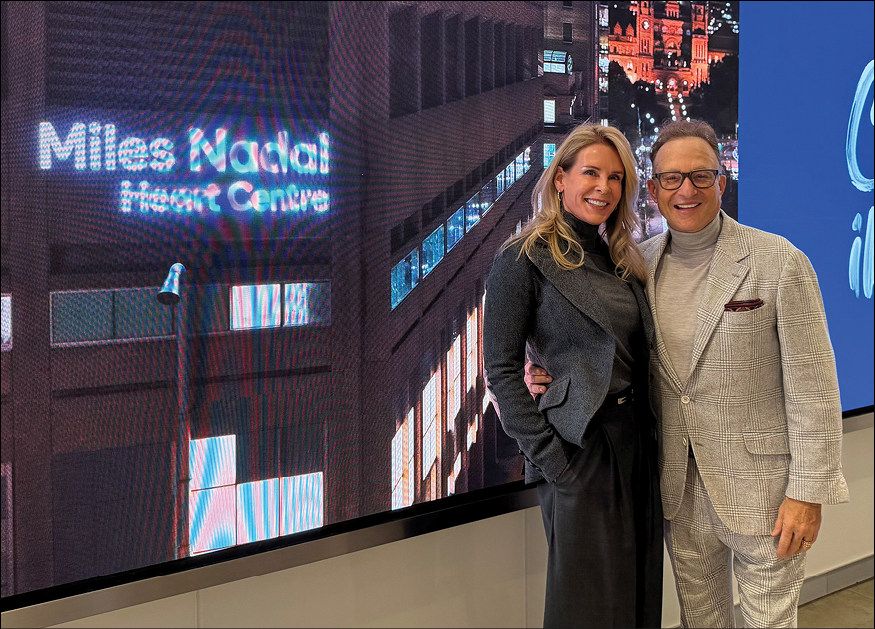
Kelly and Miles Nadal at the Miles Nadal Heart Centre
Will you discuss your career journey?
I opened my first office in 1980. I was 22, and the capital was a $5,000 advance on a Visa card. I did not come from wealth. What I had was an upbringing that treated hard work, integrity, and perseverance as ordinary expectations, not accomplishments, and those expectations became the foundation of everything that followed, including Peerage Capital. Four decades later, that first office has become a diversified enterprise across North America, with interests spanning real estate, asset management, self-storage, wealth platforms, and strategic operating businesses. The financial outcome has been rewarding, but it has never been the motivation. What has held my attention for 40 years is the work of building businesses that outlast their founders and backing the people capable of building them.
If there is a single principle behind the growth, it is partnership. I have consistently sought out entrepreneurs with vision and discipline, and then built structures that let them keep what made them successful in the first place. Much of what Peerage has become was created by those partners, not by me.
The other lesson took longer to learn and matters more. Business is about people. Markets move, transactions close and are forgotten, and cycles turn against you at inconvenient moments. The relationships hold. I am here because of partners, colleagues, mentors, and friends who chose to stay in business with me over decades, and I do not treat that as a small thing.
How do you define Peerage Capital’s mission and purpose?
We partner with exceptional entrepreneurial leaders to build businesses that endure across generations. That word, endure, carries most of the meaning. We are not simply investors. We bring strategic insight, operational expertise, and patient capital, and we deliberately leave intact the culture, independence, and identity that made a business worth partnering with in the first place. Our role is to help strong operators achieve more, not to make them resemble us.
The purpose extends past returns. A business that lasts creates something for the people inside it: employees with careers rather than jobs, clients with continuity, families and communities with a stable institution in their midst. Those outcomes are not incidental to the financial ones. Over a long enough horizon, they produce them.
Everything follows from that horizon. We are not managing to a quarter or engineering an exit. We are investing in trust, excellence, culture, and relationships – slow to build, difficult to copy, and the only assets I know of that appreciate through a downturn.
What are you building with the recent launch of Peerage Mortgage Capital?
Canada’s premier private mortgage capital provider for borrowers, mortgage professionals, investors, and developers who need financing that traditional channels are not structured to deliver. The premise is straightforward. When conventional financing reaches its limits, the opportunity in front of the borrower does not disappear. A developer with a viable project, a business owner with an unconventional balance sheet, a buyer whose circumstances do not fit a standard template – none of them have stopped being creditworthy. They have run into the edge of a system built for the average case. Our work is to underwrite the specific case with judgment, and to move at the speed the opportunity requires.
This is also, in a sense, where I started. In 1980, I was the borrower nobody would underwrite, and the capital came from a credit card because it came from nowhere else. Four decades on, I can be the capital that says yes when the answer deserves to be yes. That is not sentiment. It is the most durable business logic I know – sophisticated capital, applied with discipline, to people the market has priced by category rather than by merit.
“Entrepreneurship is the act of taking something that does not exist and making it exist, with your own capital and your own name behind it. Nothing else in business produces that clarity.”
By refusing the trade most organizations accept as inevitable. We partner with entrepreneurs, not bureaucracies. We look for builders and innovators, and we empower them rather than routing them through layers of approval that add delay and subtract conviction. Our partners keep their brands, their leadership, and their identity, because strength comes from what makes each business distinct, not from imposing a common template across all of them.
Ownership does much of the remaining work. Leaders with a real stake in the outcome behave differently from leaders executing a mandate: more accountable, more inventive, more willing to make the hard call early. That is not a cultural aspiration. It is a structural one, and we build it into how our partnerships are formed.
The last element is temperament. The businesses that last challenge their own assumptions and change everything except what they stand for.
Four decades in, why are you still building?
Because building is the part I enjoy, and I have never found a substitute for it. Entrepreneurship is the act of taking something that does not exist and making it exist, with your own capital and your own name behind it. Nothing else in business produces that clarity. You find out quickly whether you were right, the feedback is unsentimental, and there is nobody to hand the consequence to. I opened my first office at 22 for that reason, and the appeal has not diminished.
Entrepreneurship also selects for a particular kind of person, which is why I invest in entrepreneurs. The entrepreneurs I have partnered with most successfully were rarely motivated primarily by money. They were motivated by pride in the thing itself, and that is what kept them upright when a deal broke, a market turned, or a plan that took two years to build stopped working. Passion is not enthusiasm. It is what remains after the enthusiasm is gone, and it is the most reliable predictor I know of who is still standing in year ten.
My own role has changed. Most of what I build now, I build through other people, and the job is to create conditions where capable operators can think boldly and reach their full potential. Leadership at this stage is not control. It is enabling.
The instinct is unchanged, though, and launching Peerage Mortgage Capital at this point in my career is the clearest evidence of it. I am not finished building.
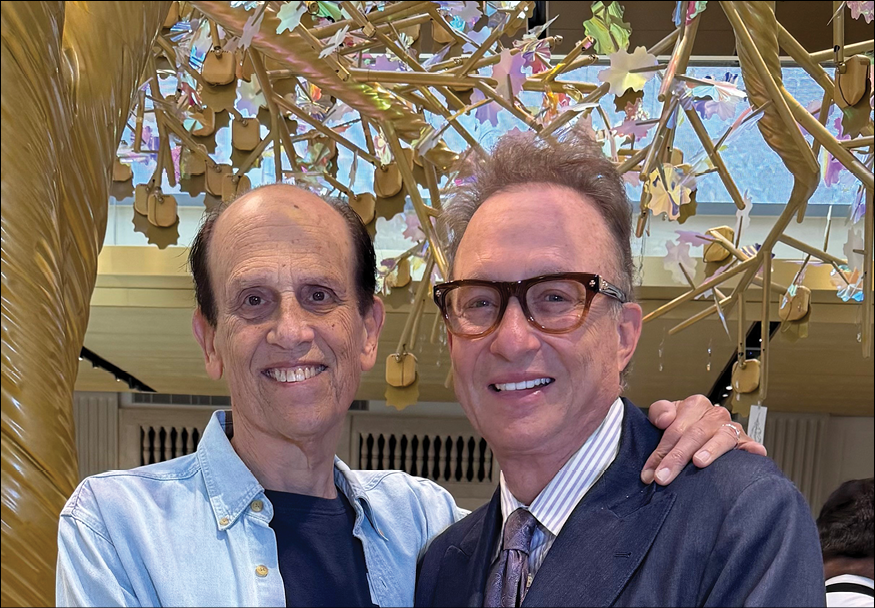
Michael Milken and Miles Nadal
What trends are shaping luxury real estate?
The definition of luxury has shifted from scale to experience, and that shift is permanent. Affluent buyers no longer measure a home primarily in square footage. They measure it in wellness, privacy, security, sustainability, and how well it supports the way they live, work, and entertain. Demand has moved decisively toward turnkey, service-oriented properties that deliver hospitality-level convenience and personalization. At the same time, the market has gone global: high-net-worth buyers treat premium property as both a lifestyle asset and a long-term store of value, and they compare cities the way they once compared neighborhoods.
Technology is reshaping how the business is conducted: artificial intelligence, predictive analytics, digital marketing, and far more sophisticated client engagement. It has not changed what the business runs on. At the top of the market, decisions still turn on trust, reputation, discretion, and advice from someone who has done this before.
That is the strategic challenge of the coming decade. Scale and technological sophistication are becoming table stakes. Entrepreneurial agility and genuinely personal service are what will separate the organizations that win, and they are considerably harder to buy.
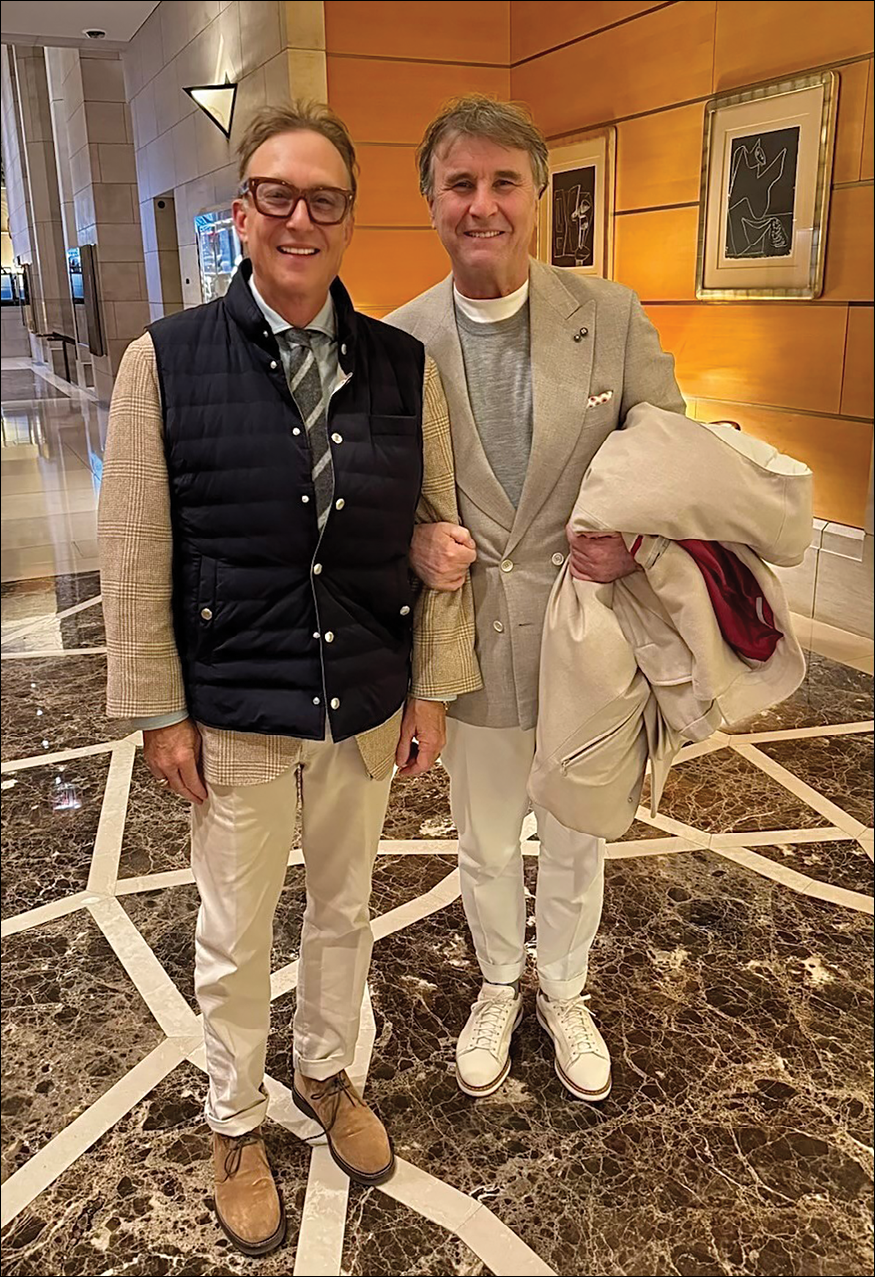
Miles Nadal and Brunello Cucinelli
What have you learned about leadership, and what do you look for in the people you build with?
Leadership is stewardship. The title is not the point; the responsibility is. Leaders earn trust by communicating clearly, doing what they said they would, and remaining steady when the situation is not. Resilience is part of it – every entrepreneur meets setbacks and periods of real doubt, and the job is to adapt, persist, and keep the organization’s optimism intact while doing it. But two things matter above the rest, and they sound contradictory. Be kind. And push people harder than they would push themselves. The leaders who changed my life did both at once: they treated me decently and they refused to accept less than I was capable of, and I never experienced those as being in tension. Kindness without expectation is indulgence. Expectation without kindness is just pressure. The combination is what people remember 30 years later.
The other discipline is deliberately learning what you do not know. It becomes easy, as you get more senior, to spend your day in rooms where you are the best-informed person present. That is comfortable and it is corrosive. I make a point of putting myself into conversations where I am behind – new sectors, new technologies, people half my age who understand things I do not. Being the least knowledgeable person in the room is the fastest education available, and the only thing standing in the way is ego.
When I build a team, character comes first, and it is not close. Talent without integrity is a liability that compounds. Beyond that, I look for curiosity, people who take genuine pride in their work, and for collaborators who can disagree openly without it becoming personal. And I look for optimism. Solutions-oriented people change the temperature of a room, and over time, their effect on a culture is enormous.
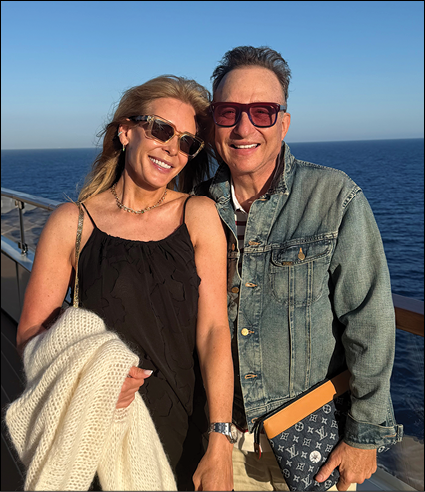
Kelly and Miles Nadal
Of everything you do now, what matters most?
Mentorship – not as a pleasant addition to the business, but as the most important work I do at this stage. Early in my career, I had the benefit of people who gave me their time and judgment for no reason. Some taught me strategic thinking and business discipline. Others shaped how I understood leadership, relationships, and character. The most valuable thing they gave me was not information. It was confidence – having someone believe I could do it at the moment I was least certain myself. Mentorship also compresses time: a good mentor hands you a lesson that cost them a decade.
I am now on the other side of that exchange, and I have come to think it is the highest-return activity available to me. Capital is abundant. Serious attention paid to one person at the right moment is not. An hour of it can redirect a career, and the compounding on that exceeds anything on a balance sheet.
I still learn in both directions, from partners, operators, and friends who see what I do not. But if you asked what I would prefer to be remembered for, it would not be a transaction. It would be the people who got further than they expected because someone took them seriously early.
How do you define success?
Success is multidimensional, and the financial dimension is the one most easily mistaken for the whole. Professional achievement creates opportunity and the capacity for impact. It does not, by itself, produce a meaningful life. What I have come to measure instead is the quality of my relationships, the integrity with which I have conducted myself, the effect I have had on other people, and what will remain when I am not here to maintain it. I often put it this way: success is meaningful, legacy is powerful, but family is everything.
I am grateful for what business has made possible. I am at least as proud of the partnerships, friendships, and philanthropic work that grew out of it. In the end, success is a matter of purpose, contribution, and gratitude – and those are available at any scale.

The Nadal family
What advice do you offer to young people beginning their careers?
Dream boldly and think in decades. Do not let fear or other people’s expectations set the ceiling on what you attempt. Do the work. There is no substitute for preparation, discipline, and persistence, and no shortcut that has ever held up under weight. Guard your character. Honor your commitments, treat people well – including the people who can do nothing for you – and always strive to be a mensch. Your reputation takes years to build and moments to spend. Find people who will push you and be honest with yourself about what you do not yet know. Almost nothing worthwhile is accomplished alone. Humility is not modesty about your ability. It is accuracy about your circumstances. And when things go well, be honest about that too. Notice how much of it was luck, timing, and how many people helped along the way.
In closing…I have been very fortunate in my life and career, and I have never lost sight of that. You can work hard, make good decisions, and put yourself in a position to succeed, but you cannot engineer every opportunity, every relationship, or every moment of good timing. The longer I have been in business, the more conscious I have become of that. I am a firm believer that through hard work you can make your own luck, but ultimately, we cannot deny that luck does play a role in everything we do, and I am grateful that sometimes when needed, I was fortunate to have luck on my side.
So, when good fortune comes your way, recognize it. Be grateful for it. And whenever you can, try to be a little bit of that good fortune in someone else’s life.