- Home
- Media Kit
- MediaJet
- Current Issue
- Past Issues
- Ad Specs-Submission
- Reprints (PDF)
- Photo Specifications (PDF)
- Contact Us
- PRIVACY POLICY
- TERMS OF USE
Loading

ONLINE

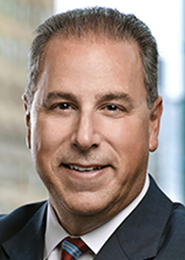
Neil H. Kessner
Contributing To The Future
Of The City
Editors’ Note
Neil Kessner serves as Executive Vice President and General Counsel of Real Property at SL Green Realty Corp., where he oversees all legal matters related to the leasing, litigation, construction, and management of the company’s office and retail portfolio. Kessner joined SL Green in 2000. From 1998 to 2000, he served as Associate General Counsel of Williams Real Estate Co., Inc., a leading New York City real estate management and brokerage firm. Prior to that, he was a partner at Kessner & Mass, LLP, where he represented prominent New York City commercial landlords and national and international office and retail tenants. Kessner received a BA degree from the City University of New York and a Juris Doctor from New York Law School. He has taught Commercial Leasing at New York Law School and has had the honor of being a guest lecturer at the United States Military Academy at West Point, Department of Law.
Company Brief
SL Green Realty Corp. (slgreen.com), Manhattan’s largest office landlord, is a fully integrated real estate investment trust, or REIT, focused primarily on acquiring, managing, and maximizing the value of Manhattan commercial properties. As of June 30, 2026, SL Green held interests in 54 buildings totaling 30.6 million square feet. This included ownership interests in 29.2 million square feet and 1.4 million square feet securing debt and preferred equity investments, excluding fund investments. SL Green also managed four third-party-owned buildings totaling 0.9 million square feet.

One Vanderbilt
How do you describe SL Green’s culture?
SL Green’s culture is fast-paced, disciplined, and entrepreneurial. We hold ourselves to high standards, and people are expected to take ownership of their work. At the same time, it is a highly collaborative and people-oriented environment. Our teams across legal, leasing, investments, construction, and operations are fully integrated, working side by side from a project’s conception through completion. We pride ourselves on drawing from one another’s expertise to achieve the best results for the company.
This integrated approach creates a strong sense of trust and accountability. Many members of our leadership team have worked together for decades, creating a shared understanding of how the company operates and what we are working to accomplish. Our culture is also defined by a deep sense of loyalty, not only to our colleagues and our work, but also to New York City. We understand that the decisions we make have a lasting impact on our buildings and tenants while also helping shape the broader story of the city.
What are the keys to SL Green’s strength and leadership in the industry?
SL Green’s greatest strength is the combination of deep local knowledge and institutional continuity. Manhattan is our home market; we’ve built the company’s core mission around knowing it better than anyone else. We know its buildings, neighborhoods, tenants, and market dynamics, and we have longstanding relationships with brokers, lenders, partners, and other stakeholders across the industry.
We lead to define the market, rather than simply acquiring an asset and waiting for the market to improve around it. We invest in our properties, reposition them, enhance the tenant experience, and continually identify opportunities to create value. Our fully integrated platform brings leaders across legal, leasing, investments, construction, and operations together from the earliest stages of a project, allowing us to identify potential challenges, make informed decisions, and execute complex initiatives efficiently.
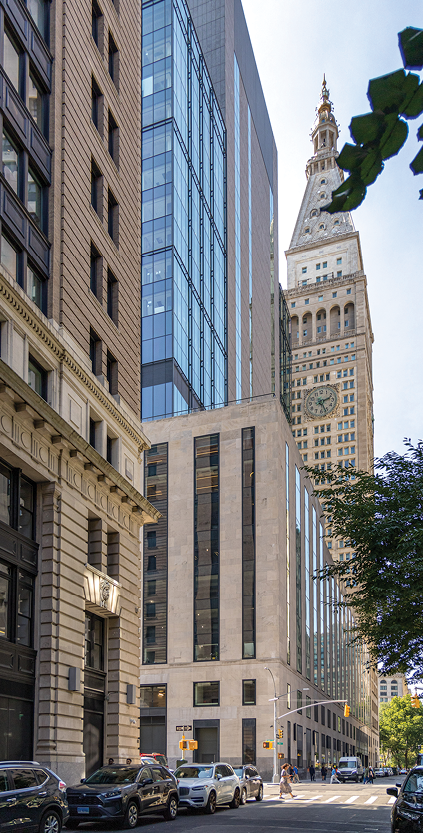
Projects such as One Vanderbilt Avenue and One Madison Avenue demonstrate what this platform can accomplish. Both required extraordinary cross-disciplinary coordination and reflect the company’s willingness to make bold, long-term investments that raise the standard for the New York City market. This combination of expertise, decisiveness, collaboration, and conviction has been central to SL Green’s industry leadership.
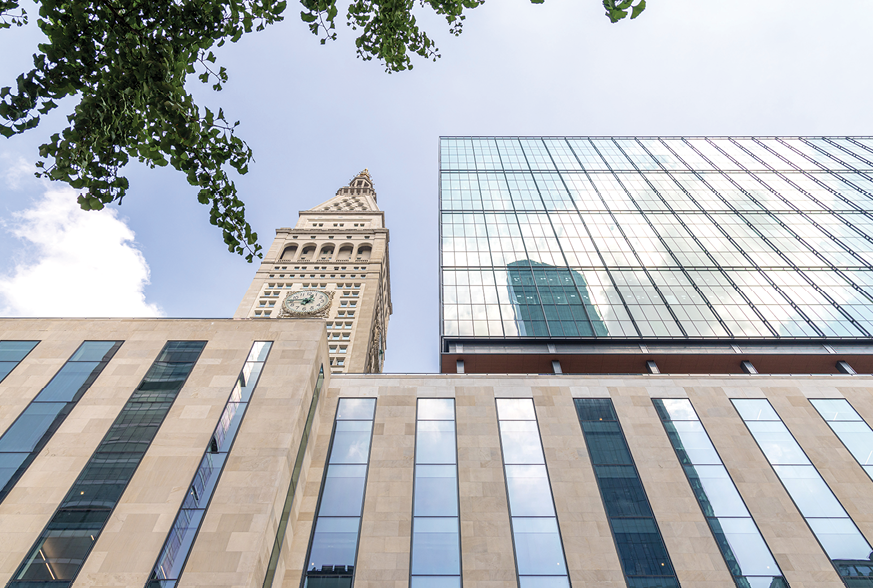
One Madison (above and below)
Will you provide an overview of your role and areas of focus?
I oversee legal matters related to leasing, litigation, construction, and management across SL Green’s office and retail portfolio. A significant part of my role involves working with our leasing team to negotiate agreements that reflect the business terms of a transaction while also protecting the company’s long-term interests.
The work does not end when a lease is signed. I remain involved throughout the full lifecycle of a lease and address legal matters that arise during construction, occupancy, and ongoing asset management. This requires close coordination with our construction, property management, operations, and investments teams.
My role is ultimately about translating commercial objectives into clear, practical, and executable agreements. That means identifying risks and anticipating potential challenges, but it also means helping the business find responsible solutions not just on our behalf, but on our tenant’s behalf as well, to keep transactions and projects moving forward. The goal is to protect the company’s long-term interests while enabling our teams to execute with confidence.
How critical is a strong working relationship and close coordination between the legal team and the leasing and investment teams during a transaction?
It is essential. The legal team needs to be involved from the outset to understand the commercial objectives, the economics of the deal, and the needs of both the tenant and the property.
Each team brings an important perspective. The leasing team understands the tenant relationship and market dynamics, while the investment team provides the strategic and economic context. Legal translates those objectives into an agreement that remains effective throughout the full term of the relationship. Construction and operations also play critical roles by ensuring that the terms negotiated on paper can function in practice within the building.
Close coordination helps us avoid surprises and maintain momentum. Beyond proactively identifying potential risks, our role as lawyers is to help the team understand and assess those risks, make informed decisions, and find a practical path for the transaction to move forward.
What types of transactions are most interesting to you personally?
I am most interested in complex transactions involving major buildouts where there is no one-size-fits-all solution. These transactions require creativity and close coordination around considerations such as phased occupancy, expansion rights, and specialized operating requirements.
I enjoy taking a complicated set of business needs and developing a legal and operational structure that works for both the company and the tenant. The most rewarding transactions are not always the largest; they are the ones that require thoughtful problem-solving, extensive collaboration, and strong relationship-building.
There is also something very tangible about real estate legal work. You can walk through a space where you negotiate the agreement for. It’s special to see the people working there and understand how the transaction has contributed to the life of the building. One transaction that was particularly meaningful to me involved the initial leasing of space to TD Bank and its affiliates at One Vanderbilt, negotiated at a time when the building was transforming from concept to reality.
When you look to the future of commercial real estate, what excites you the most?
What excites me most is New York City’s ability to attract companies, capital, and talent from around the world. The city has always found ways to reinvent itself, and its depth, energy, and resilience continue to create opportunities across commercial real estate. As businesses make long-term commitments to New York, we have the opportunity to deliver high-quality workplaces that respond to their changing needs while helping shape the city’s next chapter.
You have been at SL Green for more than 25 years. What has made the experience so special for you?
What has made the experience so special is the people. Over more than 25 years, I have had the opportunity to build lasting relationships and get to a level of trust that can only develop through years of close collaboration and bonding. I have been fortunate to work alongside extraordinarily talented people who are committed to the company and to one another, but also especially to the future of New York City.
When I joined SL Green in 2000, it was a company just embarking on its vision for the future. That experience helped shape how I approached my role and showed me the value the company places on creativity, collaboration, accountability, and problem-solving.
The scale and complexity of the portfolio and our transactions have changed considerably, but the entrepreneurial mindset and commitment to excellence have remained constant.
Real estate is tangible, and there is enormous satisfaction in walking through New York and seeing the relationships and hard work in the buildings we invest in. The work has remained challenging, but SL Green’s conviction in and lasting footprint on New York has made it meaningful. After more than two decades, I still find it rewarding to come to work, solve new problems, and contribute to the future of the city.