- Home
- Media Kit
- MediaJet
- Current Issue
- Past Issues
- Ad Specs-Submission
- Reprints (PDF)
- Photo Specifications (PDF)
- Contact Us
- PRIVACY POLICY
- TERMS OF USE
Loading

ONLINE

One RXR
Editors’ Note
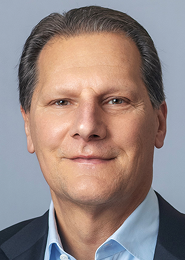
Michael Maturo is a founding Managing Partner and serves as President of RXR. In this capacity, he develops and implements RXR’s corporate strategy and oversees RXR’s operating business units and RXR’s investment management businesses as well as all capital markets activities. Maturo is a member of RXR’s Investment Committee and its Board of Directors. Prior to the Reckson/SL Green merger, Maturo served as President and a member of the Board of Directors at Reckson. Maturo serves on a number of outside boards and committees including First Vice Chairman of the Board of Directors of the Long Island Association (LIA), as well as a Member of its Executive Committee; member of the Board of Directors of Tomorrow’s Hope Foundation; member of the Cold Spring Harbor Laboratory Association Board of Directors; Member of the Board of Directors of the National Italian American Foundation; and Member of the Real Estate Roundtable. Maturo was appointed by New York Governor Cuomo in December 2012 to the Board of Trustees of the Long Island Power Authority (LIPA). Maturo completed his tenure on the LIPA board in January 2014.
Company Brief
Headquartered in New York, RXR (rxr.com) is a fully integrated real estate company and investment manager that owns and manages over 32.9 million square feet of commercial properties and more than 9,400 multi-family units. RXR specializes in public-private partnerships and master developments, including the $4 billion development of Terminal 6 at JFK International Airport and a 1,100-acre, $3 billion mixed-use development in Raleigh, North Carolina. Additionally, RXR has a multi-billion-dollar credit platform that leverages its real estate expertise to originate and acquire commercial real estate loans. RXR’s geographical footprint includes the New York metropolitan region and many of the nation’s fastest-growing markets, including Phoenix, Denver, Dallas, Raleigh, and Tampa.
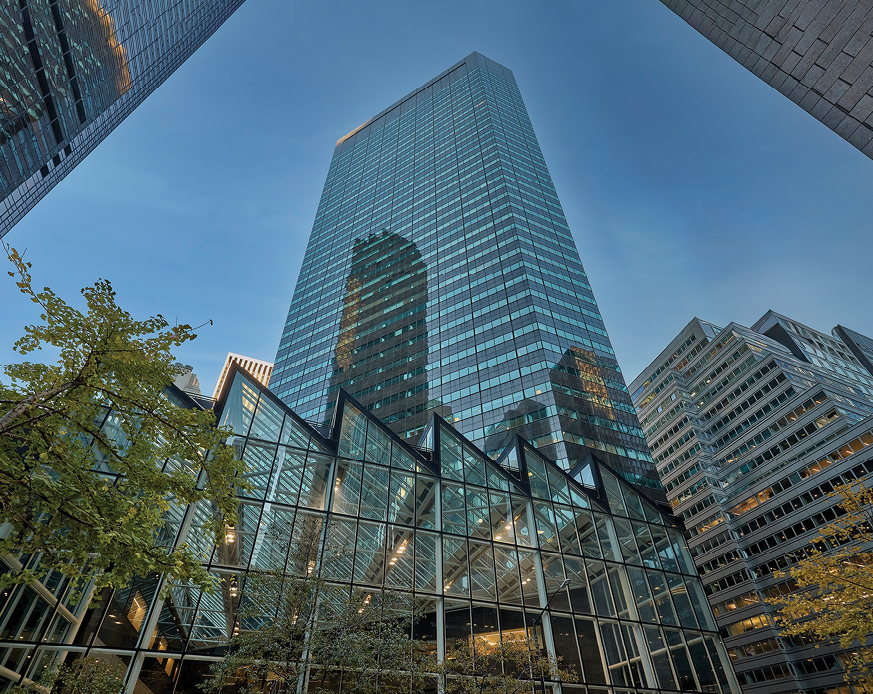
590 Madison Avenue - New York, New York
You were the architect and orchestrated significant organizational changes at RXR involving the creation of sector-oriented operating business units, a reengineered capital formation and capital deployment engine. Will you discuss this work and explain its impacts to RXR’s culture?
The organizational changes stemmed from the belief that the real estate industry has fundamentally changed. Following the dislocation created by COVID, rising interest rates and what RXR describes as the “Age of Disruption,” the company concluded that traditional real estate organizations were no longer sufficient. Success would require a more integrated, entrepreneurial and technology-enabled operating platform.
The first phase was organizational. RXR reorganized into four sector-oriented operating businesses – Office, Residential, Credit/Capital Solutions and Public-Private Partnerships – supported by centralized Investment Management and shared service platforms. Each business now has clear accountability while leveraging enterprise-wide expertise in construction, asset management, technology, capital markets and operations.
The second phase was cultural. Rather than becoming a bureaucracy, RXR wanted to institutionalize what made the company successful while preserving its entrepreneurial DNA. The firm’s philosophy is to build business platforms – not simply own buildings – allowing it to adapt across market cycles. Decisions are informed collaboratively across disciplines, enabling the company to identify opportunities earlier, solve more complex problems and execute faster than competitors.
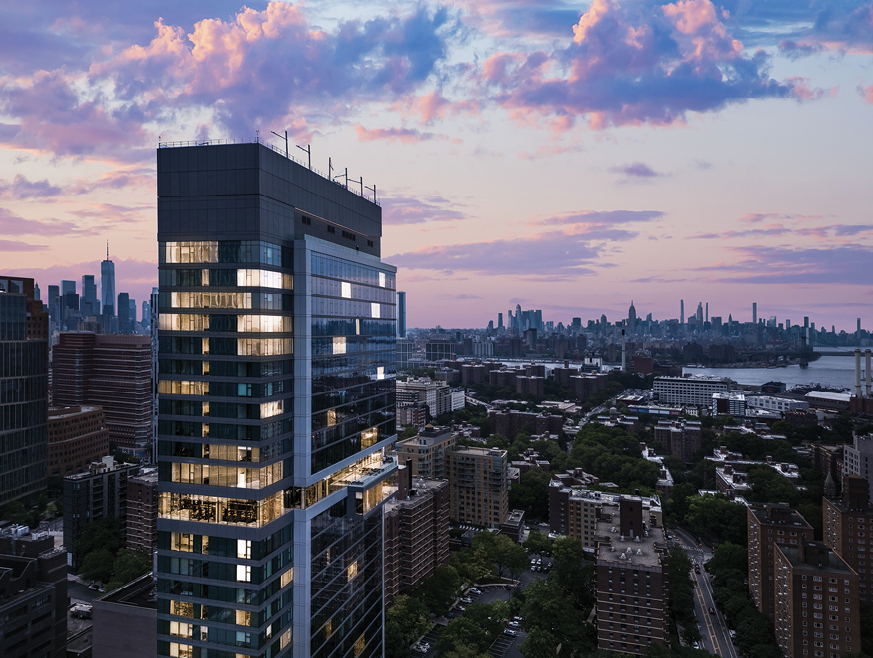
The Willoughby - Brooklyn, New York
The result is what RXR calls “One RXR” – a culture that is strategic, entrepreneurial, collaborative and accountable. Employees are encouraged to think like owners, leverage the firm’s integrated platform, and continuously recalibrate as markets evolve. The operating philosophy is captured in the firm’s guiding principle: “Doing Good and Doing Well Means Doing Better.”
How do you describe RXR’s culture?
RXR is an entrepreneurial company with institutional capabilities. The firm’s culture is built around four characteristics:
• Strategic and forward-looking
• Entrepreneurial and agile
• Integrated and collaborative
• Disciplined, accountable and performance-driven
What differentiates RXR is that it encourages entrepreneurial thinking within a highly integrated platform. Teams across investments, development, leasing, construction, operations, technology and capital markets work together rather than in silos. Employees are expected to think like owners, move quickly, challenge assumptions and continually adapt.
At RXR we emphasizes three traits that we believe will define winners in the Age of Disruption:
• Humility
• Awareness
• Agility
These are not viewed as abstract leadership qualities but as operating requirements that have guided the firm through 9/11, the Global Financial Crisis, COVID and today’s disruptive environment.
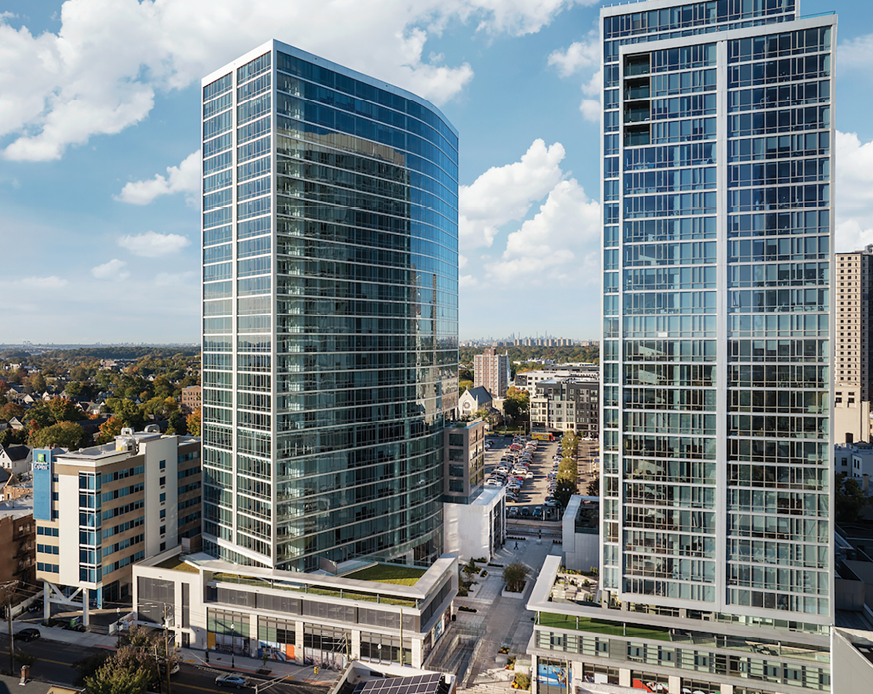
Clinton Park - New Rochelle, New York
Will you highlight RXR’s long and deep commitment to New York?
New York is more than RXR’s largest market – it’s the measure on which we choose other markets across the U.S. The firm argues that New York’s defining competitive advantage is not simply its size but its unmatched concentration of talent, capital, institutions and culture. In an economy increasingly driven by AI and knowledge work, RXR believes “people power” is more valuable than “compute power.” Cities succeed because talented people cluster together to innovate, collaborate and build businesses.
RXR has consistently invested during periods when others lost conviction. Examples include:
• Following 9/11, RXR’s leadership doubled down on New York office before ultimately selling its predecessor company for $6.5 billion.
• Following the Global Financial Crisis, RXR acquired 12 office properties during market dislocation.
• Following COVID, RXR invested approximately $8.9 billion into more than 18 million square feet of New York City Class A office assets and residential assets in “Regionally Significant Cities” across the U.S. while many investors avoided the sector.
The firm believes New York has repeatedly overcome crises because of its unique concentration of human capital and continues to view the city as America’s true global city.
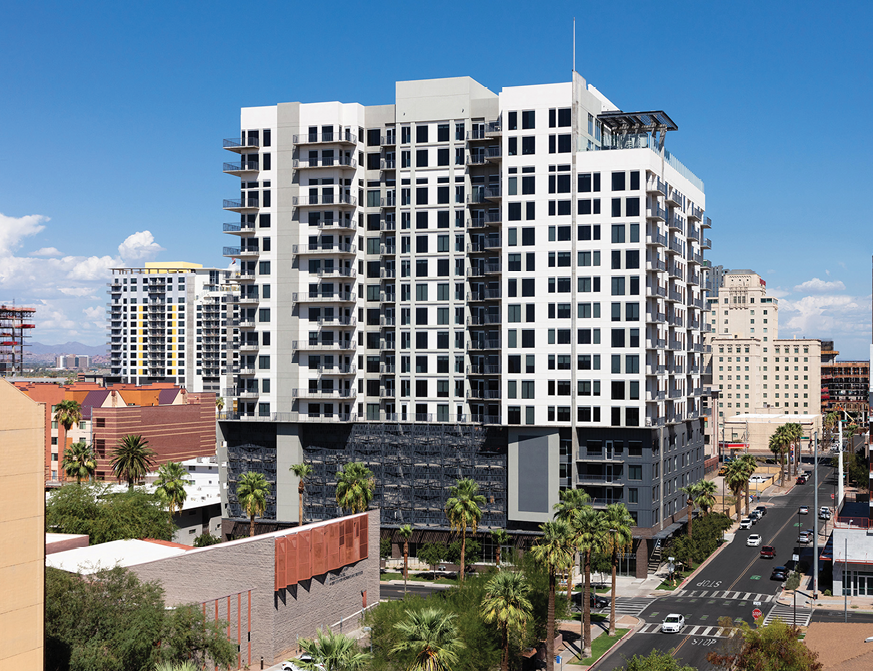
Sky - Phoenix, Arizona
What are your views on the current state of New York’s commercial real estate market?
RXR believes the office market has moved decisively beyond the post-COVID transition. The office fundamentals have largely recovered:
• Leasing reached nearly 43 million square feet in 2025 (leasing in the first half of 2026 has exceeded that pace)
• Availability declined for seven consecutive quarters.
• Absorption turned positive for the first time in more than a decade.
• Trophy buildings captured more than half of all leasing activity.
• Premium rents have exceeded $200 per square foot for the best assets.
At the same time, capital markets have begun to improve with debt capital flowing back into the office sector, while equity has been slower to recognize these improved fundamentals. Many institutional investors remain cautious, creating opportunities to acquire high-quality office buildings at meaningful discounts to replacement cost.
RXR sees today’s market as one where improving operating fundamentals coexist with attractive entry pricing – a combination the firm believes creates one of the strongest investment opportunities in years.
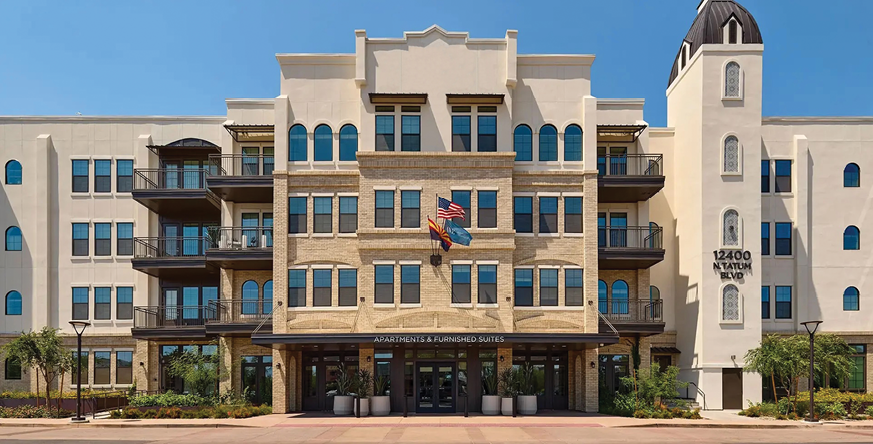
Paradise Valley - Phoenix, Arizona
Will you highlight RXR’s New York portfolio?
RXR highlights several flagship investments that demonstrate its conviction in New York. These include:
• 590 Madison Avenue – acquired for approximately $1.1 billion at roughly 50 percent of replacement cost.
• 1211 Avenue of the Americas – recapitalized through Project Gemini with approximately $1.4 billion of investment and refinancing.
• 175 Park Avenue – a transformative mixed-use development exceeding $7 billion, including 2.4 million square feet of office, hotel space, public open space and more than $550 million of transit improvements adjacent to Grand Central Terminal.
• JFK Terminal 6, Metropolitan Park, and other major public-private partnership developments.
Collectively, these projects demonstrate RXR’s strategy of investing in irreplaceable locations while leveraging its integrated operating platform.
How is AI impacting the way RXR operates?
RXR views AI as one of the most significant technological shifts since electricity or the internet and has formally adopted an AI-First operating model. Rather than treating AI as another software tool, RXR is embedding AI throughout the organization. The company has:
• Invested over $40 million in its AI/Digital Lab;
• Built a data lake containing more than 5 billion data points;
• Established an Executive AI Advisory Council;
• Launched enterprise AI training using ChatGPT and other AI tools;
• Developed proprietary AI agents such as REX, which assists investment underwriting and portfolio monitoring.
RXR describes AI operating through three reinforcing pathways:
1. Enterprise AI fluency through education.
2. Business pilots with measurable ROI.
3. Complete workflow redesign where AI augments decision-making across departments.
Importantly, AI is positioned as augmenting – not replacing – human judgment.
Will you provide an example of RXR’s focus on building communities rather than simply buildings?
RXR explicitly states that it creates “environments to be experienced, not simply assets to be managed.” Examples include:
Hospitality-driven operations: rather than focusing only on buildings, RXR emphasizes tenant experience through curated programming, community events, hospitality services and digital engagement platforms such as RXO Home.
Community investment: the company believes its success is inseparable from the strength of the communities where it operates, reflected in its philosophy: “Doing Good and Doing Well Means Doing Better.”
Public-private partnerships: projects such as JFK Terminal 6, Veridea Master Planned Community (Apex, Nort Carolina), and Downtown New Rochelle are designed not simply as developments but as long-term investments in infrastructure, housing, transportation and economic development.
As cities compete for residents and employers, what qualities will define the most successful urban centers?
RXR believes that successful cities will increasingly compete on human capital, not simply tax policy or real estate. The most successful cities will:
• Attract and retain highly skilled talent;
• Foster collaboration across industries;
• Maintain high quality of life;
• Address housing affordability;
• Invest in infrastructure;
• Create environments where ideas, capital and innovation intersect.
RXR believes New York remains uniquely positioned because of its unmatched ecosystem of finance, technology, healthcare, media, education and culture. Talent functions as infrastructure, creating a self-reinforcing cycle of innovation and economic growth. In the AI era, the company believes value will increasingly accrue to places where people gather to create ideas rather than where servers are located.