- Home
- Media Kit
- MediaJet
- Current Issue
- Past Issues
- Ad Specs-Submission
- Reprints (PDF)
- Photo Specifications (PDF)
- Contact Us
- PRIVACY POLICY
- TERMS OF USE
Loading

ONLINE

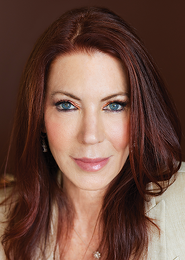
Joanne Stone
Reimagining The Delivery Of Women’s Healthcare
Editors’ Note
Joanne Stone is a well-known expert in the field of maternal-fetal medicine and previously served as the Maternal-Fetal Medicine Division Director and Fellowship Director for the Mount Sinai Health System. Currently, she serves as the Director of the Mount Sinai-Rainbow Clinic that provides enhanced prenatal care following stillbirth. Stone is a Past-President of the Society for Maternal-Fetal Medicine (SMFM) and serves on the Board for the Foundation for SMFM. She also serves on the Board of the Gottesfeld-Hohler Memorial Foundation, the PUSH for Empowered Pregnancy Advisory Board, and is Chair of the Sonography Community for the American Institute of Ultrasound in Medicine (AIUM). She previously served on the Executive Board of the American College of Obstetricians and Gynecologists (ACOG). Stone currently serves as the immediate Past-President for Mount Sinai Faculty Council. She also was the recipient of the prestigious Jacobi Medallion at Mount Sinai in 2022. Stone is an associate editor of the American Journal of Obstetrics & Gynecology and the co-author of the books Pregnancy for Dummies and The Pregnancy Bible. She has been named both a Castle Connolly/New York Magazine Top Doctor and a New York Times Magazine Super Doctor each year for more than a decade. Stone received her medical degree from Columbia University’s College of Physicians and Surgeons. She completed her residency and fellowship in maternal-fetal medicine at the Icahn School of Medicine at Mount Sinai, and continued as full-time faculty. She also holds a master’s degree in healthcare delivery and leadership from Icahn Mount Sinai.
Institution Brief
Mount Sinai (mountsinai.org) is consistently recognized among the world’s leading academic health systems. It includes a premier academic enterprise consisting of leading schools of medicine, graduate biomedical education, and nursing, along with 600 research and clinical labs. The Icahn School of Medicine at Mount Sinai ranks #11 nationally among medical schools for National Institutes of Health (NIH) funding, underscoring the strength of its academic enterprise and its leadership in scientific discovery, biomedical research, and innovation.
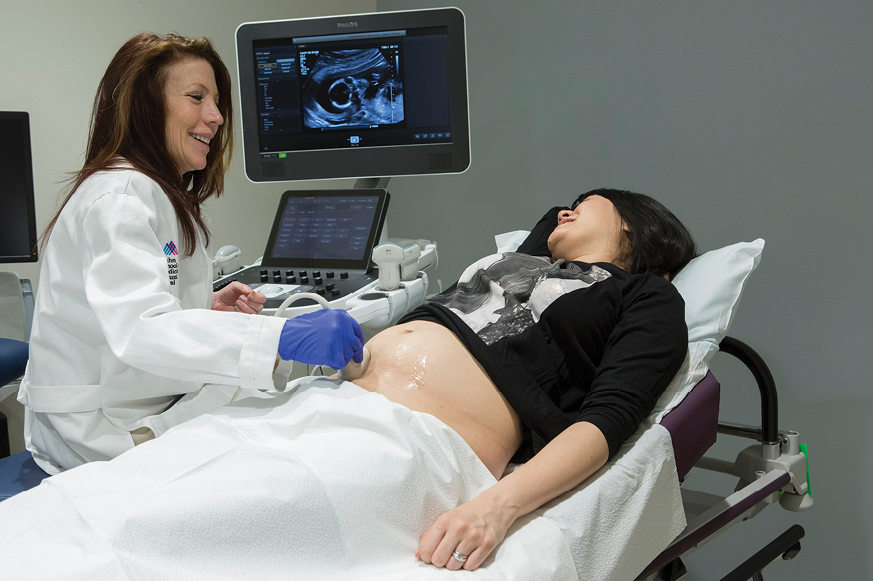
Joanne Stone provides specialized care to patients with high-risk births
Will you discuss your career journey?
I always knew I wanted to be a doctor and specifically care for women. Growing up, I was a huge advocate for women’s rights and equality. I remember as far back as 8th grade, my best friend and I went to the principal’s office to say it wasn’t fair that the girls took home economics and boys took shop class. We changed things and that year we took shop instead of home ec, and after that they changed it so both boys and girls took both classes. That advocacy continued throughout my career. In medical school, I simply fell in love with OB/GYN and pursued a career in the field and ultimately in maternal-fetal medicine. Working in an academic center has afforded me the ability to do research and teach medical students, residents, fellows, and junior faculty. I pursued leadership roles, becoming fellowship and division Director, and then Chair of the department. Outside Mount Sinai, I held leadership roles in the American College of Obstetricians and Gynecologists, American Institute of Ultrasound in Medicine, and Society for Maternal-Fetal Medicine.
Will you provide an overview of your role and areas of focus?
As a maternal-fetal medicine specialist, I take care of high-risk pregnancies – whether that is a woman with medical conditions that place her pregnancy at high risk, diagnosing fetal anomalies and treating certain fetal conditions, following patients with multiple gestations (twins or more), or more recently, directing the first Rainbow Clinic in the U.S. I am one of the physician leads for the Pregnancy After Loss US network and this has been a real passion of mine. As Chair of the Department of OB/GYN, I lead a team of faculty and staff highly focused on providing outstanding, evidence-based, and innovative patient care. We are on the forefront of research in the field, providing an outstanding educational environment for our medical students, residents, and fellows.
What are the keys to the strength and leadership of Mount Sinai Health System’s OB/GYN practice?
I think a key pillar of leadership is to focus on your strengths and allow others to be successful by focusing on their strengths. My nature is collaborative, and I prioritize working together to create a department focused on research, education, and innovative, exceptional patient care. In addition, I work with Health System physician and research leaders to create a strong ecosystem that elevates collaboration within Mount Sinai. Many have said this is the best experience they have had – holding workshops, arranging get-togethers for people who otherwise would never have built strong networks of friends and colleagues within the Health System. Thanks to our generous donors and their philanthropic commitment, we have launched the first-of-its-kind women’s center – the Rowan Center for Women’s Health and Wellness – and have created beautiful postpartum and antepartum floors, both major initiatives elevating the patient experience.
What was the vision for launching the Rowan Center for Women’s Health and Wellness?
Our vision was to reimagine the delivery of women’s healthcare to be integrative, innovative, and personalized so that every woman feels seen, heard, and empowered at every stage of life. We are on a mission to redefine the experience of women’s health by creating a seamless, empowering, and deeply personalized journey. Through an integrative approach we blend every aspect of a women’s health, from gynecologic and hormonal health to cardiometabolic wellness, mental well-being, sleep, and more into a cohesive, expert-led experience that supports every season of her life. We are forging the future of women’s health beyond the conventional to deliver proactive and transformative care.
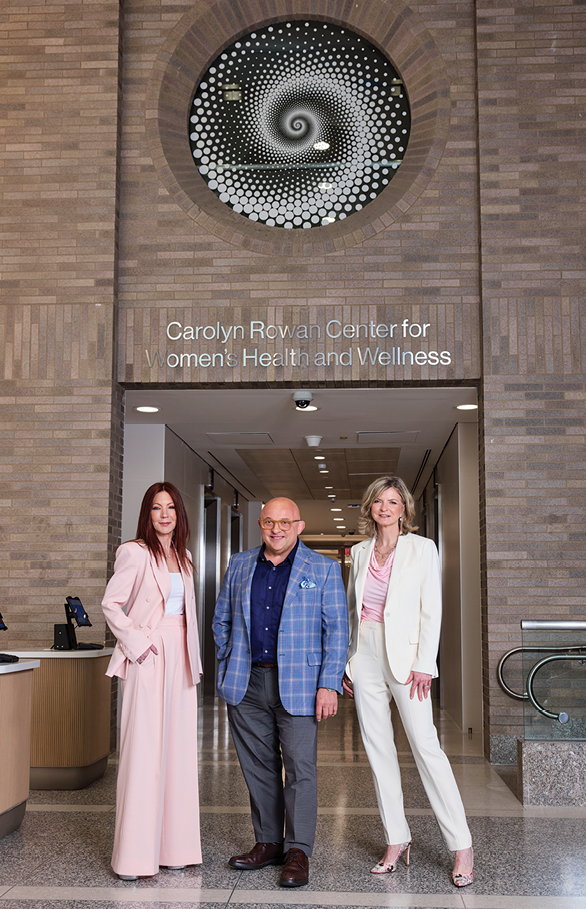
Rowan Center leadership team: Joanne Stone, MD, MS, Chair, Department of Obstetrics, Gynecology and Reproductive Science; Francesco Callipari, MD, Medical Director;
Anna Barbieri, MD, Clinical Strategy Leader
How will the Mount Sinai Rainbow Clinic approach care for expectant mothers who have experienced a prior loss?
The Mount Sinai Rainbow Clinic recognizes that pregnancy after loss is a very different pregnancy experience. Our goal is to provide highly personalized, compassionate care that addresses both the medical and emotional needs of expectant mothers and their families. A central part of the program is access. Patients have direct and immediate touchpoints with the clinical team whenever concerns arise, because we know that reassurance cannot always wait until the next scheduled appointment. Our physicians, nurses, sonographers, and other staff receive specific training in empathetic, trauma-informed communication, so that every interaction reflects an understanding of what it means to enter another pregnancy after experiencing a loss. We also integrate social work and emotional support into care rather than waiting for patients to ask for help. Importantly, we have developed a peer mentorship program, connecting patients who wish to participate with others who have experienced pregnancy after loss and understand the unique mixture of hope, fear, and uncertainty that can accompany it. Finally, the Rainbow Clinic has a strong research mission. We study the medical and psychosocial needs of these patients, evaluate which interventions truly improve their experience and outcomes, and use what we learn to continually improve care. Ultimately, our goal is to create a place where families feel medically safe, emotionally supported, and never alone as they navigate a pregnancy after loss.
There are tremendous advances happening in maternal-fetal medicine right now. What are some of them?
One of the most exciting areas is prenatal diagnosis. Ultrasound technology has become extraordinarily sophisticated, allowing us to evaluate fetal anatomy, growth, the placenta, and even aspects of fetal cardiac and neurologic development with remarkable detail. At the same time, advances in genetics and genomics – from cell-free DNA screening to increasingly sophisticated diagnostic testing and sequencing – are allowing us to identify genetic conditions earlier and more accurately than ever before. Another major focus is reducing maternal morbidity and mortality. We are getting better at identifying patients at risk for complications such as preeclampsia, hemorrhage, cardiovascular disease, and severe maternal morbidity before they become critically ill.
There is also much greater recognition that pregnancy can provide a window into a woman’s future health, so maternal-fetal medicine is increasingly focused not only on getting a mother safely through pregnancy, but also on improving her long-term cardiovascular and metabolic health. At Mount Sinai, we have some innovative and collaborative partnerships to improve outcomes for pregnant patients born with congenital heart disease or chronic conditions like Crohn’s disease or ulcerative colitis. Artificial intelligence (AI) is likely to accelerate many of these advances. AI has the potential to help us interpret ultrasound images, recognize patterns in very large amounts of clinical data, and identify patients at risk for complications earlier than we can today. Ultimately, I think AI will be most valuable not by replacing physicians, but by giving us better tools to make more individualized and timely decisions for our patients. And we’re increasingly moving from prenatal diagnosis toward prenatal treatment. For selected conditions, fetal therapy and fetal surgery can now change the course of disease before birth. Taken together, these advances are moving maternal-fetal medicine toward a future that is more predictive, precise, preventive, and personalized – for both mother and baby.
What advice do you offer to young people interested in pursuing a career in medicine?
My advice to young people interested in medicine is to pursue it if you are genuinely curious about science, interested in people, and motivated by the opportunity to make a difference in someone’s life. Medicine is demanding, and the training is long, but it is also an extraordinary privilege to be trusted with people’s health and to care for them during some of the most important and vulnerable moments of their lives. I would also tell them to stay curious and be open to where the journey takes you, and to pursue what you love. Medicine is changing incredibly rapidly. The careers that young physicians will have, with advances in genetics, technology, AI, and personalized medicine, may look very different from the careers we have today. Embrace those changes but never lose sight of the human connection at the center of medicine. Finally, find great mentors, work hard, and choose an area of medicine that you truly enjoy. If you love what you do, hard work is much easier and there are very few careers where you can continue learning throughout your life while having such a meaningful impact on others.