- Home
- Media Kit
- MediaJet
- Current Issue
- Past Issues
- Ad Specs-Submission
- Reprints (PDF)
- Photo Specifications (PDF)
- Contact Us
- PRIVACY POLICY
- TERMS OF USE
Loading

ONLINE


Christina Chiu
Delivering A High-Quality
Tenant Experience
Editors’ Note
Christina Chiu is the President of Empire State Realty Trust. Prior to her appointment as President, she served as Executive Vice President, Chief Financial Officer since May 2020 when she joined ESRT, and was then appointed to both Chief Operating Officer and Chief Financial Officer in December 2022. Chiu had an 18-year career at Morgan Stanley where she served as Managing Director and Chief Operating Officer of the Global Listed Real Assets Investing business, responsible for business development and capital raising efforts, institutional investor and consultant relationships, oversight of the day-to-day investing business, and execution of strategic initiatives. She began her career as a real estate investment banking analyst on both principal investing and strategic advisory transactions. Chiu is a member of the Real Estate Roundtable Real Estate Capital Policy Advisory Committee, Nareit Advisory Board of Governors, NYU Stern Real Estate Board of Advisors, vice chair of the ULI Technology & Real Estate Council, and a David Rockefeller Fellow of the Partnership for NYC. She also serves on the American Red Cross National Board of Governors. Chiu earned a BS degree in finance and accounting summa cum laude from NYU Stern School of Business.
Company Brief
Empire State Realty Trust, Inc. (esrtreit.com) is a NYC-focused REIT that owns and operates a portfolio of well-leased, top tier, modernized, amenitized, and well-located office, retail, and multifamily assets. ESRT’s flagship Empire State Building, the “World’s Most Famous Building,” features its iconic Observation Deck, ranked the #1 Top Attraction in the United States in Tripadvisor’s 2026 Travelers’ Choice Awards: Best of the Best Things to Do. The company is a recognized leader in energy efficiency and indoor environmental quality.

View of the Empire State Building
from the rooftop of 1333 Broadway
How do you describe ESRT’s culture and values?
ESRT’s culture is built around ownership, collaboration, and continuous learning. Our colleagues take initiative, collaborate across functions, and think beyond the boundaries of their own role. We also have a long-term ownership mindset, which shapes not only how we invest but also how we make decisions. We encourage thoughtful debate and different viewpoints because we believe better decisions come from challenging assumptions.
Finally, service and relationships are central to our culture. Every interaction with a tenant, colleague, investor, lender, or other stakeholder shapes their experience with ESRT. We believe those interactions build credibility and strengthen relationships over time.
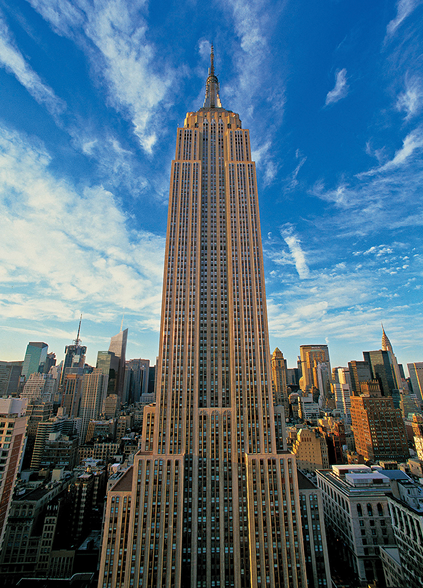
Empire State Building
What have been the keys to ESRT’s industry leadership?
I think one of our greatest strengths has been our proactive approach to positioning the company ahead of where the market is going, while maintaining discipline in how we allocate capital. Whether through portfolio-wide modernization, our leadership in sustainability and healthy buildings, or maintaining a well-positioned balance sheet, we have consistently taken a proactive, long-term approach while adapting thoughtfully as market conditions evolve.
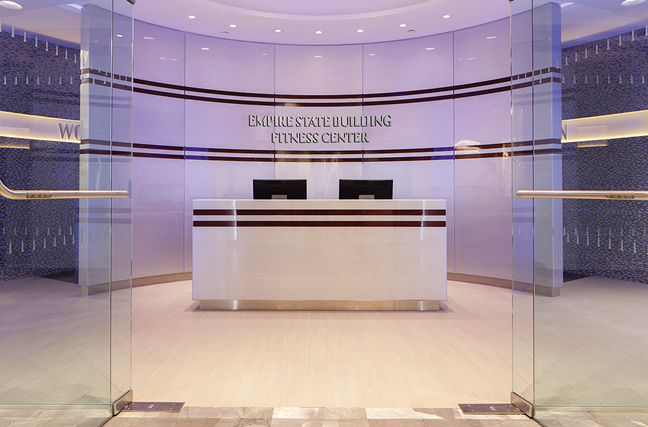
Empire State Building Fitness Center entrance
Our focused strategy has also been important. As a vertically integrated owner, operator, and manager of our portfolio, we know our assets and our markets exceptionally well. That enables us to maintain consistently high standards across the portfolio while making informed decisions and responding quickly as opportunities arise.
Just as importantly, we continue to invest in both our buildings and our tenant relationships. High-quality assets require ongoing investment, and tenants value owners who are financially strong, responsive, and committed to the long-term success of their properties.

Empire State Building Fitness Center
workout area
What differentiates ESRT’s office portfolio in today’s competitive market?
Today’s tenants want workplaces that help attract and retain talent, enhance productivity, and support their business and strategic objectives. Our portfolio delivers top-tier space within our market segment, providing tenants with a compelling value proposition. Over the past decade, we have invested more than $1 billion in modernization, amenities, sustainability, and healthy building initiatives.
Our properties are located in close proximity to mass transit and neighborhood amenities. Combined with our hands-on ownership and management approach and service orientation, we deliver a consistently high-quality tenant experience backed by a long-term commitment to both our buildings and our tenants.

Empire State Building Fitness Center locker room
How will AI impact the way ESRT operates?
We have focused on embracing AI as an increasingly valuable tool across every part of our business. It can improve efficiency, help our teams analyze information more quickly, automate routine processes, and allow our people to spend more time on higher-value work.
At the same time, we view AI as an enhancement to human judgment rather than a replacement for it. Our business remains fundamentally a relationship business, and judgment, experience, and relationships cannot be automated.
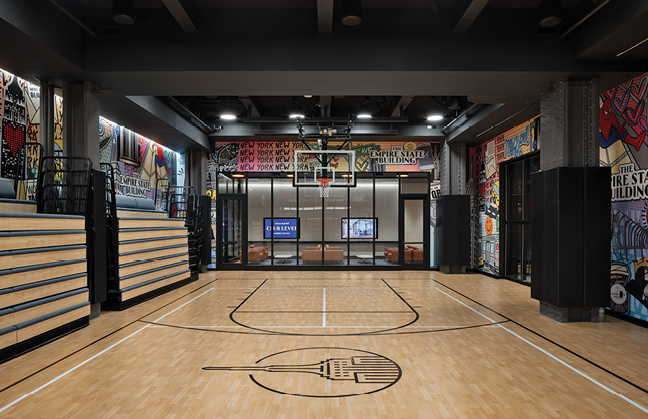
Basketball court at the Empire State Building
The organizations that benefit most from AI will be those that combine technology with strong people, sound judgment, emotional intelligence, intellectual curiosity, and appropriate governance. Responsible implementation also requires reliable data, thoughtful verification of outputs, and clear oversight.
AI also represents an opportunity well beyond our own operations. We believe it has the potential to enhance productivity, create jobs, attract companies, and generate new demand for office space, particularly in vibrant, innovation-driven markets like New York City.

The Empire Lounge at the Empire State Building
How ingrained is sustainability in Empire State Realty Trust’s DNA?
Sustainability has been part of ESRT’s strategy long before it became an industry focus. We invested early because we believed improving energy efficiency was simply good business and a critical component of the full modernization of the Empire State Building and our broader portfolio. It enhances asset performance, provides a financial payback through reduced operating costs and, where available, grants and other incentives, and creates long-term value for our tenants and shareholders.
Our long-term ownership model has also shaped our approach. Because we own and operate our buildings over the long term, we evaluate investments based on their full life-cycle value rather than short-term payback periods. Through detailed life-cycle analyses and energy modeling, we identify investments that improve building performance while generating measurable long-term returns.
Today, we continue to approach sustainability as measurable performance rather than marketing. Many of our tenants publish their own sustainability and corporate responsibility reports and increasingly look to their landlords as partners in achieving those objectives. Providing energy data and supporting initiatives around energy efficiency, waste reduction, and water conservation has become an important part of the value proposition we provide our tenants. We continue to evaluate new technologies and operating practices that improve efficiency, reduce emissions, and enhance the quality and performance of our portfolio.
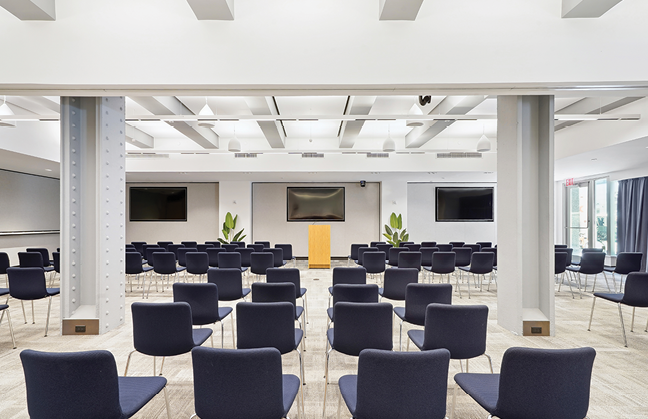
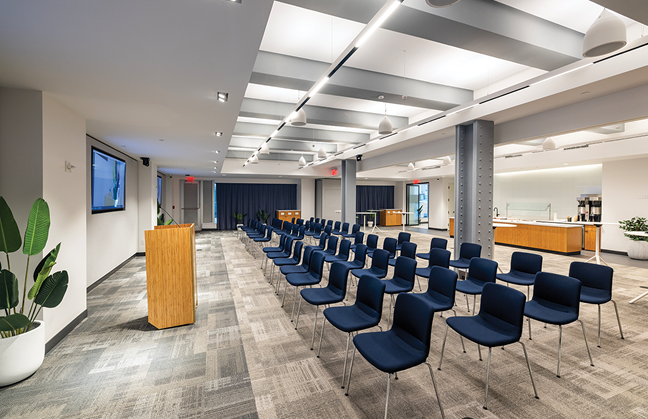
The Townhall at 1400 Broadway
How do you approach your leadership style?
I believe leadership begins with establishing and clearly communicating priorities. People make better decisions and contribute more effectively when they understand where the organization is headed, why those priorities matter, and how their work advances those objectives.
I also believe leadership is about creating an environment where people can do their best work. Listening is critical. We have talented people across every part of our organization, and the best decisions come from bringing together different perspectives, asking thoughtful questions, and fostering an environment where people feel comfortable challenging assumptions and contributing ideas. Leaders also benefit from honest feedback that helps them continue to improve and become more effective. I often say it is difficult to fix what you don’t know is an issue, which is why organizations need to be intentional about creating an environment where feedback can flow in every direction.

The rooftop lounge at 501 Seventh Avenue
(above and below)
Equally important is empowering people with the autonomy to help determine the best path forward. My role is to provide clear objectives and appropriate guardrails, not prescribe every step. I have found that people develop greater ownership and commitment when they help shape the solution rather than simply execute a prescribed plan.
Finally, accountability is essential. Individuals are accountable for execution, while leaders are responsible for providing the context, support, and feedback that help people succeed.
What trends do you believe will have the biggest impact on commercial real estate over the next decade?
The distinction between top-tier assets and the rest of the market – the “haves” and “have nots”– will continue to widen. Companies increasingly recognize that the workplace plays an important role in attracting and retaining talent, fostering collaboration, and reinforcing culture, which will continue to drive demand for top-tier space in exceptional locations.
Tenants are also placing greater emphasis on the quality of ownership, not just the quality of the asset. Financial strength, operational excellence, responsiveness, following through on commitments, and a willingness to continue investing in properties will become increasingly important differentiators.
The days of simply delivering a building and expecting tenants to come are behind us. Owners need to continually demonstrate their value proposition through the quality of their buildings, the level of service they provide, and their long-term commitment to investing in both their assets and their tenant relationships.
When you look to the future of commercial real estate, what excites you the most?
What excites me most is that our industry continues to evolve. The expectations of tenants continue to rise, technology creates new opportunities, and it is more important than ever for owners to differentiate themselves by continually enhancing the value proposition they provide through their product, approach, and service.
That constant evolution is what makes commercial real estate so interesting. Every market cycle creates new challenges, but also new opportunities to learn, adapt, and create value. I believe the owners who remain curious, continue investing, and never stop enhancing their value proposition will be the ones best positioned for the future.