- Home
- Media Kit
- MediaJet
- Current Issue
- Past Issues
- Ad Specs-Submission
- Reprints (PDF)
- Photo Specifications (PDF)
- Contact Us
- PRIVACY POLICY
- TERMS OF USE
Loading

ONLINE

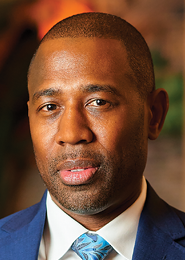
Prince A. Sanders
An Elegant Downtown Residence
Editors’ Note
Prince Sanders was named to his current post in 2025. He launched his hospitality career in 2002 with Starwood’s W Hotels, first in Chicago and then in New York. Sanders continued his career at The Ritz-Carlton Hotel, New York, where he served as Front of the House Manager and Assistant Rooms Executive. In 2010, Sanders assisted with employee trainings for the openings of The Waikiki Edition, The Istanbul Edition and The London Edition. Sanders is an avid writer who has published a series of children’s books.
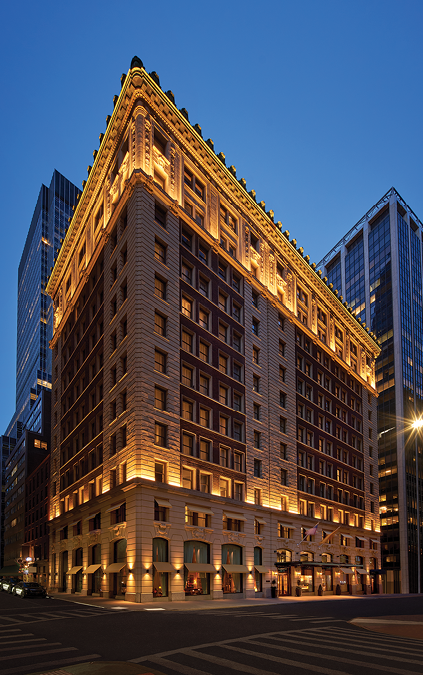
The Wall Street Hotel
Will you discuss your career journey?
My journey into hospitality was anything but conventional. My first career was as a professional ballet dancer. After a career-ending injury, I found myself having to reinvent my life much earlier than I expected. I entered hospitality thinking it might be temporary and discovered another way to use many of the same skills I had developed as a performer. Ballet taught me discipline, preparation, attention to detail and the understanding that making something appear effortless usually requires an extraordinary amount of work behind the scenes. Those lessons translated naturally into luxury hospitality.
I began my hotel career with W Hotels and went on to work with Ritz-Carlton and concept creation of EDITION hotels before becoming General Manager of Trump International Hotel & Tower New York. While at Park Lane New York, I had the opportunity to help lead the transformation and repositioning of an iconic New York property. Today, I lead The Wall Street Hotel, where I’m bringing together more than two decades of experience to help shape the next chapter of a younger independent luxury hotel.
Along the way, my perspective on leadership has also expanded beyond hotels. Becoming an entrepreneur and independent business owner gave me the opportunity to experience the business from a different side – where every decision is deeply connected to the customer, the team and the financial health of the operation. That experience changed the way I think about revenue, expenses, labor and accountability, and ultimately made me a more disciplined operator and a more complete business leader. My career has ultimately been a series of reinventions, but the common thread has remained remarkably consistent: people, performance and creating experiences for others.
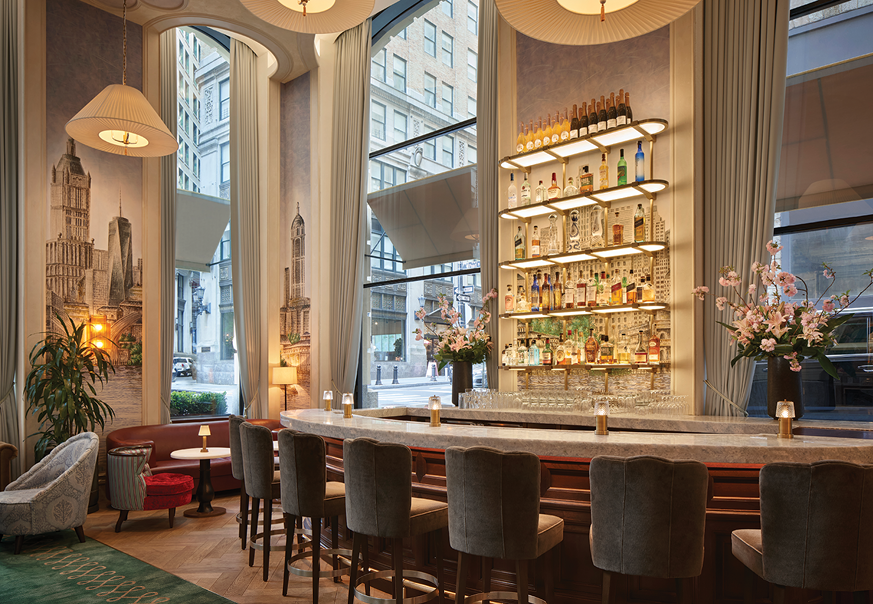
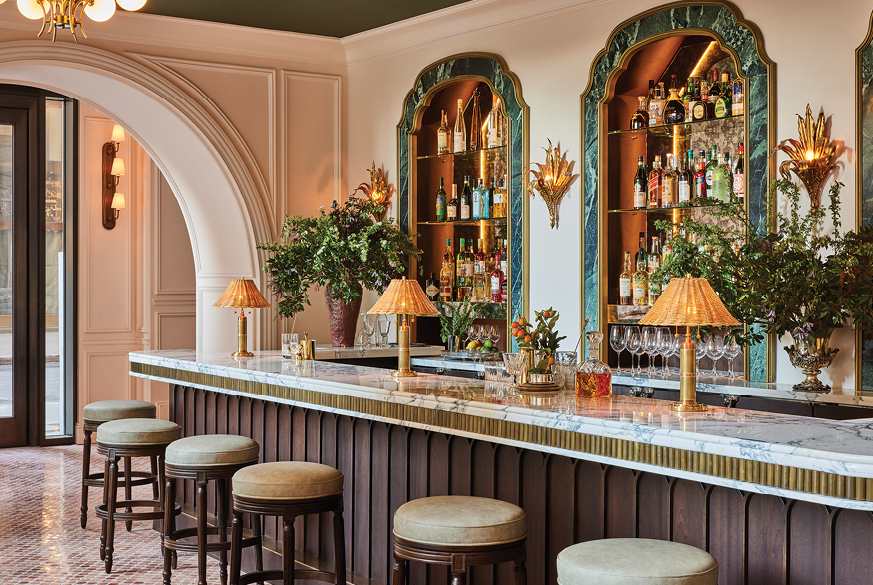
The Wall Street Hotel Lounge on Pearl bar
Will you provide an overview of The Wall Street Hotel, and how the property is positioned in the market?
The Wall Street Hotel is an independent luxury hotel in one of New York’s most historic and dynamic neighborhoods. When I arrived, I believed the physical product was already incredibly compelling. The opportunity was to make the service experience and market positioning equally compelling. We have been very deliberate about that. We’ve strengthened the traditional foundations of luxury hospitality through expanded concierge services, 24-hour in-room dining, enhanced turndown and arrival experiences, and significant investment in training and development. At the same time, we’ve created programming that gives the hotel personality and a stronger connection to the neighborhood, from jazz to live vinyl DJ sets and wellness experiences.
Ultimately, the true measure is whether the market validates the strategy. We’ve been admitted into some of the industry’s most prestigious luxury travel networks, including Virtuoso and Signature Travel Network, and our guests are validating the experience as well. Travel + Leisure’s 2026 World’s Best Awards ranked The Wall Street Hotel #3 among New York City hotels and #9 among city hotels in the continental United States. I look at those results as our progress report. The commercial performance tells us the market increasingly recognizes the value of the experience. Acceptance into these luxury networks tells us the industry recognizes our positioning. And the Travel + Leisure results tell us our guests are feeling the difference. I’m proud of that progress, but for me, it’s validation that we’re moving in the right direction, not that the work is finished.
Our goal isn’t to recreate uptown luxury downtown. Lower Manhattan has its own identity. Centuries of history, extraordinary architecture and cobblestone streets now coexist with a neighborhood experiencing tremendous growth in fashion, culture, dining and residential life. The Wall Street Hotel should reflect that duality. It is elegant but not overly formal, sophisticated but comfortable. I often describe it as an elegant downtown residence. Our ambition is to establish The Wall Street Hotel among New York’s most prominent hotels while remaining distinctly of its neighborhood.
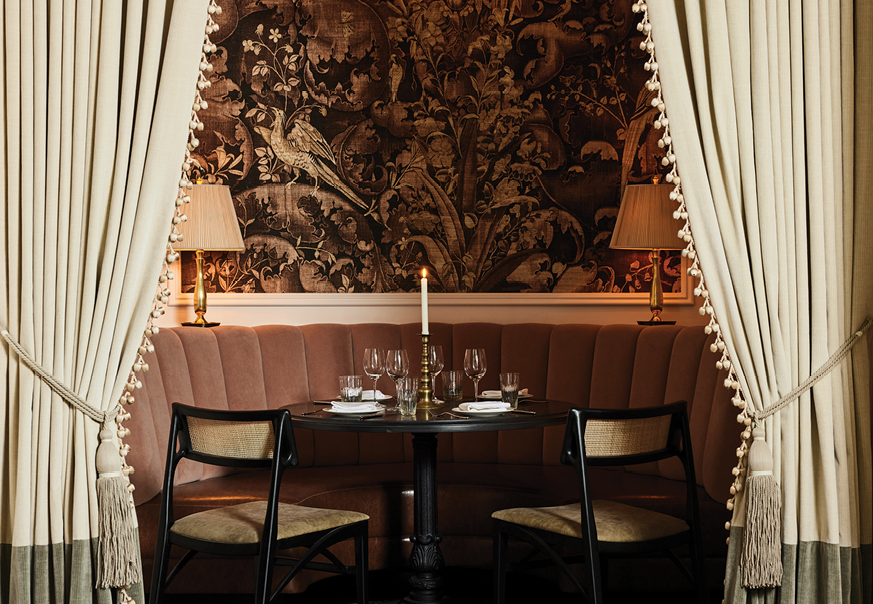
La Marchande restaurant (above and directly below)
How valuable is it to have such a strong suite product, and do you see this as a differentiator for the property?
In New York, space itself is a luxury. A great suite isn’t simply about square footage, views or beautiful design. The real opportunity is what that additional space allows us to create for the guest. A family can actually live together rather than simply occupying separate hotel rooms. An extended-stay guest can begin establishing routines. Someone traveling for business can entertain or work privately without their bedroom becoming their office. But I don’t believe square footage alone creates differentiation. The experience should become more personal as the opportunity grows. How do we prepare that suite for the particular family arriving? What have we learned about them before they walk through the door? What small details will make the space immediately feel like theirs rather than simply ours? The square footage creates the opportunity. What we do with it creates the luxury.
How has The Wall Street Hotel approached its restaurant/food and beverage offerings, and what are the keys to being successful in this part of the business?
New York is probably one of the most unforgiving cities in the world for hotel food and beverage because a hotel restaurant cannot depend on the people sleeping upstairs. New Yorkers have too many extraordinary choices. If the neighborhood doesn’t choose you, you haven’t finished the job. I had the extraordinary opportunity to work alongside Jean-Georges Vongerichten and his brother Philippe to see what happens when a world-class culinary identity becomes integral to the identity of a hotel. I now also bring the perspective of being an independent restaurant owner myself, which has made my understanding of food and beverage much more operational and personal. Beautiful design may get someone through the door once. Consistency, food, atmosphere, value and genuine hospitality are what brings them back.
At The Wall Street Hotel, we think about food and beverage as more than traditional meal periods. We want our spaces to have a life of their own and create reasons for both hotel guests and New Yorkers to return. Our Saturday jazz brunch and evening vinyl DJ sets at Lounge on Pearl are examples of how food, beverage, music and atmosphere can come together to create community. The real measure of success is when someone who lives or works downtown stops thinking of it as a hotel bar and starts thinking of it as one of their places.
Will you discuss The Wall Street Hotel’s focus on offering personalized service and a customized guest experience?
Standards create consistency, and consistency creates trust. But standards alone don’t create luxury. A standard can tell an associate how to deliver an amenity. It cannot tell them whether that particular guest needs the amenity, a restaurant reservation, ten minutes of conversation or simply to be left alone. That’s where intuition becomes incredibly important. Technology can help us remember preferences. It can tell us what pillow someone requested or what they ordered during their last stay. Technology cannot read the room. True personalization requires curiosity, observation and associates who have the confidence to act on what they notice.
I want our service to be precise without feeling scripted, familiar without becoming casual, and attentive without becoming intrusive. There should be tremendous discipline behind the experience, but the guest should primarily feel warmth. The best teams have a way of welcoming someone with the familiarity of an old friend while never forgetting the privilege and responsibility of serving them. That’s when personalization stops being a hotel standard and becomes a relationship.
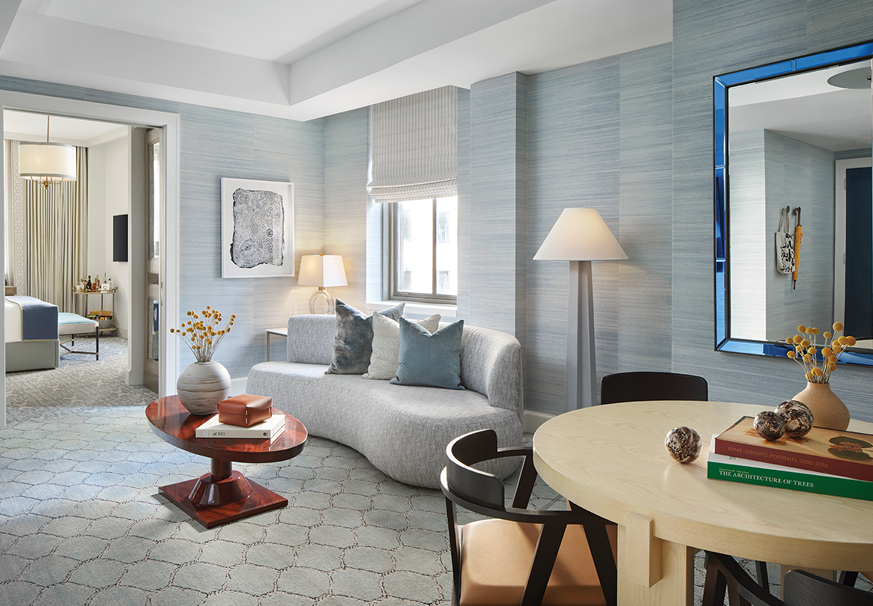
Great Pearl Suite living area
How do you define a true luxury hotel experience today?
Luxury is a feeling, not simply a rating. Beautiful design, exceptional linens, extraordinary food and wonderful amenities matter, but at this level they are expected. They are the foundation, not necessarily the differentiator. Today, I think one of the greatest luxuries is ease. Recognition without intrusion. Anticipation without assumption. Personalization without performance. It’s arriving somewhere and feeling that people understand why you’re there and what you need from them. It’s not having to repeat yourself. It’s having someone recognize when you want engagement and, equally important, when you want privacy. Luxury should feel personal without becoming casual.
Ultimately, I want a guest to stop thinking of The Wall Street Hotel as simply a hotel in New York and begin thinking of it as my hotel in New York – my place, my living room, my home when I’m in the city. That feeling can’t be manufactured by amenities alone. It comes from a team that genuinely knows and cares about you. The most sophisticated luxury isn’t always about adding more. Sometimes it’s about removing everything that gets in the way.
What advice do you offer to young people interested in building a career in the industry?
Get out of the office before you ever aspire to have one. Learn the entire hotel – not just the departments, but the people behind them. Spend time with Housekeeping and understand what it takes to prepare a room exceptionally well. Walk the building with Engineering before something breaks. Work a restaurant shift. Sit with Revenue and understand why a rate changes. Spend time with Sales and understand how relationships, positioning and strategy come together to bring the right business into the hotel. Read a P&L and connect those numbers back to what is actually happening in the hotel. Most importantly, get to know the associates doing the work every day. Ask questions, listen to them, and understand what makes their jobs easier or harder. Some of the most valuable things I’ve learned as a General Manager have come from associates who understood an operation or a guest experience far better than anyone sitting around the executive table.
I would also tell young people not to confuse ambition with impatience. Ambition is important. I’ve always been ambitious. But there is tremendous value in mastering something before rushing toward the next title. Some of the experiences that shaped my career most profoundly didn’t look like promotions when I accepted them. Find leaders who will tell you the truth, not simply people who tell you that you’re talented. A great mentor should challenge you, expose you to things you don’t yet understand and ultimately prepare you to sit in their chair – or perhaps one even bigger.
And never stop being curious. I’ve spent more than two decades in hospitality, and I’m still a student of the business. Experience should give you confidence, but it should never replace curiosity. The best leaders I know are still asking questions, still listening and still looking for ways to become better.