- Home
- Media Kit
- MediaJet
- Current Issue
- Past Issues
- Ad Specs-Submission
- Reprints (PDF)
- Photo Specifications (PDF)
- Contact Us
- PRIVACY POLICY
- TERMS OF USE
Loading

ONLINE

Mark Durliat
Handmade Experiences
Editors’ Note
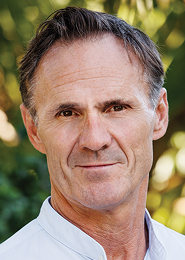
Mark Durliat is a leading figure in Turks and Caicos real estate development. With acclaimed projects such as Grace Bay Club and Rock House, he has played a key role in shaping the islands’ luxury landscape. Durliat offers expert insight into topics including the Turks and Caicos real estate boom and its advantages for U.S. buyers, residential real estate trends, the importance of privacy and exclusivity, and the process of developing premier properties like The Point.
The Point property pool
Will you discuss your career journey?
My career was shaped initially by a desire to work internationally after having worked part-time during college in a more traditional office environment. That world didn’t seem to be my calling, so I moved abroad after graduation in search of opportunity. Europe (France and Belgium) was my first stop, where I learned skills in real estate development alongside golfer Gary Player. After a few years, I moved to South Africa where I co-founded a firm in the development of residential hotels, an experience that I eventually took to the Turks & Caicos (TCI), where I co-founded Grace Bay Resorts. I have been here in TCI for the past two and a half decades.
My interest in hospitality came out of necessity while developing real estate in South Africa, as the company I co-founded chose early on to develop and manage the residential hotels we were developing as independent or non-branded properties. In this, I learned how to build a hospitality management team and a service philosophy, as well as adopting the hospitality mindset through working with talented hoteliers. Through these experiences, along with our active real estate construction and eventual sales of properties to third parties, I learned to harness the power of relationships and trust. I came to value good design and engineering, the importance of taking care of employees and creating quality workplaces, and ultimately, the joy of creating places to which people feel a genuine connection.
As CEO and co-founder of Grace Bay Resorts, I was fortunate to be able to contribute to the luxury landscape of Turks and Caicos, from acclaimed properties such as Grace Bay Club and Rock House to our newest residential development, The Point. Over the years, I’ve worked across different aspects of hospitality and real estate, which has given me a perspective that extends beyond simply operating a hotel or developing a property. In this, I have learned how thoughtful developments can create exceptional experiences for guests while also delivering long-term value for our real estate owners.
Rock House patio
How do you describe Grace Bay Resorts’ mission?
We started developing in the Turks & Caicos in the early 2000s, long before it was known in the luxury travel community. Our mission then was to be a true homegrown Turks & Caicos company which would assemble design, hospitality, and local talent to create world-class real estate on irreplaceable beachfront sites that would stand the test of time. We figured that if we could persuade enough people with an adventurous spirit, which this unknown destination required at the time, we would have a platform for growth.
Once we proved we could convince enough real estate investors to join us, we were then able to build a brand. That brand’s mission was simple: harness the real estate investment momentum to create world-class residential hotels, which would in turn create enormous career opportunities for Turks & Caicos Islanders and others in this growing tourism community. In the process, we sought to provide exceptional service that would rival competitors around the world.
In the end, we were able to achieve this by blending the Caribbean spirit that defined us with international hospitality experience from top professionals who joined us from brands like Aman, Four Seasons, the Ritz Carlton, and others. In the process, we created a brand that has been able to compete with all these names while remaining independent.
We have taken a long-term view of both hospitality and development. For us, success is not simply measured by selling residences or filling hotel rooms, but rather about creating properties that remain relevant, exceptionally operated, and valuable over time. That is why our hospitality platform is so integral to our residential business. We remain involved well beyond the sale, ensuring the service, experience, and quality of the property continue to meet the standards our owners and guests expect.
Will you provide an overview of Grace Bay Resorts’ portfolio?
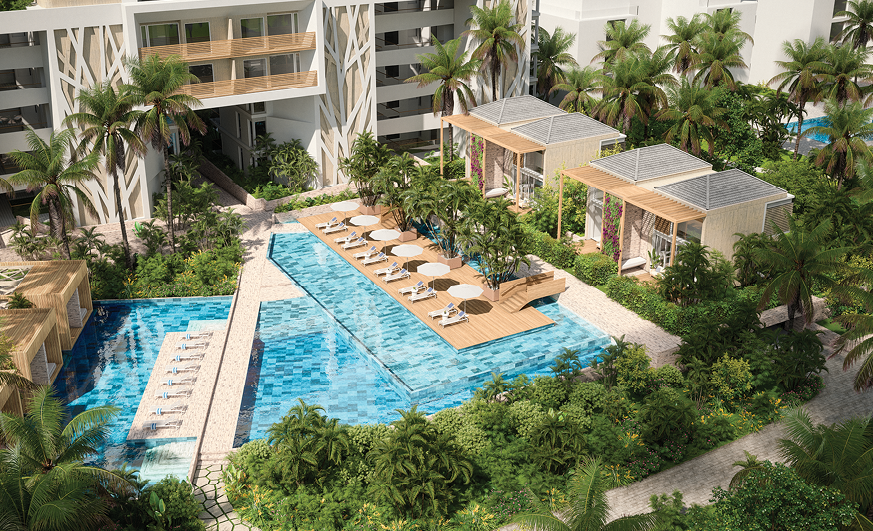
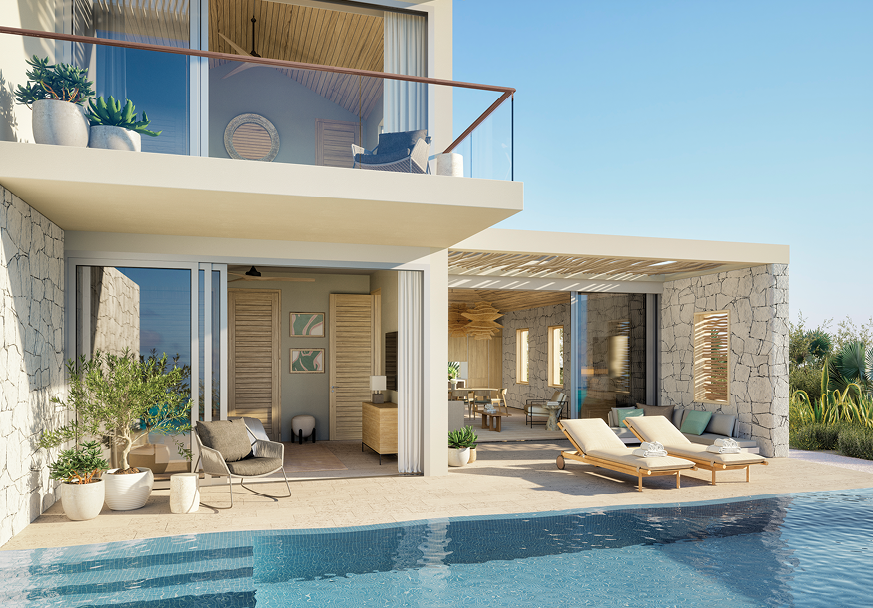
Our portfolio reflects how the luxury market in Turks & Caicos has evolved. Grace Bay Club helped establish the destination at the highest end of Caribbean hospitality and remains one of the most recognized properties in the region. Since then, we have deliberately expanded into projects with very different identities rather than replicating one successful formula. Rock House demonstrated that there was demand for a more intimate, design-driven experience beyond the traditional beachfront resort. South Bank pushed this further by combining world-class architecture, waterfront living, and a strong residential component to create an entirely new oceanfront and marina community of the highest caliber. The Point represents the next stage of our evolution. The development is located on one of the most sought-after locations on Grace Bay Beach and offers a distinctive low-density approach, with only 42 oceanfront condominiums and 16 private casitas. The property is nearly 80 percent sold. Later this year we will embark on the next phase of Rock House as this iconic property continues to expand.
The common denominator is not a particular architectural style or product type – it is our belief that luxury buyers increasingly want something distinctive. As more capital enters established resort markets, differentiation becomes more important, not less.
What was your vision for The Point?
To create a residential experience that feels connected to its setting while offering a level of design, privacy, and service that reflects the expectations of today’s luxury buyer. We wanted the project to feel elevated but not overdesigned, contemporary, and highly sophisticated. We have been able to achieve this by taking a lower-density, personalized approach, which contrasts to many of our competitors who are more focused on volume. Our collaboration with Young Huh Interior Design and SWA Architecture was central to that vision – two boutique and highly personalized design firms that help us craft unique properties.
The Point location is second to none, and its residences are truly world-class; oversized oceanfront balconies, expansive ceiling heights, kitchens by Italian brand Scavolini, Sub-Zero appliances, and breathtaking views. We are also developing private single-family casitas, which offer an even more intimate experience, boasting individual pools, outdoor showers, and private gardens surrounded by elegant landscaping.
The Point is about more than the physical product. It is designed to provide effortless access to the lifestyle and service that make Turks & Caicos so compelling, while offering a location positioned to maintain and grow in value over time.
What are your views on the convergence of luxury travel and residential living?
Buyers are becoming much more sophisticated about what sits behind the real estate, so we are moving beyond the traditional idea of the branded residence. A name on a building is not enough. They want to understand who operates it, what the service culture is, how the property will be maintained, what the food and beverage experience looks like, how ownership works when they are not in residence, and whether the destination itself has long-term relevance. That favors hospitality-led residential models because the relationship does not end when the residence closes. The operator has to continue delivering every day.
It also changes how we think about resorts. A successful resort is increasingly an ecosystem of hotel guests, homeowners, restaurants, wellness, recreation, and social experiences. When that ecosystem works, residences can create a more committed community around the property, while hospitality keeps the destination active and evolving. The opportunity is significant, but I also think the market will become more discerning. There will be a much greater distinction between residences that simply carry a luxury association and those that deliver a genuine hospitality experience.
What do you see as Turks & Caicos’ strengths as a luxury lifestyle destination?
Turks & Caicos has extraordinary natural beauty, but what differentiates it is the combination of accessibility, privacy, scarcity, and strong fundamentals. Foreigners can own land, the U.S. dollar is the currency, and there is excellent connectivity to major U.S. markets, all of which are factors when someone is making a significant second-home investment.
As the destination grows, the priority needs to be protecting what made it desirable in the first place. The strongest luxury destinations will not be those that build the most, but those that maintain a high bar for development while preserving their sense of place.
What does luxury mean to you in today’s hospitality landscape?
Luxury has shifted from more to better. Sophisticated travelers already expect exceptional design and amenities. What now increasingly differentiates a property is how intelligently and seamlessly it delivers the experience. Time, privacy, recognition, and ease have become some of the most valuable luxuries. The best hospitality removes friction, anticipates needs, and creates an experience that feels specific to its destination rather than following a formula.
What advice do you offer to young people interested in pursuing a career in the industry?
I would encourage patience and to believe that small steps add up. For me, I was a dishwasher at IHOP pancake house at age 17, which to most might seem like a dead-end job. But my family encouraged me differently. Thus, my goal became all about gradual steps: get promoted to bus boy, then to waiter, then something bigger. I kept at it, and in the process, I learned about people – and that doing the less glamorous work builds pride and respect from your colleagues, and that grit is essential. Don’t be put off by the first few steps. Instead, learn from others, listen, and set a goal.
Maybe the goal is General Manager or Director of Food & Beverage, or maybe even a real estate developer or a resort chef. Whatever it is, remember that if you see someone doing it, it is very likely that they had a journey paved with less glamorous jobs to get there. With this in mind, be willing to do the same, and in time, you will get there.
If you want to succeed in hospitality, you need to genuinely like people and like providing service. If you want to be a developer, remember that the first thing you need to do is build trust with those who might invest with you. Then work hard, take time to learn about as much as you can – even the things you think you don’t need to know – and put those skills to work. Smart people will see and respect hard work, and if you show passion in what you are doing, they will come along with you.