- Home
- Media Kit
- MediaJet
- Current Issue
- Past Issues
- Ad Specs-Submission
- Reprints (PDF)
- Photo Specifications (PDF)
- Contact Us
- PRIVACY POLICY
- TERMS OF USE
Loading

ONLINE


David Wanek
No Compromises
Editors’ Note
David Wanek is President and Chief Executive Officer of Western Technology Investment (WTI), a 46-year-old firm widely recognized as a pioneer in venture debt financing for emerging technology companies. Over the past four decades, WTI has invested more than $7.5 billion in over 1,500 companies. In 2018, Wanek and his two partners founded Walla Walla Land Company to acquire and farm land across the region. Today, the company stewards more than 440 acres, including over 220 acres in The Rocks District, while maintaining full control of its farming operations. Cimento (cimentowines.com) is the estate expression of that vision, crafting single-vineyard wines from 100 percent estate-grown fruit in The Rocks District of the Milton-Freewater AVA, which lies within the broader Walla Walla Valley AVA. The Rocks District is regarded as one of the most distinctive AVAs in the United States, defined by a singular terroir shaped by ancient glacial floods that left deep layers of basalt cobblestones across the landscape. This ancient riverbed creates ideal conditions for wines of remarkable character and a sense of place recognized around the world. Wanek grew up in rural Nebraska and later attended college in Kansas and graduate school in New Mexico before settling in the San Francisco Bay Area, which he has called home for the past 28 years.
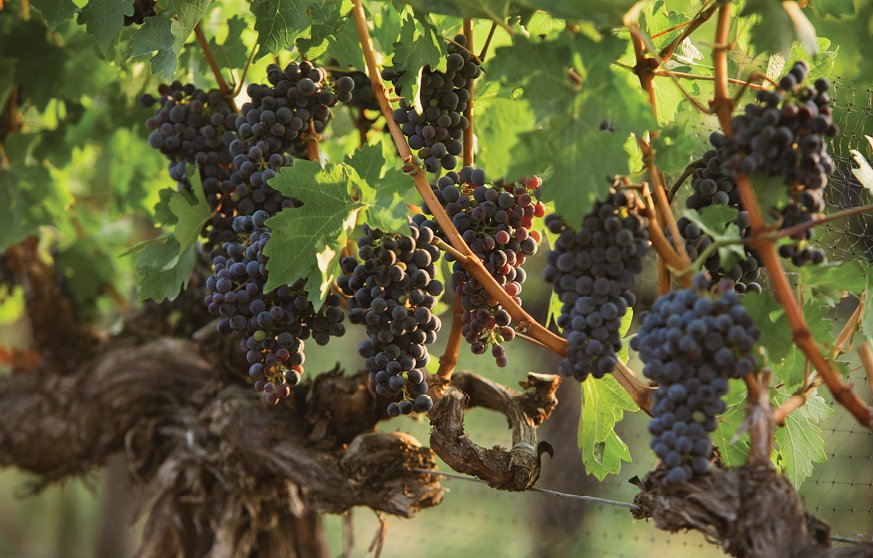
Cimento San Tommasco Cabernet vine
Will you discuss your career journey?
My career journey began with two different jobs during two different stints in graduate business school and law school, respectively. During business school, I worked at Los Alamos National Laboratory. The lab created a program to have business school students work with lab scientists who had discovered new and novel technologies that could potentially be spun out into startups or used by industry. Our job as students was to hone the idea, find new applications, and help to write business plans for these nascent technology businesses.
During law school a few years later, I worked at a newly (at the time) public company called Verisign. I helped their marketing and sales team come up with pricing strategies for new products as web-based e-commerce began to take off.
Both of these jobs were entrepreneurial and involved technology. I have always been interested in new technologies and new business formation, so working at the Lab and at Verisign really helped hone my skills and narrow the focus of what I wanted to do in my career.
While at Verisign, I got introduced to one of the founders of a private credit firm called Western Technology Investment (WTI). WTI was a pioneer in lending to startups in Silicon Valley outside of the regulatory constraints of traditional banking rules and had a very impressive portfolio. They offered me a job during the last two years of law school which I accepted. Working at WTI gave me direct access to a plethora of new startups across all industries and stages.
After law school and passing the bar exam, I went to work at WTI full time. I’ve now been at the firm for 26 years, have been a partner for more than 20 of those years, and have now been CEO for five years. It’s been a very rewarding experience to have a front row seat to multiple technology and business cycles as well as a partner to hundreds of companies during that time.
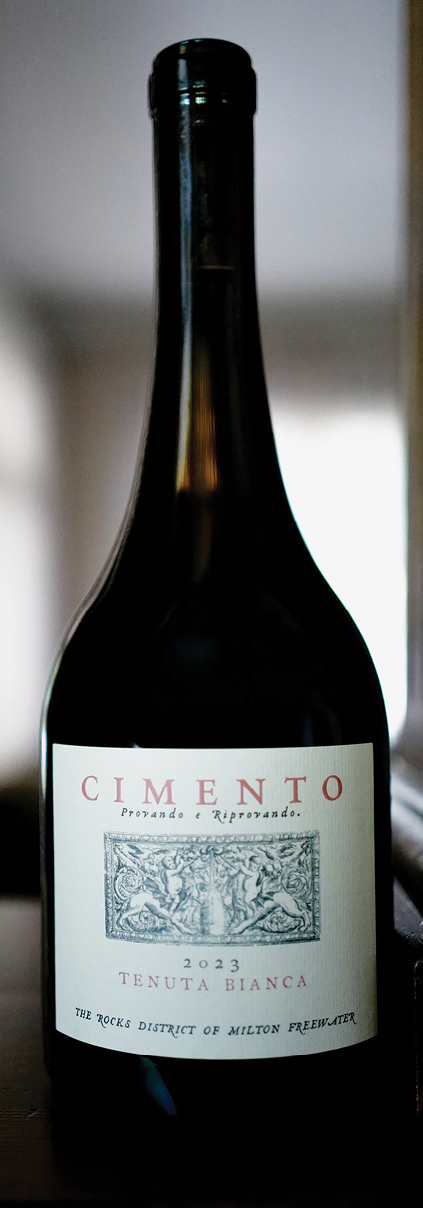
Cimento Tenuta Bianca
What led to the creation of Cimento?
Cimento was started to showcase the uniqueness and capabilities of The Rocks District of Milton-Freewater AVA. Our land and farming business, Walla Walla Land Company, owns three estate vineyards in the Rocks, and Cimento bottles wine from all three sites. We want to broaden the aperture of exposure to the Rocks for consumers and collectors of fine wine. Our belief is that these wines can have a seat at the table with their global benchmark varietals. The uniqueness of terroir that exists in The Rocks gives the wines an unmistakable sense of place which is a characteristic found in the best wines in the world.
What have been the keys to Cimento’s strength and leadership in the industry?
Our motto is “no compromises.” Everything we do is centered around a north star of quality. Each decision comes down to what will make a better wine. We don’t use chemical pesticides or herbicides. We don’t cut corners on farming or in the wine making process. It’s truly an artisanal, by hand approach. In a time of extreme weather pressure due to climate change and economic pressure due to inflation and changing consumption patterns, focusing on quality at all costs is very important and difficult.
Will you provide an overview of Cimento’s new releases?
Cimento was born in 2021, but our first release wasn’t until 2025. That inaugural release was a 2021 Syrah and Cabernet Sauvignon. Going forward, we will have two releases per year for Cimento. Our Spring release is a white wine from the 2023 vintage which we call Tenuta Bianca. It’s a southern Rhone blend of five different grapes and it comes from our Orselli Estate. It’s paired in the release with a 2023 Grenache which is also from Orselli Vineyard. In the Fall, we will release our next 2022 Syrah and 2022 Cabernet.
Will you discuss Cimento’s commitment to sustainability?
Walla Walla Land Company and Cimento are both focused on sustainability. Sustainability in how we farm and operate the winery, and in how we run our business. In the vineyard, climate change is making volatility the new normal. We believe the most effective way to combat climate change is to have healthy plants. Healthy plants are best able to deal with extreme heat, cold, wind, rain, drought, hail, pest and disease pressure. So, every decision in the field is made around what’s best for the plant. Healthy plants also make the best wine. Most agriculture in the world still uses chemical pesticides and herbicides. It’s ten times more expensive to not use them, and we are committed to that approach.
If any business is going to survive, it’s got to have a sustainable business model. That means you’ve got to have a product that people want and you’ve got to be able to continue to demonstrate to customers that they should support your business. There is more great wine in the world than ever before. Consumers have access to nearly any wine from any region with a click of a button. This puts enormous pressure on producers to differentiate their products and their business. We don’t take customers for granted. Too many producers in our industry have treated customers as if they’re fungible. I’ve seen it firsthand as a collector and consumer. We have very small production (less than 1,000 cases), engage directly with our customers, and think of them as partners in this journey. Getting to know them individually and personally is paramount to how we engage the consumer. Authenticity matters and it takes time which is an investment they’re making with us and vice versa.
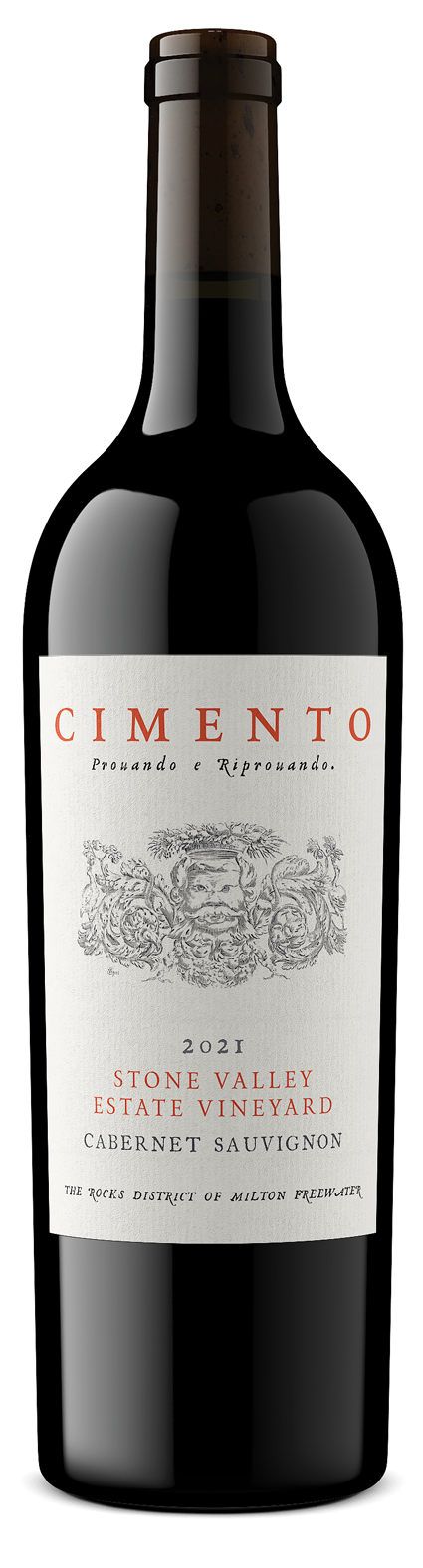
Stone Valley Estate Vineyard
Cabernet Sauvignon
What has made the wine industry so special for you?
I’m a believer that wine people are the best people. What I mean by that is that wine people are often curious, engaging, and willing to share. Those are special human traits that make interacting with one another such a pleasure. Wine makes social interactions better whether it be alongside a meal or at a tasting table. Each bottle is a time capsule that takes its buyer on a journey to a spot on the earth and place in time. Sharing that experience, and the conversations and friendships that result, is truly special.
With all that Cimento has achieved, are you able to enjoy the process and take moments to reflect on Cimento’s success?
We are still closer to the starting line versus the finish line of our journey as a grower and producer. One of our mentor farmers likes to say that every vintage gives you something you’ve never seen before. In that way this business always keeps you on your toes. Rather than lament that reality we embrace it. We relish the fact that we are always learning and trying to improve every facet of the process of growing grapes and making wine. The name Cimento in Italian means “experiment.” For us, experimentation is how we get better and continue to prove ourselves.