- Home
- Media Kit
- MediaJet
- Current Issue
- Past Issues
- Ad Specs-Submission
- Reprints (PDF)
- Photo Specifications (PDF)
- Contact Us
- PRIVACY POLICY
- TERMS OF USE
Loading

ONLINE

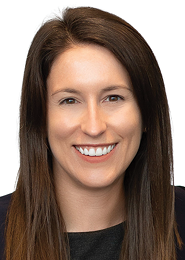
Tracy Nowski
Philanthropic Strategy
Editors’ Note
Tracy Nowski leads McKinsey’s philanthropy work globally. She works with private and corporate foundations, high-net-worth individuals, philanthropic limited liability companies, and multidonor collaboratives, helping them become more innovative, strategic, and effective so they can magnify social impact. Her work spans from the earliest ideation and strategy phases for new philanthropic initiatives to evolving the operating models and organizational designs of existing philanthropies to serve their missions better. Nowski also has deep expertise in issues pertaining to gender equality and leads the firm’s projects related to women and girls. She works with leaders to address the strategic, operational, and organizational challenges that face the not for profits, nongovernmental organizations, and multilateral organizations focused on women’s economic empowerment and women’s health. An attorney by training, Nowski worked in legal and advocacy roles in the women’s-rights space before joining McKinsey. For seven years, she served on the board of directors of Strong Women, Strong Girls, a national, not-for-profit mentoring program for at-risk girls. Nowski earned a BA degree in studies of women, gender, and sexuality from Harvard University and a JD from Yale Law School.
Firm Brief
McKinsey & Company (mckinsey.com) is a global management consulting firm committed to helping organizations accelerate sustainable and inclusive growth. It works with clients across the private, public, and social sectors to solve complex problems and create positive change for all its stakeholders. The firm combines bold strategies and transformative technologies to help organizations innovate more sustainably, achieve lasting gains in performance, and build workforces that will thrive for this generation and the next.
Will you discuss your career journey?
I began my journey with McKinsey 20 years ago. I started in 2006 as a member of McKinsey’s first-ever class of summer business analysts, and joined the Atlanta office. It was during my interviews that the seed for my future career was planted. I was a women’s studies major from Harvard, and one of my interviewers looked at my resume and asked, “So, why do you want to work here?” I told him that I understood that McKinsey worked on solving the world’s hardest problems, and I believed gender inequality was one of them. He shared that McKinsey is an entrepreneurial place, and if I wanted to build something, I could use the full weight of the firm’s resources to work on important problems in society – so if I did join McKinsey, perhaps I could build a practice focused on advancing the status of women and girls. And that’s what I did.
I joined full-time in 2007, and then transferred to the Washington, DC office in 2009 to focus on social sector work. I left for a time to get my JD at Yale Law School, focusing on women’s rights law, and policy. I experimented with different modes of legal practice – first in litigation at the ACLU Women’s Rights Project, and then in policy and advocacy at Planned Parenthood. I returned to McKinsey in the fall of 2013 and got involved with an incredible group of colleagues working to scale McKinsey’s Social Sector Practice. I was elected partner in 2019 and senior partner in 2026. I founded and have led our women and girls service line for the last eight years, focusing on women’s health and economic empowerment. I also lead our philanthropy practice for North America and, more recently, globally.
“The biggest unlock we provide for our clients is helping them to sufficiently concentrate their resources, staff time, and energy to reach tipping points of impact.”
Will you provide an overview of your role and areas of focus?
My work solely focuses on foundations and nonprofits, with about 60 percent of my time dedicated to projects focused on issues of gender equality. The other 40 percent of my work with foundations is wide-ranging, touching everything from economic mobility and workforce development to K-12 education, public health, and climate and nature. I collaborate with colleagues who have deep technical expertise in these areas, while I bring my knowledge of how to run a foundation effectively and develop sound grant-making strategies.
In addition to my client work, I lead our research in the philanthropy sector. I also founded and chair our Philanthropy CEO Roundtable, which brings together foundation CEOs for closed-door, small-group discussions where they can have a safe space to tackle some of their most pressing challenges in partnership with their peers.
Will you highlight McKinsey’s work in the philanthropy sector?
Our work in the philanthropy sector can be broken down into three core areas: strategy, organizational work, and operational work. The lion’s share of what we do is philanthropic strategy. This can be at the “enterprise” level, where we might help a foundation with its next 10-year plan or assist a family in designing a foundation from scratch. We also do deep, technical, focus-area strategies, such as developing a nature conservation strategy or a contraceptive access strategy.
For organizational work, we advise on governance issues, which can be particularly complex for families, as well as on organizational design, talent strategy, and agility transformations to help foundations navigate a constantly changing world.
Operationally, we help foundations with dynamic financial planning, strengthening their grantmaking processes, and leveraging AI to rewire their workflows and improve their efficiency and impact.
“I fundamentally believe that philanthropy is a rare and precious part of the capital stack because it is uniquely positioned to take risks, absorb failure, and move quickly in pursuit of breakthrough solutions.”
What do you advise clients on the ways to maximize the impact of their philanthropic resources?
While there is so much that can be said on this topic, if I had to offer one piece of advice, it would be to focus. The need in the world is sadly infinite, and there is a constant gravitational pull to expand into new topics or geographies. The biggest unlock we provide for our clients is helping them to sufficiently concentrate their resources, staff time, and energy to reach tipping points of impact. It is difficult to deliver real change and results when resources are spread thinly across dozens of topic areas. The key is to figure out where you can make a distinctive contribution and put the weight of your resources there.
What role do you feel philanthropy plays as a critical systematic lever to drive change at scale?
I fundamentally believe that philanthropy is a rare and precious part of the capital stack because it is uniquely positioned to take risks, absorb failure, and move quickly in pursuit of breakthrough solutions. Unlike public sector funding or return-seeking private investment, philanthropy can act as truly risk-loving, loss-leading capital – deploying resources in fast, surgical ways to test innovations, experiment with new approaches, and solve problems in ways others cannot. When put to its highest and best use, philanthropy serves as a catalyst for change at scale: it can fund early experimentation, generate proof points, and unlock solutions that can later be expanded through larger public or private investment once their effectiveness is demonstrated.
What have been the keys to McKinsey’s industry leadership?
From the perspective of our Social Sector Practice, much of our impact comes from our ability to bring together world-class expertise from across geographies, sectors, and functional disciplines. When a client faces a challenge – for example, strengthening a vaccine supply chain – we can quickly convene leading global experts in pharmaceutical distribution alongside our public health specialists to develop practical, high-impact solutions. What distinguishes our work is the ability to seamlessly integrate expertise across our broad network of sector and functional practices, drawing on colleagues from more than 150 cities across 65 countries. Whether a foundation is tackling questions related to higher education, economic development, climate change, or behavioral health, we can mobilize teams of specialists who have dedicated their careers to these issues and are ready to support philanthropic clients with deep, relevant expertise.
“What distinguishes our work is the ability to seamlessly integrate expertise across our broad network of sector and functional practices, drawing on colleagues from more than 150 cities across 65 countries.”
What advice do you offer young people beginning their careers?
One of the most significant learnings for me over the past two decades has been that sponsors and mentors are everything. As you begin your career, you will start to encounter people – your managers, peers, senior leaders you admire – who could become part of your support network. The more you invest in that network, the more you will get out of it. These relationships are not just about keeping in touch; it’s about mutually investing in each other’s success. These are the people who will be your neutral sounding boards. They are where opportunities come from, and they will be there to help you navigate pivot points and tough choices throughout your career, regardless of whether you’re still working together or even in the same field.