- Home
- Media Kit
- MediaJet
- Current Issue
- Past Issues
- Ad Specs-Submission
- Reprints (PDF)
- Photo Specifications (PDF)
- Contact Us
- PRIVACY POLICY
- TERMS OF USE
Loading

ONLINE

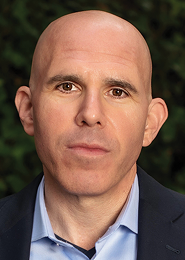
Scott Rechler
The Power Of
Public-Private Partnerships
Editors’ Note
Scott Rechler is the Chief Executive Officer and Chairman of RXR, a fully integrated real estate and investment manager headquartered in New York. Before launching RXR, Rechler served as the Chair and Chief Executive Officer of Reckson Associates Realty Corp., which he helped take public in 1995. RXR was founded in 2007, the day after he and his partners sold Reckson Associates for over $6 billion, generating a 700 percent return to Reckson’s investors. Since its founding, RXR has raised over $10 billion of private equity, building an over 450-person, fully integrated team of professionals with expertise in operations, construction and development, investment management, and more. In December 2021, Rechler was elected to a three-year term on the Board of the Federal Reserve Bank of New York and was recently nominated for an additional three-year term. From 2011 to 2016, he served as Vice Chairman of the Board for the Port Authority of New York & New Jersey. He served on the Metropolitan Transportation Authority (MTA) Board from 2017 to 2019. From 2017 to 2023, Rechler served as the Chair of the Regional Plan Association. He currently serves as trustee and Vice Chair of the National September 11th Memorial and Museum and has recently been elected to the Board of Trustees of New York University (NYU). Rechler is actively engaged with several of the region’s top healthcare systems, serving as Chair of the Feinstein Institutes for Medical Research, a member of the Board at Northwell Health, and the Board of the Hospital for Special Surgery (HSS). He is also an active board member of the Real Estate Roundtable and the Real Estate Board of New York.
Company Brief
Headquartered in New York, RXR (rxr.com) is a fully integrated real estate company and investment manager that owns and manages over 30.5 million square feet of commercial properties and more than 9,800 multi-family units. RXR specializes in public-private partnerships and master developments, including the $4 billion development of Terminal 6 at JFK International Airport and a 1,100-acre, $3 billion mixed-use development in Raleigh, North Carolina. Additionally, RXR has a multi-billion-dollar credit platform that leverages its real estate expertise to originate and acquire commercial real estate loans. RXR’s geographical footprint includes the New York metropolitan region and many of the nation’s fastest-growing markets, including Phoenix, Denver, Dallas, Raleigh, and Tampa.
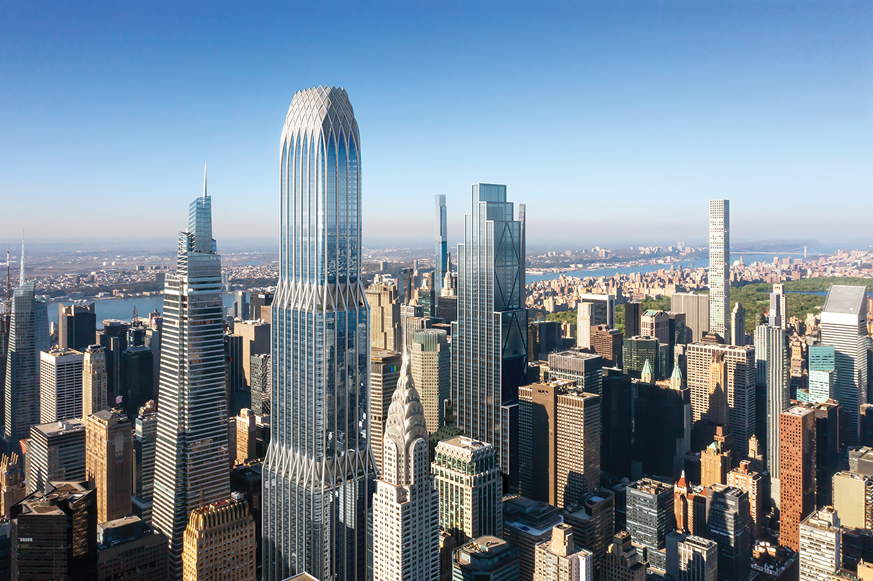
Rendering of 175 Park Avenue
How do you define RXR’s mission?
At its core, RXR’s mission is to create durable value not asset by asset, but through platforms that can perform across cycles, adapt to change, and serve the people and communities connected to them. We have always believed that real estate is not simply about buildings. It is about the role those buildings play in enabling economic activity, fostering human connection, and shaping the places where people live and work.
That perspective guides how we operate. We think in terms of long-term outcomes rather than short-term transactions. We invest in capabilities across development, operations, capital markets, and technology to respond to both cyclical volatility and structural change. We remain deeply focused on our customers, whether they are tenants, residents, capital partners, or the communities in which we operate.
There is also a broader responsibility embedded in what we do. Our operational ethos, “Doing Good and Doing Well means Doing Better,” reflects the belief that our success is inseparable from the success of the communities where we operate.
I believe we are operating in what I describe as the “Age of Disruption,” a period defined by the speed and scale of technological, economic, and societal change. It is driven by the convergence of digitalization, deglobalization, and deregulation, alongside rapid advances in artificial intelligence that are compressing the distance between idea and execution. That combination is reshaping how people live, work, and make decisions at a pace that legacy playbooks cannot match. It requires a different level of adaptability, discipline, and awareness.
.png)
Rendering of Veridea in Apex, North Carolina
How does RXR create a “sense of place” in large-scale projects?
A project is not enough just to be functional or well-designed; it must also feel intuitive, connected, and purposeful within its environment. We achieve this through design, programming, and operations. From a design perspective, we focus on how spaces are used daily, how they relate to neighboring areas, and how they support both individual activities and group interactions. But design alone isn’t enough. The key difference comes from how a place is curated and managed over time. This is where our hospitality-focused approach becomes essential. Whether in residential or office settings, we prioritize service, engagement, and community-building as fundamental operational elements. Programming, amenities, and responsiveness help make a space feel vibrant and relevant.
Will you provide an overview of RXR’s current developments?
We have long believed in the power of public-private partnerships. In many cases, neither the public nor the private sector can achieve transformative outcomes alone, but together they can deliver projects with lasting economic and social impacts. One of the most notable examples is 175 Park Avenue, a state-of-the-art mixed-use development in the heart of New York City. When completed, it will be the tallest office tower and hotel in the Western Hemisphere, featuring more than $550 million in transit and public infrastructure improvements connected to Grand Central, new public open space, and a fully union-built and operated project. Similarly, our work on Terminal 6 at JFK International Airport showcases the scale and complexity of modern infrastructure and highlights the importance of coordinated execution.
Beyond New York, Veridea in Apex, North Carolina represents the next generation of master-planned communities. It is a 1,100-acre mixed-use development designed to integrate housing, employment, education, and healthcare. A key element is the North Carolina Children’s campus, a partnership between UNC Health and Duke Health, which includes a 500-bed children’s hospital, a behavioral health facility, outpatient care services, and a research and education enterprise. The campus is expected to bring thousands of jobs and serve as an anchor for a broader ecosystem focused on health, education, and long-term economic opportunities.
We are also advancing a number of office-to-residential conversion efforts that reflect how cities and buildings are evolving in real time. Projects like 61 Broadway and 5 Times Square are examples of repositioning obsolete office inventory into over 2,000 new housing units while helping reimagine the future of downtown New York.
In parallel, our Capital Solutions platform has become a core driver of growth, particularly through construction financing and structured capital for major developments. Through our credit and investment strategies, we deployed more than $4 billion to support housing, redevelopment, and economic activity across markets, including Charlotte, Phoenix, New York, and New Jersey, advancing the development of more than 2,000 multifamily units.
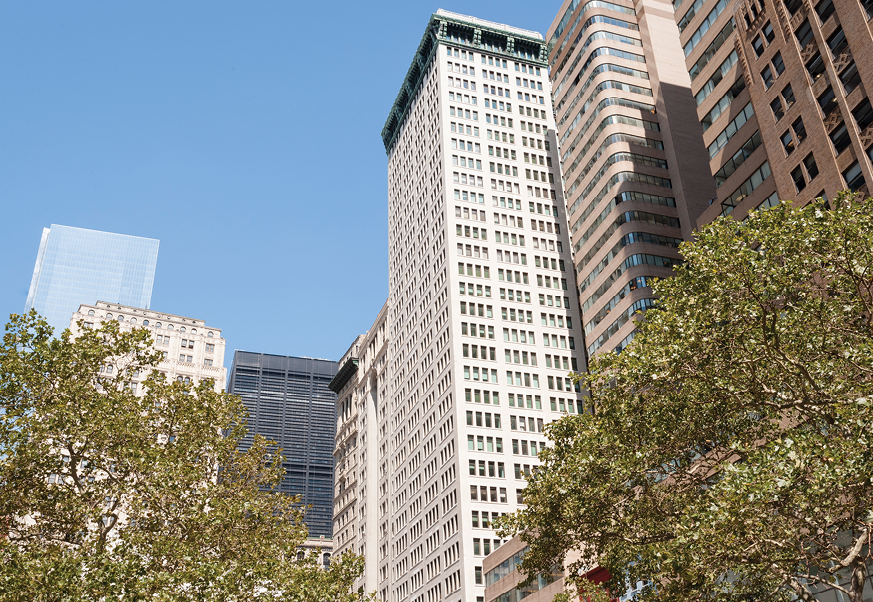
61 Broadway in Manhattan
How do you foster innovation within a large real estate organization like RXR?
Innovation in a large organization doesn’t happen by chance. It needs to be structured, supported, and integrated into decision-making. At RXR, it’s both a cultural and an operational discipline. Culturally, it begins with mindset. We prioritize humility, awareness, and agility. We understand that the environment is always changing and that yesterday’s playbook might not work tomorrow. This fosters openness to new ideas and a willingness to challenge assumptions.
Operationally, we have made intentional investments to enable innovation. Our AI and Digital Lab has developed the infrastructure to organize and analyze large-scale data, helping us move from descriptive to predictive insights. This capability enhances decision-making across the business.
Innovation isn’t just about technology. It’s also about how teams collaborate. Our integrated platform brings together expertise across development, operations, and capital markets to solve complex problems. That coordination results in better, more informed outcomes. In a world where the pace of change is accelerating, innovation isn’t a separate function. It’s essential for remaining relevant and competitive.
“Whether in residential or office settings, we prioritize service, engagement, and community-building as fundamental operational elements. Programming, amenities, and responsiveness help make a space feel vibrant and relevant.”
What trends are you seeing in tenant expectations for premium office buildings?
We are seeing a continued flight to quality, with tenants prioritizing location, experience, and functionality more than ever before. High-quality, well-situated buildings with robust amenities and thoughtful design are capturing a disproportionate share of demand, and tenants are willing to pay for spaces that foster collaboration, culture, and productivity.
There is also an increased focus on flexibility and service. Tenants expect environments that can adapt to evolving workforce needs, supported by responsive management and a hospitality-focused approach. The experience inside the building has become just as important as the physical space itself.
On a broader level, companies are increasingly viewing their office footprint as a strategic asset for attracting talent, strengthening culture, and driving innovation.
How are technology and AI impacting real estate development?
At a high level, we think about this in terms of compute power and people power. An enormous amount of capital is being deployed into computing infrastructure, data centers, and AI systems. That computing power is real and transformative. But ultimately, its value is unlocked by people, by how ideas are generated, tested, refined, and brought to market. At the same time, data and analytics are improving how we evaluate markets, underwrite risk, and forecast performance. With more granular, real-time information, we can identify trends earlier, adjust our business plans appropriately, and deploy capital more effectively. AI compresses the distance between information and action, allowing us to process large volumes of data, identify patterns, and generate insights that would be difficult to uncover manually.
RXR has worked closely with government on major projects. What makes a public-private partnership succeed?
Successful public-private partnerships are built on alignment of objectives, incentives, and execution capability. When that alignment exists, these partnerships can achieve outcomes that neither sector could deliver on its own. The public sector defines the rules of the road, including policy, zoning, and broader economic objectives. The private sector brings capital, innovation, and execution discipline, and takes on the risk required to deliver projects at the highest level.
Ultimately, success comes when public purpose and private execution are fully aligned in a true win-win-win scenario: a win for the public sector, a win for the private investor, and a win for the surrounding community.
What role does sustainability play in RXR’s projects?
Sustainability is integral to how we think about long-term value creation. The built environment has a significant impact on energy use and resource consumption, and this reality informs how we design and operate our assets.
We also view sustainability through a broader lens that includes social and economic impact. It is not just about operating buildings more efficiently. It is about creating jobs, delivering new housing, and supporting the communities where we invest.
What qualities do you look for when attracting talent to RXR?
Talent is the most important driver of any organization’s success, especially in an environment defined by rapid change. We look for people who think like owners and act with an entrepreneurial mindset. That means taking accountability, seeing opportunity where others see constraints, and having the discipline to execute.
Our platform brings together expertise across the full real estate lifecycle, and we expect our people to operate within that environment. That requires not only individual excellence, but also the ability to work across teams, contribute ideas, and solve problems collectively.
When you look to the future of real estate development, what excites you the most?
We are in a period of significant technological, economic, and social change, which is redefining how value is created in the built environment. The way people live, work, and interact with space is evolving, and real estate sits at the center of that shift. There is an opportunity to rethink how spaces are designed and used, and how they contribute to broader economic and social outcomes.
Periods of disruption can be uncomfortable, but they are times when meaningful progress occurs. The firms that will lead are those that can regularly recalibrate for changing realities, adapt quickly, allocate capital with discipline, and execute with precision. In the end, the future of real estate will be defined by the ability to turn complexity into opportunity and to act with conviction when others hesitate.