- Home
- Media Kit
- MediaJet
- Current Issue
- Past Issues
- Ad Specs-Submission
- Reprints (PDF)
- Photo Specifications (PDF)
- Contact Us
- PRIVACY POLICY
- TERMS OF USE
Loading

ONLINE

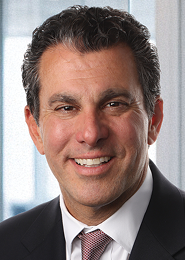
Peter Riguardi
Accelerate 2030
Editors’ Note
As Chairman and President of JLL’s New York Region, Peter Riguardi leads all operations for the firm in the New York, New Jersey, and Connecticut area. He oversees a team of more than 2,300 professionals in seven offices throughout the Tri-state region. Prior to joining JLL in September 2002, Riguardi was Vice Chairman and Principal of Colliers ABR Inc., a company that he helped form in 1994. He started his real estate career at GVA Williams, where he was the youngest Senior Vice President in the firm’s history. During his extensive career in commercial real estate, he has been actively involved in several of the largest and most noteworthy transactions in the New York Metropolitan area. Riguardi is consistently ranked by the New York Observer as one of New York’s most influential real estate executives.
Firm Brief
JLL (jll.com) is a leading global commercial real estate services and investment management company with annual revenue of $26.1 billion, operations in over 80 countries and a global workforce of more than 113,000 as of December 31, 2025. For over 200 years, clients have trusted JLL, a Fortune 500 company, to help them confidently buy, build, occupy, manage and invest across a variety of industries and property types, including office, industrial, hotel, multi-family, retail and data center properties. Driven by its purpose to shape the future of real estate for a better world, JLL helps its clients, people, and communities to see a brighter way. Powered by rich global datasets and leading technology capabilities, JLL provides coordinated, end-to-end delivery of real estate services for a broad range of global clients who represent a wide variety of industries. Through LaSalle Investment Management, the firm invests for clients on a global basis in both private assets and publicly traded real estate securities.
How do you define JLL’s mission?
Our mission is to be a true strategic partner to our clients. Real estate decisions today intersect with talent strategy, capital allocation, and corporate culture. Clients need advisors who can anticipate what’s coming and help them act on it. Our “Accelerate 2030” strategy sharpens our focus on combining human expertise with technology and innovation. We’ve evolved from a transaction business to an advisory business – and that shift changes everything about how we organize, invest, and serve clients.
What have been the keys to JLL’s industry leadership, and how do you describe the JLL difference?
We flipped the traditional brokerage model. For 20 years, I’ve built a culture where the client comes first, JLL second, and broker third. That priority order changes everything. When the client comes first, you stop chasing transactions and start building relationships. We’ve built a platform around client needs – leasing, workplace strategy, financial consulting, sustainability – that makes our service seamless.
Our financial consulting capability is a real differentiator. We provide sophisticated modeling, portfolio valuations, and capital markets advisory that puts us in board-level conversations where real estate is treated as a strategic asset, not just an operational expense. We’ve established deep client relationships that are very difficult to replicate.
“We’ve evolved from a transaction business to an advisory business – and that shift changes everything about how we organize, invest, and serve clients.”
What are your views on the current state of the New York City commercial real estate market?
New York always comes back strong. Q1 leasing hit 8.9 million square feet. Overall vacancy is at 13.5 percent, the lowest since 2021. Trophy vacancy is 6.3 percent–back to pre-pandemic levels. Return-to-office is at 70 percent, well ahead of the 57 percent national average. And 2026 is shaping up to be a record year for AI leasing.
But the market has fundamentally changed. The fallback options we used to rely on – Long Island City, outer boroughs – are thinner. Back-office roles are going to Dallas instead. Tenants who used to settle for Class B are now competing for Class A. Trophy rents hit $179 per square foot in Q1.
This means tenants are entering the market two years before lease expiration – what used to be best practice is now the bare minimum. Deal structures are more complicated. Expansion rights have become non-negotiable. The brokers who aren’t tracking shadow space and off-market options are already behind.
Our job is to stay ahead of all of that and deliver honest advice – good news and bad. Real estate used to be location and price. Now it’s also labor, affordability, sustainability, workforce strategy. Our clients expect honest advice on all of it.
What trends are you seeing in tenant expectations for premium office buildings?
Flight to quality is the headline. Trophy vacancy is 6.3 percent while Class B vacancy is 15.7 percent – the widest gap I’ve seen. Trophy rents hit $179 per square foot in Q1. When trophy space isn’t available, tenants are choosing to expand in place or negotiate hard for expansion rights. Expansions hit 18 percent of Q1 volume – the highest we’ve tracked. For tech and AI firms especially, flexibility in lease structure has become more important than the address.
There is also a shift in what tenants expect from their advisor. Financial consulting is now table stakes. Sophisticated tenants expect rigorous financial modeling, not just market comparables. They want to understand the structure and balance sheet implications.
“Real estate used to be location and price. Now it’s also labor, affordability, sustainability, workforce strategy. Our clients expect honest advice on all of it.”
How are technology and AI impacting the way JLL operates?
Technology is how we scale our client coverage model. 41 percent of our workforce uses JLL’s proprietary AI tools daily – with over 80,000 active users. We’ve cut RFP response time from four days to under two hours. Our AI-driven HR strategy delivered $2.4 million in savings and reduced cost-per-hire by 42 percent.
JLL Spark, our venture arm, has committed $425 million across more than 55 proptech startups since 2018. We’re not just adopting AI – we’re helping shape what it looks like in our industry.
What qualities do you look for when attracting talent to JLL?
Four things: passion, ownership, continuous learning, and commitment. This business is hard – you need passion to sustain a career that spans decades. Ownership because clients are trusting us with critical decisions. Continuous learning because the industry is moving faster than ever. And commitment to putting the client first, platform second, and your own production third.
How do you approach your leadership style?
I’m decisive and direct. I don’t believe in long meetings where nothing gets decided. I push myself and the people around me to accomplish objectives and exceed expectations. In this business you have to rebound quickly from setbacks – deals fall apart, clients change their minds, markets shift overnight. How you respond separates the people who build careers from the people who don’t.
My leadership is built around the model we run: client first, JLL second, broker third. When the client comes first, decisions get clearer. You stop optimizing for the individual and start building for the long-term relationship.
“JLL Spark, our venture arm, has committed $425 million across more than 55 proptech startups since 2018. We’re not just adopting AI – we’re helping shape what it looks like in our industry.”
You have been with JLL for more than 20 years. What has made the experience so special for you?
The people. And the moments that tested us. The pandemic tested us. 2018 and 2019 were record years. Then 2020 hit and our leasing revenue was cut by more than half. What I saw in that period was the real JLL – our people showing up for clients making life-or-death decisions, colleagues supporting each other, and a firm that refused to contract defensively. We kept investing. We kept hiring. We kept believing New York was coming back. And it has. Our 2025 fee revenue is on par with 2019, but we’re doing 10 percent more transactions – serving a wider range of clients on more complex work through a more integrated platform. The numbers look relatively flat on the surface. The business underneath has been transformed.
When you look to the future of commercial real estate, what excites you the most, and what concerns you the most?
What excites me is that young talent still wants to be here. The data is clear: New York is the number one destination for 2025 graduates. Among mid- and early-career professionals from top schools, New York wins decisively. The AI and tech sector boom is real – 2026 is shaping up to be a record year for AI leasing. Trophy vacancy is back to pre-pandemic levels. Return-to-office is at 70 percent. The energy is back.
What concerns me is affordability – not at the top of the market, but for the next-level employee. The jobs leaving New York aren’t the highest-paying roles. They’re mid-level positions where firms feel like they’re giving employees a better opportunity somewhere else. Twenty or thirty years ago, the New York office market was strong on Third Avenue and Water Street. Those jobs are now elsewhere. What New York needs is an affordable housing solution that mirrors what Hudson Yards did for office. Hudson Yards succeeded because the public and private sector came together. We need the same partnership to create affordable housing at scale.
I have no interest in ever leaving New York. On balance, I’m an optimist. In 20-plus years, I’ve never seen a moment where having a genuine advisor mattered more than it does right now.