- Home
- Media Kit
- MediaJet
- Current Issue
- Past Issues
- Ad Specs-Submission
- Reprints (PDF)
- Photo Specifications (PDF)
- Contact Us
- PRIVACY POLICY
- TERMS OF USE
Loading

ONLINE

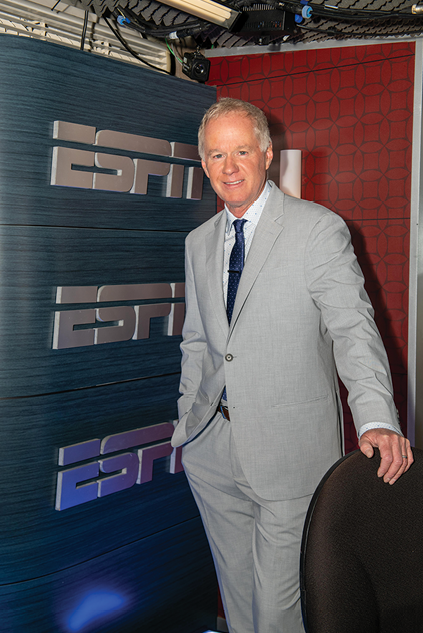
Patrick McEnroe
A Life In Tennis
Editors’ Note
Patrick McEnroe is a renowned professional tennis player and a tennis commentator for ESPN. He also worked for CBS Sports from 1996-2008, most notably at the US Open. McEnroe has held important roles with the United States Tennis Association (USTA). In December 2000, he was named the 38th U.S. Davis Cup captain, winning the title in 2007 for the first time since 1995. After having served in the role longer than anyone in history, he resigned from that position in September 2010. In April 2008, he was named to the newly created position of General Manager, USTA Elite Player Development. He stepped down from that role in September 2014. He also was coach of the 2004 U.S. Olympic men’s tennis team. As a junior player, McEnroe partnered with Luke Jensen to win the French Junior doubles and the USTA Boys’ 18 National and Clay Court titles in 1984. He also made his first impact on the professional tour that year, teaming up with brother John to win the doubles title at Richmond, Virginia. A three-time singles All-American (1986-88), he led Stanford to NCAA titles in 1986 and 1988. McEnroe earned 16 titles in doubles and reached a career-high ranking of #3 in April 1993. He won the men’s doubles gold medal at the 1987 Pan American Games with Luke Jensen, the French Open men’s doubles title in 1989 with Jim Grabb, and the Paris Indoor with his brother John in 1992. In 1991, he was also runner-up in the doubles at the Australian Open, partnering with his former Stanford teammate David Wheaton. In the Davis Cup, McEnroe represented his country as a doubles player in 1993, 1994 and 1996. McEnroe’s first career singles final came in 1991 at Chicago, where he faced his brother John, who won the match for his 77th and final singles title. McEnroe’s best Grand Slam singles performance came at the 1991 Australian Open, where he reached the semifinals before being knocked out by eventual champion Boris Becker. McEnroe’s singles career peaked in 1995 when the righthander reached the quarterfinals of the US Open and reached a career-high ranking of 28 in the world. That year, he won the men’s singles at the Sydney Outdoor Championships, his first (and only) career singles title. He also had some notable Grand Slam singles results that year – beating Boris Becker in the first round of the Australian Open (before eventually losing in the fourth round), and then reaching the quarterfinals of the US Open where he lost to Becker in an epic four-hour and seven-minute four set marathon. McEnroe graduated from Stanford University in 1988 with a bachelor’s degree in political science.
Will you discuss your career journey
I’ve been fortunate to have a long career in tennis, both as a player and afterward in broadcasting, coaching, and leadership roles within the sport. I grew up in New York and played junior tennis before going to Stanford University, where I was a three-time All-American and helped Stanford win NCAA championships. As a professional player, I won 16 doubles titles and the French Open doubles championship in 1989. Later, as captain of the U.S. Davis Cup team from 2000 to 2010, I had the privilege of helping lead the United States to a Davis Cup title in 2007 – the country’s first championship in more than a decade. After retiring from professional tennis, I transitioned into broadcasting and have spent many years working with ESPN, covering all four Grand Slam tournaments. I’ve always enjoyed analyzing and talking about the game, so that’s been a very rewarding part of my career.
I’ve also been deeply involved in the development side of tennis. I became General Manager of USTA Player Development, where we worked to help shape the next generation of American players and improve the coaching system in the United States.
Today, I continue to serve as Executive Director of the John McEnroe Tennis Academy, where I work with young players and mentor developing talent. In 2023, I was honored to become President of the International Tennis Hall of Fame, which gives me another opportunity to help grow and promote the sport globally. I also host a SiriusXM show called Holding Court, where I get to discuss tennis, sports, and the future of the game.
What was the vision behind the John McEnroe Tennis Academy, and how do you define its mission?
The mission behind the academy is to help as many kids as we can in the New York metropolitan area develop in tennis as much as they want to. Whether that means playing recreationally or pursuing the sport at a high level, we want to give kids the opportunity to grow and improve through tennis.
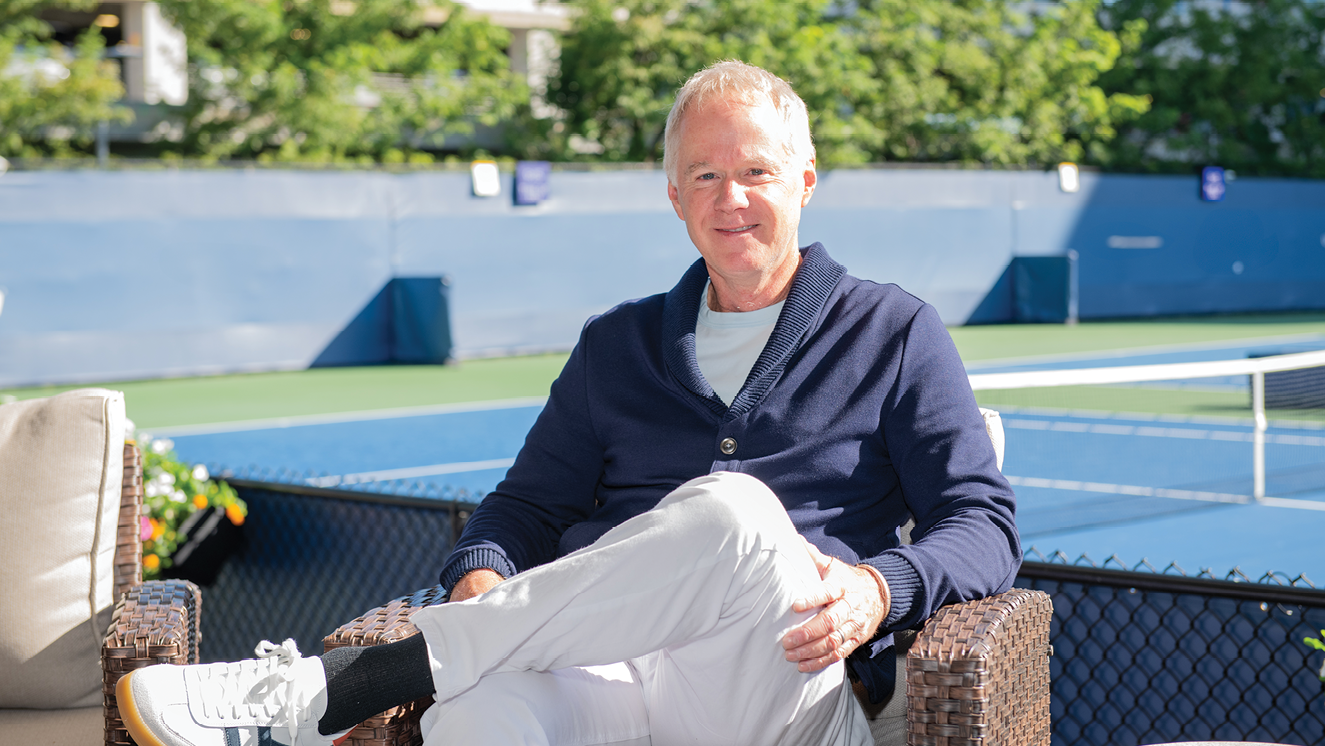
What are your thoughts on the current state of professional tennis?
The state of professional tennis is very healthy. Overall, sponsorship numbers, ticket sales, and revenues are through the roof, especially since the pandemic. The revenues for the major tournaments have gone up exponentially, and I think the players feel they’re missing out on a slice of that pie, so there’s some controversy around that right now. Obviously, with Carlos Alcaraz injured and unable to defend his title in Paris, that’s not ideal for the tournament, but overall, I’d say the state of professional tennis is in a very good place.
You have been involved in both individual and team competition. Did you approach both formats the same way?
I’ve always preferred the team format because I grew up playing all sports with my brothers. We obviously loved tennis and its individuality, but one thing I always missed as a professional player was being part of a team. That’s why I’ve always loved college tennis, and why being part of the Davis Cup – both as a player and later for 10 years as captain – meant so much to me. I also spent eight years working alongside my brother at the Laver Cup, where he was the captain and I served as vice-captain.
Even though tennis is mostly an individual sport, I really enjoyed competing alongside other players, whether as a coach or as a player myself. The approach is definitely a little different in a team setting. You’re still out there competing for yourself on the court, but the atmosphere and camaraderie are completely different. And when you’re playing for your country, especially, I think you feel even more pressure than you do playing individually.
Do you feel that mental toughness is something that can be taught?
I remember hearing a great answer Novak Djokovic gave in a 60 Minutes interview a couple of years ago. The interviewer mentioned how he’d always been known for his mental toughness, and Novak stopped him and said, “Wait a second – I had to work on that. That’s a skill.” I think over the last 20 years or so, we’ve really learned that mental toughness can absolutely be trained. It’s like a muscle. You can train your brain to react a certain way and to focus in a certain way.
A lot of it comes through repetition and learning how you react under pressure. You have to accept that you’re going to get upset or frustrated at times, but the key is how quickly you recover from that. It’s really no different than learning how to hit a better serve. The more you do it, the more you train your brain to respond positively when things aren’t going your way. It becomes about asking yourself: How do I stay positive? How do I focus on the next point and the next part of the match instead of dwelling on what already happened? The best players are able to move forward quickly and stay present.
Obviously, having physical gifts is hugely important if you want to become a professional athlete, but what probably separates the really good players from the greats and the all-time legends is their ability to shape their minds and use that part of their game as effectively as possible. So yes, I definitely believe mental toughness is something you can train and develop.
What are your views on the professionalization and commercialization of youth sports?
I think it has gone too far in a lot of ways. Kids are concentrating on one sport too early and, in some cases, losing the joy of simply playing the game for the sake of playing. I also think that when kids participate in multiple sports, it can take some of the pressure off.
A lot of it depends on age. Once kids become teenagers, if they truly have aspirations of becoming a professional athlete or even an elite college athlete, then naturally, they may need to focus more seriously on one sport. But I always tell parents that it’s okay for a child to specialize only if the passion is coming from the child themselves. If they’re being pushed into it by outside forces – especially parents – generally speaking, they’re going to burn out. We see this all the time at our tennis academy. Even when kids are very young, you can usually tell whether they’re doing it for healthy reasons – because they enjoy it, because they want to improve, and because they love participating. At its best, sports should help better a child’s life, whatever that ultimately looks like for them.
How is NIL (Name, Image, Likeness) impacting high school and college athletes?
I think what’s happening in college sports with NIL is causing younger athletes to become more focused and professionalized in the way they train. That can be both a good and a bad thing, for a lot of the same reasons I mentioned earlier. What concerns me is that high-level college sports are starting to look almost fully professionalized, and that mentality then filters down into high school sports and even younger levels. I think we need to find some guardrails that still allow kids to have a normal experience growing up, while also giving talented athletes opportunities to develop and succeed.
What do you see as the keys to effective leadership?
I think effective leadership starts with listening. It’s also about being strong in your convictions and surrounding yourself with good people.
With all that you have accomplished during your career, are you able to enjoy the process and take moments to celebrate the wins?
I’ve been very lucky. I love tennis, I love sports and athletics, I love traveling, and I enjoy meeting people – and tennis has allowed me to experience all of those things. It’s given me so many different opportunities throughout my career: to play, to travel, to work in broadcasting, to write, to take on leadership roles within the USTA, and to speak publicly about the sport. So, I feel incredibly fortunate, and in many ways, I celebrate that every day because tennis has really given me my entire career.