- Home
- Media Kit
- MediaJet
- Current Issue
- Past Issues
- Ad Specs-Submission
- Reprints (PDF)
- Photo Specifications (PDF)
- Contact Us
- PRIVACY POLICY
- TERMS OF USE
Loading

ONLINE

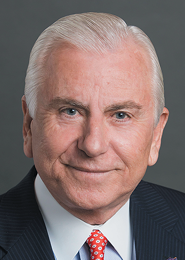
Dr. Nido R. Qubein
Choose To Be Extraordinary
Editors’ Note
Dr. Nido Qubein became the seventh President of High Point University in January 2005. Since that time, enrollment has quadrupled, campus has expanded from 90 to 560 acres, and academic schools have grown from 3 to 14. Qubein came to the United States as a teenager with limited knowledge of English and only $50 before going on to build business partnerships in banking, real estate, publishing, and retail businesses. Prior to his role as HPU President, Qubein rose to prominence as an internationally known author and consultant who has given more than 8,000 presentations worldwide. He has served on the corporate boards of several Fortune 500 companies including Truist, the sixth largest bank in the nation, La-Z-Boy, and Savista. Qubein is also executive chairman of the Great Harvest Bread Company. Among numerous honors and recognitions he has received, Qubein is an inductee of the Horatio Alger Association for Distinguished Americans, along with Oprah Winfrey and Colin Powell.
Institution Brief
Founded in 1924, High Point University (highpoint.edu) is a liberal arts institution located in the Piedmont Triad region of North Carolina. “America’s Best Colleges” 2026 Edition, published by U.S. News & World Report, ranks HPU #1 among all regional colleges in the South (the fourteenth consecutive year at number one). It also ranked HPU for the eleventh consecutive year as the #1 Most Innovative Regional College in the South for innovation in curriculum, faculty, students, campus life, technology, and facilities. HPU was named for the fifteenth consecutive year to the national “Colleges of Distinction” list. HPU also earned Fields of Study distinctions for the Phillips School of Business and the Stout School of Education. The Princeton Review named High Point University as one of the nation’s top institutions for undergraduate education, including recognizing HPU as the #1 Best-Run College in the Nation for the second consecutive year in the 2026 edition of “The Best 391 Colleges.” HPU was also recognized among the Top 20 in the nation for Best Career Services, Most Beautiful Campus, Most Active Student Government Association, and Best Campus Food, as well as a Great School for Business/Finance Majors and a Great School for Communication Majors.
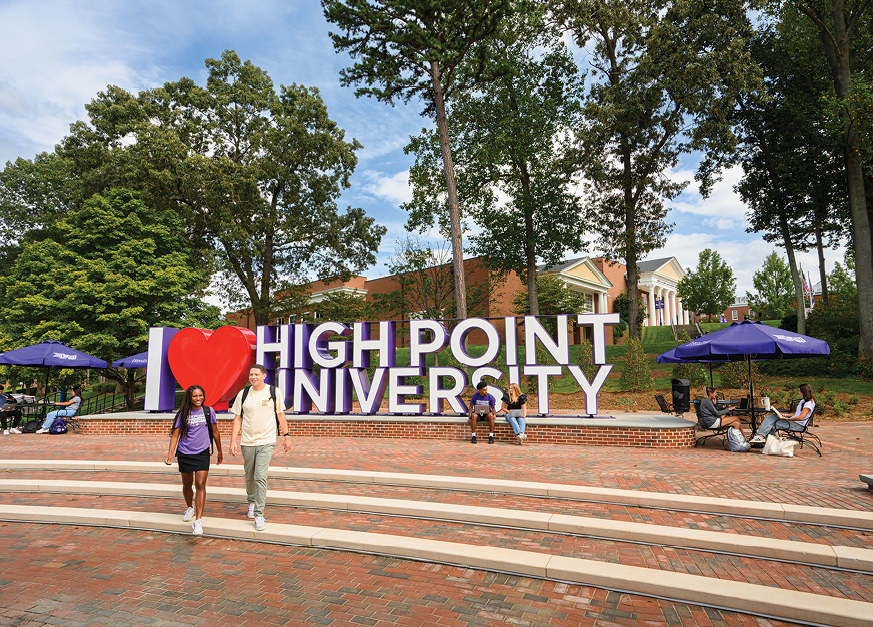
What have been the keys to High Point University’s strength and leadership?
At High Point University, everything is built around a single focus: the personal and professional transformation of our students. College should be more than a diploma. An extraordinary liberal arts education should prepare students to be experts in their field and experts in professionalism – communicating across differences, adapting to a fast-changing workforce, and navigating complex situations without being intimidated by life’s obstacles. That’s why we are The Premier Life Skills University. The proof is in the outcomes: 99 percent of our graduates are employed or furthering their education within 180 days of graduation – 13 points higher than the national average. Families see those results and appreciate what an investment in an HPU education actually delivers.
It’s our mission to ensure that our students are prepared to compete in a constantly changing job market, and we are committed to that.
How do you describe the HPU experience?
First and foremost, HPU students are supported, cared for, and guided in their personal and professional development. Our philosophy is “students first,” and every aspect of our campus was built to inspire them. Our call to action is: Choose to Be Extraordinary! That is an invitation – a choice we encourage them to make daily – and we make it possible for them to do so.
From the moment students arrive, every resource on this campus is open to them. We don’t make freshmen wait their turn for the labs, the mentors, or the opportunities that shape a career. We give them access on day one and let them spend four years building an impactful experience. There’s no need for them to wait to begin achieving their dreams here.
I also teach a First-Year Seminar on Life Skills to every freshman – time management, fiscal literacy, communication, self-esteem, the rule of thirds (life is one-third learning, one-third earning, one-third serving). And I teach them that the word “impossible” can quickly become “I’m possible” with the simple addition of an apostrophe.
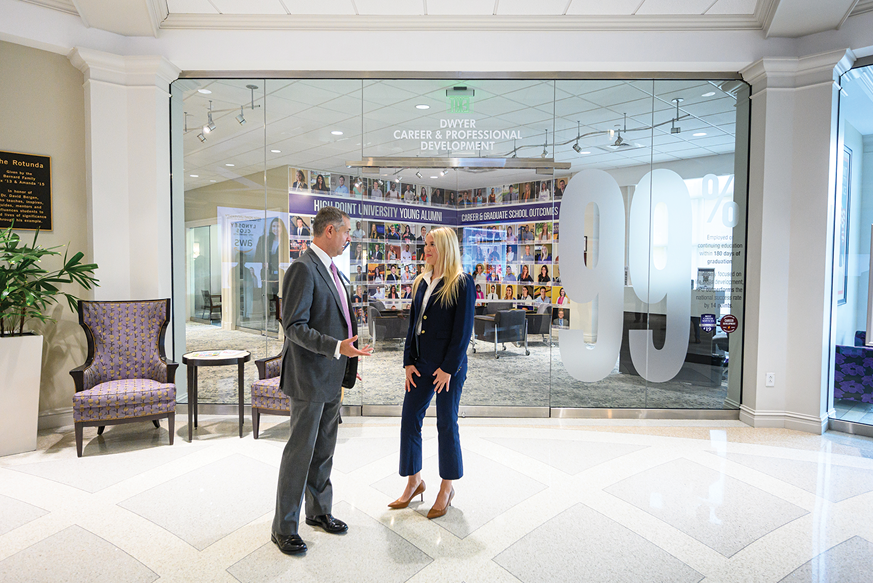
HPU Career Center
By the time they graduate, they can have amassed the kind of experience it often takes years to build. Our model is really built to compress time for students to achieve more. When they graduate, they won’t be intimidated by life’s obstacles. They’ll be well prepared to pursue their dreams.
What role should education play in preparing students for an uncertain future?
At a moment when many families are questioning whether college is worth it, our answer is to listen to the marketplace, and especially to employers, who keep telling us they need graduates with more than technical skills that inevitably change. They need graduates with life skills that outlast technical skills.
During my two decades as president, HPU has grown during periods of uncertainty, including the recession of 2009 and the COVID-19 pandemic of 2020. Throughout my life, I’ve learned how the one thing leaders must be most prepared for is adapting in uncertainty. Higher education must instill this in students, along with life skills like motivation, work ethic, temperament, resilience, and more.
Our university has grown from three academic schools to 14. We’ve just opened a law school and a school of dental medicine, with an optometry school on the horizon. Each new program is designed so students work directly with community members, learning to practice with integrity and professionalism from day one.
No longer is it enough to teach methods or technology from a textbook. Today’s students require hands-on learning and problem-solving scenarios that help them build the life skills they’ll need throughout their career, regardless of what the next disruptive wave may be.
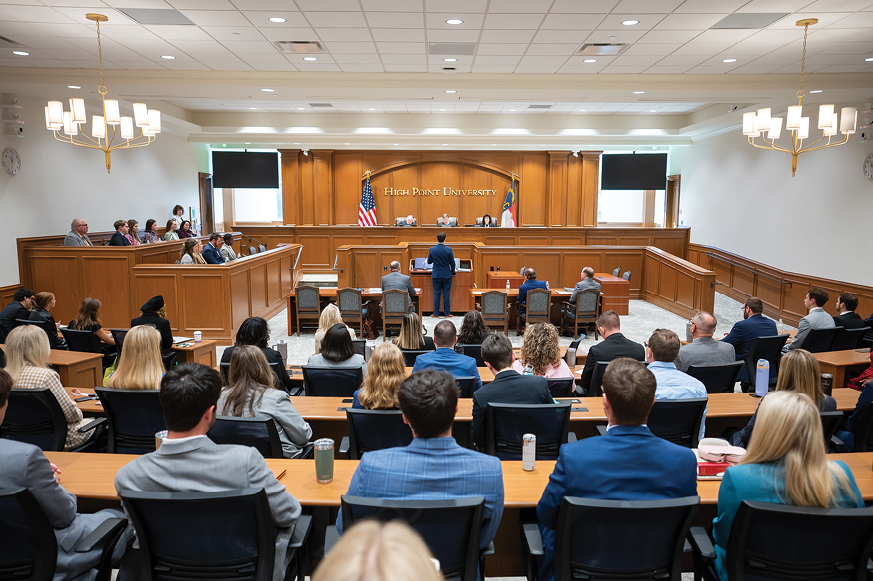
HPU’s Kenneth F. Kahn School of Law mock courtroom
How will artificial intelligence reshape teaching and learning experiences?
AI represents a transformative shift in how students learn and how industries operate. Our goal is for students to build both the life skills to use AI well and the judgment to use it responsibly. A growing number of faculty are integrating AI into coursework for data analysis and problem-solving, partnering with our Center for Innovative Teaching and Learning to help students articulate that experience to future employers. We’ve also created a faculty development position dedicated to AI integration – a signal that we’re moving forward intentionally rather than reactively.
That said, artificial intelligence cannot replace emotional intelligence. In fact, the rise of AI has actually underscored the importance of life skills, according to many national headlines. More than ever, companies will hire people who can adapt, solve problems, communicate, and exercise sound judgment. An education built around life skills and real-world learning will only become more valuable.
How do you see the role of teachers changing in a tech-driven world?
Teachers will continue to hold critical roles for mentoring, encouraging, and shaping the futures of their students. Technology provides tools for teachers and students, but cannot replace human empathy and interaction. We are committed to small size classes (20-25 students) with full-time faculty (no teaching assistants or grad students). We also believe no one succeeds without support, good judgment, and commitment to work toward achieving goals, whether in the classroom, research laboratory, or professional world.
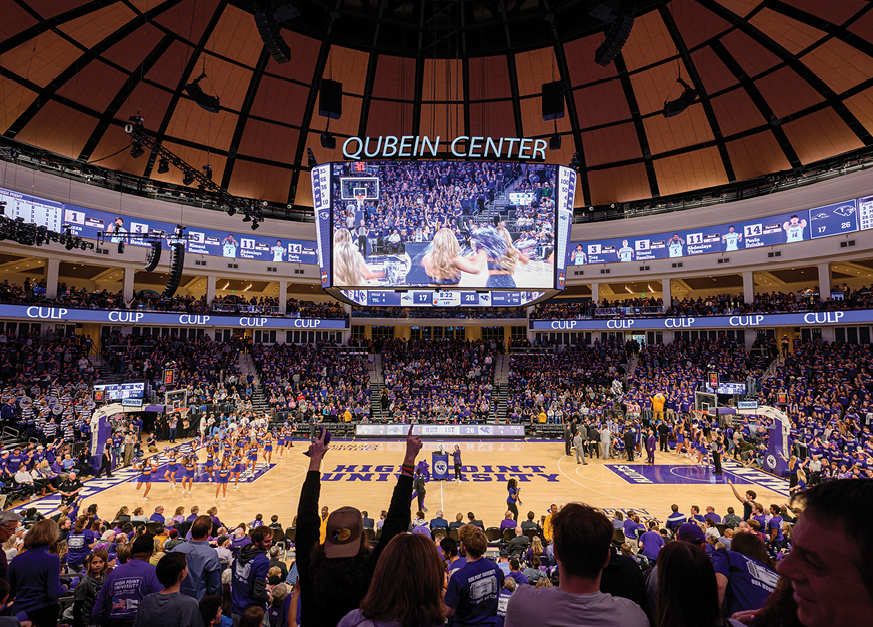
Nido and Mariana Qubein Arena at HPU
What skills will be most important for students to learn to be prepared for the future?
HPU regularly surveys C-suite executives from across the country to find out. A 2022 survey of 500 executives told us what we suspected: employers want candidates with hands-on, real-world experience, and they rank life skills – motivation, emotional intelligence, problem-solving – above technical skills.
The success of our students is our greatest achievement. Morgan Stanley, Northwestern Mutual, Gartner, KPMG, Bloomberg, Coca-Cola, and the NBA are among the companies who hire our graduates. They can tell within minutes which candidates have been prepared to think, to ask good questions, and to carry themselves professionally. Those are the candidates they hire.
Our Office of Career and Professional Development is also ranked #9 in the nation by The Princeton Review.
What do you see as the responsibility that leading universities like High Point have to the communities they serve?
I’m very clear that HPU is High Point’s university with an apostrophe “s,” and we wouldn’t have achieved our record growth over the past two decades without the city’s partnership and the support of countless community members. Our faculty, staff and students show their appreciation by giving back to the community, dedicating 500,000 hours of service every year. For example, students donate more than 2,000 hours every year on Martin Luther King Jr. Day, partnering with 40 local service projects. They donate food, plant trees, and paint local schools to brighten them up for the students who go there.
Every year, the university hosts what is believed to be the largest Veterans Day Celebration on a college campus. It’s our way of honoring and celebrating local veterans, and it’s made possible by hundreds of volunteers made up of students, faculty and staff.
This is all part of the values-based education that we provide which fosters gratitude, generosity, civility, respect, patriotism, an entrepreneurial spirit, and more. Parents appreciate that the values they instilled in their students are furthered on our campus.
How do you approach your leadership style?
Good leaders must be what they want their followers to become. The leader who can’t communicate can’t create the conditions needed to motivate people to do their very best work. People don’t respond to what you say, they respond to what they understand you to say.
A good leader must never stop learning and being inspired. I wake up early, have a clear vision about my work, and follow it strategically and tactically each day. I focus on doing good things, building solid relationships, and executing methodically on my objectives. Throughout my career, I have adhered to several key strategies that have driven success. These include developing communication skills. I moved beyond merely communicating to truly connecting with people, emphasizing the importance of understanding others’ needs and emotions. I believe in positioning oneself as a problem-solver in the eyes of others. I maintain that self-esteem is crucial and should be built on merit and continuous learning. And finally, my strategic choices have been pivotal in shaping this successful journey.
Transformational leaders focus on long-term impact, not short-term tasks. They encourage exploration, risk-taking, and accountability. I encourage leaders to focus on strengths, dwell on the positive, master positioning and branding, and manage risk wisely as they pursue new ventures. Successful people don’t avoid risks. They learn to manage them. They don’t dive off cliffs into unexplored waters. They learn how deep the water is and make sure there are no hidden obstacles. Then they plunge in. Leaders take risks.
How do you define a life of significance?
Life is a balance of both success and significance. Success is in the eye of the beholder, but significance has greater clarity. As I mentioned earlier, I impart the Rule of Thirds to students in my seminar for freshmen. It’s a simple but powerful principle that I live my life by: One-third of your time should be invested in earning, one-third in learning, and one-third in serving.
I came to America when I was 17 years old with no money and little knowledge of English. I went on to build businesses, offer more than 8,000 presentations around the world, serve on the boards of major corporations, and consult with executives. Along the way, I was supported by many people. Once when I couldn’t pay my college tuition in full, an anonymous doctor paid for what I owed.
As a young man, I needed a car so that I could work, but I couldn’t afford it. My housemother at the time deposited $500 into my bank account without my knowledge. When I discovered this and asked her why, she said, “It’s better for me to invest into a budding young man than to park the money in a savings account.”
So, when I achieved a certain level of success, I remembered these individuals and the immeasurable impact they had on my life. I started a scholarship fund to give back to others the way they had given to me.
Everyone’s version of success looks different, but significance always involves making a positive impact on others.
When you look to the future of education, what excites you the most, and what concerns you the most?
Higher education has reached an inflection point. Families are questioning whether a college degree is worth the cost, and in the wake of the COVID-19 pandemic and inflation, many students are choosing to instead attend a technical school or to immediately enter the workforce. This has resulted in colleges and universities across the country competing for a smaller pool of high school graduates, and unfortunately, some institutions have needed to make tough decisions to address budget issues.
But when I wake up in the morning, I am encouraged more than ever by the education, values, and life skills that we are instilling in our students at High Point University. We are intentional and prepare our students to stand out from other job applicants. And it is hard to argue with the results when our overall outcomes rate stands 13 points higher than the national average.
This isn’t the first time since I became HPU’s president that higher education has faced strong headwinds. For example, our university was in the middle of a major expansion on campus when the market crashed in 2008. But rather than pause construction, we decided to keep going. A few years later, when the pandemic started, we chose to keep campus open and continue to safely offer in-person learning to students.
We bucked national trends of enrollment decline and welcomed our largest freshman class and the largest total student enrollment in fall 2025, a time when many universities reported enrollment declines.
We’ve become a model for how to navigate the headwinds the academy is facing. We’re resilient, and we keep moving forward with faithful courage.