- Home
- Media Kit
- MediaJet
- Current Issue
- Past Issues
- Ad Specs-Submission
- Reprints (PDF)
- Photo Specifications (PDF)
- Contact Us
- PRIVACY POLICY
- TERMS OF USE
Loading

ONLINE

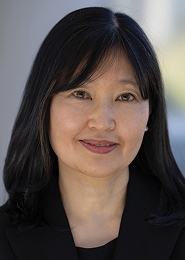
Mimi Kim
Advancing Scientific Discovery
Editors’ Note
Dr. Mimi Kim has been head of the Division of Biostatistics since 2003, is Associate Director of the Block Institute of Clinical and Translational Research (ICTR), Director of the ICTR Biostatistics, Epidemiology and Research Design (BERD) Core, and Director of the Center for Quantitative Sciences. She is a Fellow of the American Statistical Association (ASA) and Chair of the ASA Council of Chapters Governing Board. She has also served as Chair of the ASA Lifetime Data Science Section, Vice-Chair of the Board of Trustees of the National Institute of Statistical Sciences, President of the Korean International Statistical Society, and on the Medical and Scientific Advisory Council of the Lupus Foundation of America. She has participated on numerous grant review panels for the National Institutes of Health and was a member of the NIH Arthritis, Musculoskeletal and Skin Diseases Clinical Trials Review Committee. Kim’s research focuses on statistical methods for designing and analyzing clinical trials and epidemiologic studies (research of the factors affecting health and illness).
Institution Brief
Montefiore Einstein (montefiore.org) is a leading academic medical organization comprised of Montefiore Health System and Albert Einstein College of Medicine. Together they are pioneering patient-centered research and providing exceptional personalized care with over six million patient interactions a year in communities across the Bronx, Westchester and the Hudson Valley. Montefiore Health System is comprised of 10 member hospitals, including the Children’s Hospital at Montefiore, Burke Rehabilitation Hospital, White Plains Hospital, and more than 200 outpatient ambulatory care sites that provide coordinated, comprehensive care to patients and their families. Albert Einstein College of Medicine, home to more than 1,000 students in its MD, PhD, and combined MD/PhD programs, is one of the nation’s preeminent centers for research, medical education and clinical investigation.
Will you discuss your career journey?
I come from a family of academics (my father, uncle, and brother were science professors) so I grew up believing that being a professor was one of the most meaningful and rewarding careers. I liked the idea of teaching students, the intellectual freedom of academic life and the opportunity to contribute new knowledge to different fields. As an undergraduate at UC Berkeley, I initially planned to major in biology, but I soon discovered that I enjoyed math, physics, and computer science. So, I pursued an interdisciplinary degree in bioengineering, combining my interests in biology and health with quantitative problem-solving. That decision shaped the trajectory of my career.
A pivotal moment came during my senior year, when I interned with a public health researcher at the beginning of the AIDS epidemic in the mid-1980s. For the first time, I saw how rigorous data collection and analysis could help society understand and respond to a major public health crisis. My mentor used data to study different aspects of the epidemic. He introduced me to the relatively new field of biostatistics and encouraged me to pursue graduate training in that field. I earned a doctorate in biostatistics at the Harvard School of Public Health, where my research focused on estimating the infectivity and incubation period of HIV. I later joined New York University Medical School as a postdoctoral fellow, continuing my work in HIV/AIDS research while developing new methods for the design and analysis of clinical trials and epidemiological studies in other disease areas such as cancer and autoimmune disorders. After 13 years, I moved to Albert Einstein College of Medicine to establish and lead a new Division of Biostatistics and expand the institution’s methodological expertise and collaborative research infrastructure. This was my first leadership role, and I was fortunate to be in an incredibly collaborative and supportive environment – a trait that makes Einstein so special. Today, we have more than 20 biostatistics faculty members contributing across a range of scientific and clinical disciplines.
Looking back over my nearly 40-year career in academia, it has been incredibly rewarding to witness the dramatic growth in the importance of statistics and computational methods in biomedical research and public health. What was once considered a small, specialized field has now become central to how we understand disease, develop therapies, and improve population health.
“The Institute is developing new approaches that enable investigators to uncover patterns and biological insights that would be difficult to detect using traditional methods alone.”
Will you provide an overview of your role and areas of focus?
I continue to serve as head of the Division of Biostatistics, and a few years ago, I became associate director of our NIH-funded Block Institute for Clinical and Translational Research (ICTR), which provides resources and training to facilitate research that has the potential to improve the health of our Bronx community and beyond. Most recently, I also became director of the Data Science Institute.
Having these three roles is exciting in part due to the tremendous overlap and natural synergies among them. Each is focused on expanding collaborative, multidisciplinary biomedical research and enhancing the infrastructure and expertise needed to support Montefiore Einstein investigators. The biostatistics division is the academic home for faculty and staff who develop, apply, and teach novel study designs and quantitative techniques; the ICTR helps disseminate and implement those methods in research to accelerate the translation of scientific discoveries into clinical and community impact; and the Data Science Institute expands our ability to leverage AI, machine learning, informatics and large-scale data to spur scientific discovery and improve patient care.
Will you describe the Data Science Institute at Montefiore Einstein, and how you define its mission and goals?
The overarching mission of the Data Science Institute (DSI) is to transform data into knowledge, insights, and innovations that improve human health. Data science is an interdisciplinary field that combines principles of statistics, computer science, and domain knowledge such as biology, clinical knowledge, and public health expertise. This centralized hub enables synergies and cross-fertilization among more than 70 faculty members (across 17 departments) with varied data science expertise. The Institute aims to be a collaborative engine that facilitates the formation of research teams necessary to tackle the most complex analytic problems; a driver that speeds development of new cutting-edge data science methods and tools to solve emerging methodological problems; an educational center committed to training the next generation of investigators and clinicians to work fluently at the intersection of medicine, biology, and data science; and a resource to help investigators find and access data, tools, and expertise.
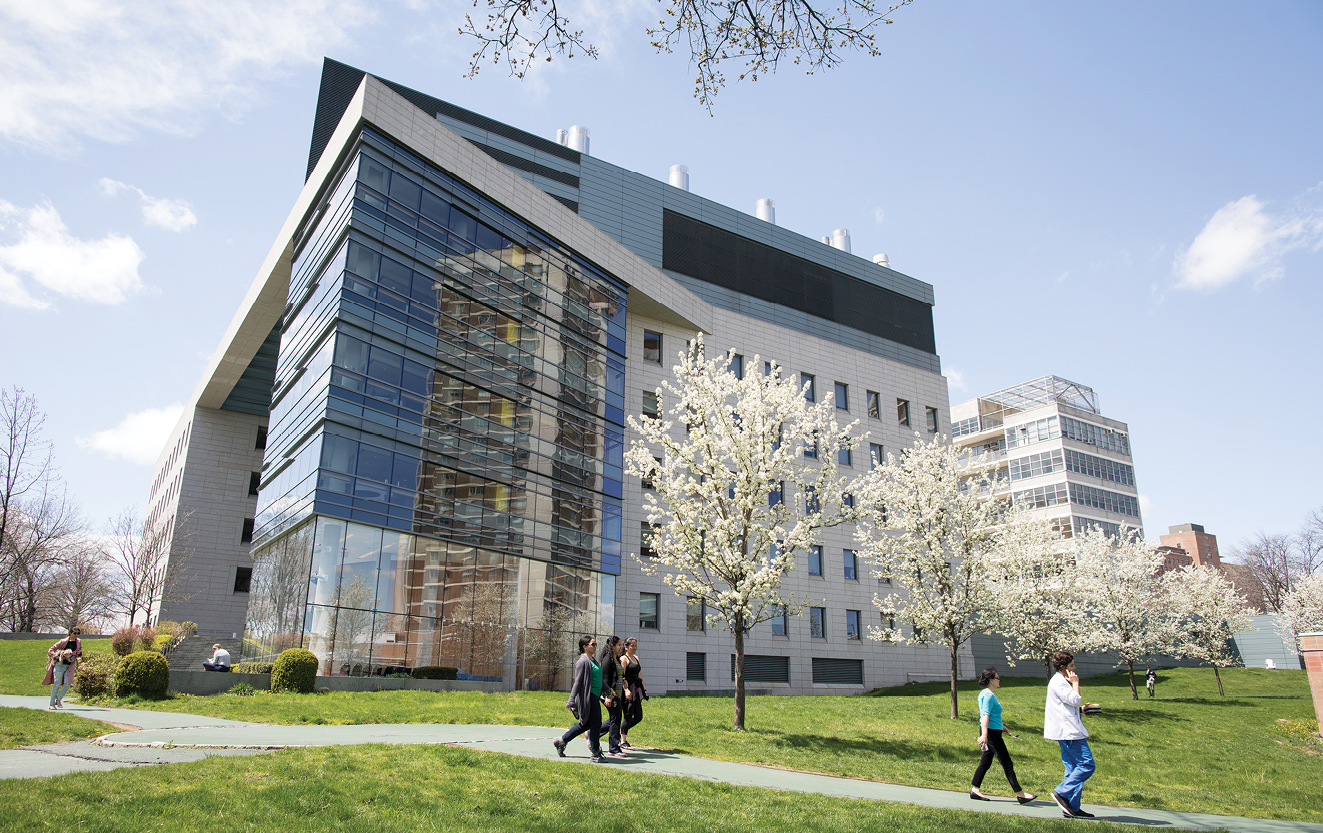
The Price Center is a genetic and translational medicine
building for Albert Einstein College of Medicine
in the Bronx, New York
How is the Data Science Institute leveraging technology to advance scientific discovery and impact clinical care?
The Data Science Institute at Montefiore Einstein leverages technologies – including artificial intelligence (AI), machine learning, bioinformatics, and health informatics – to turn healthcare and biomedical data into insights that advance scientific discovery and enhance clinical care. By integrating electronic health records, medical imaging, genomics, pathology, and public health data, the Institute helps drive precision medicine, predictive analytics, and faster therapeutic development. For example, Einstein data scientists and epidemiologists are collaborating to combine longitudinal clinical, lifestyle, and multi-omics data like epigenetic (how behaviors and environment can cause changes affecting the way genes work), transcriptomic (the study of all RNA in a cell, tissue, or organ sample), proteomic (comprehensive study of protein structures and functions), and metabolomic data to better understand shared disease mechanisms among chronic conditions such as obesity and diabetes, and identify novel subtypes and biomarkers that will potentially lead to more effective prevention and treatment strategies. But generating actionable knowledge from these very massive and high dimensional data sets requires more powerful analytic methods.
The Institute is developing new approaches that enable investigators to uncover patterns and biological insights that would be difficult to detect using traditional methods alone. For example, novel methods for conducting bioinformatics and transcriptomic analyses (the study of the complete set of RNA transcripts in a cell or organism) were used to discover that higher levels of a certain type of connective tissue cell (CAF) that can promote tumor growth, spread, and resist therapy are associated with worse outcomes in glioblastoma, a form of brain cancer, offering important insights that could guide future therapies. Imaging analyses using AI are improving early disease detection, diagnosis, and assessment of treatment response, while real-world clinical data helps researchers evaluate how therapies perform in practice. Einstein investigators now have access to EPIC COSMOS, a research platform that provides access to one of the largest, most diverse de-identified clinical datasets in the country – representing over 300 million patients across the U.S. Investigators can use the rich data from this platform to assess, for example, how well vaccines or treatments such as asthma biologics or anticoagulants for stroke prevention perform in real-world clinical settings, providing insights that complement traditional clinical trials.
In clinical care, the Institute is focused on translating technological advances into practical tools that support physicians and improve patient outcomes. These include: predictive models that support AI enabled diagnostic tools, ways to identify patients who are more likely to respond to therapy or who are at risk for complications, and the integrated data platforms that help clinicians make more informed decisions in “real-time.”
“We help investigators navigate the many scientific, operational, and methodological challenges that can slow research progress – from study design and regulatory issues to data management, study recruitment, and analysis.”
What are your research interests, and how do you approach your research?
I’m a statistician so my research interests focus on developing new methods to enhance how we design, conduct, analyze, and interpret biomedical research studies. Earlier in my career, I worked primarily in the HIV/AIDS area, but for the past two decades I have also focused on improving how we plan and conduct trials to find new treatments for lupus. Lupus is a highly heterogeneous disease, and many clinical trials have struggled to distinguish effective treatments from placebo or standard-of-care therapies. I’ve been interested in understanding why lupus trials often fail and how statistical and analytic methods can increase the power to detect treatment signals. I mine data from past trials to characterize patterns of treatment outcomes, predictors of response, and sources of variability in disease activity over time to devise new approaches for evaluating treatment efficacy and designing future lupus trials.
In addition to my own methodological research in this field, I have collaborated on studies with rheumatologists to improve the health of women with lupus. About 90 percent of lupus patients are women, and those of childbearing age are at greatest risk. We’ve worked on discovering the main biological and clinical contributors to adverse pregnancy outcomes in this patient population and turning them into risk prediction tools that can develop more effective management of care. We’re also conducting studies to create better strategies for long-term medication use and minimize side effects due to prolonged exposure to certain drugs.
What is your focus as co-principal investigator of the National Institutes of Health’s (NIH) $30 million grant to the Block Institute for Clinical and Translational Research at Einstein and Montefiore?
One of my other leadership responsibilities is to co-lead the Block Institute for Clinical and Translational Research (ICTR) with Dr. Jessica Kahn. This Institute has been continuously funded by the NIH since 2008. Our most recent grant (awarded in 2023) focuses on translational science, a relatively new field dedicated to studying and improving the research process along the translational spectrum – from basic science experiments to improving population-level health outcomes.
Our goal is to create an environment for high-quality clinical and translational research to move forward more effectively and efficiently. We help investigators navigate the many scientific, operational, and methodological challenges that can slow research progress – from study design and regulatory issues to data management, study recruitment, and analysis. We provide them with access to specialized research expertise, resources and tools, training programs, and methodological support that improves the rigor and reproducibility of research studies.
The ICTR also plays an essential role in developing future researchers. Through mentorship, education, and career development programs, we help trainees and early-stage investigators gain skills for conducting impactful clinical and translational research.
Finally, a key aspect of our mission is ensuring that the research we support and promote remains connected to patient and community needs. We strive to develop and implement innovative methods to integrate community perspectives and priorities throughout the research process. One example is an AI-enabled research communication platform that is being built with ICTR funding to generate plain-language, culturally grounded and multilingual research summaries to increase community engagement and trust in research. Many of the studies we support address health conditions that are disproportionately prevalent in the Bronx such as obesity, asthma, cardiovascular disease, diabetes, and cancer.
When you look to the future of research, what excites you the most?
The convergence of AI with the enormous volumes of data generated through modern biomedical technologies – from molecular assays and imaging studies to electronic health records and wearable devices – creates unprecedented opportunities to advance scientific discovery and improve health. For the first time, we truly have the computational methods and power to extract meaningful insights from data at this scale.
What excites me most is the potential to catalyze research, personalize care, and answer questions that previously seemed out of reach. At the same time, it is essential that we approach these technological advances thoughtfully. For example, we need to ensure that AI supports, rather than replaces, human judgment and creativity, and is used safely and ethically. The way we navigate these opportunities and challenges will shape the future in profound ways.
Notably, the Data Science Institute has supported several initiatives launched by the Einstein Innovation Group, a student-built, student-run community working to integrate innovation, entrepreneurship, and interdisciplinary collaboration into future healthcare models. One example is the RISE (Reimagining Innovative Social Entrepreneurship) competition that encourages students to collaborate and develop innovative solutions to real world problems such as lack of affordable housing, food insecurity, and other significant public health challenges facing our local Bronx community. The students’ passion for designing and implementing better ways to improve healthcare delivery and patient outcomes is truly inspiring and reflects the tremendous potential of the next generation of biomedical leaders.
What advice do you offer to young people interested in pursuing a career in medicine and/or research?
Keep an open mind about the different areas of research and professional opportunities that present themselves to you. What you learn in one area can often inform how you approach another. You also may not realize what you are capable of until you are challenged by a new situation.
Additionally, don’t forget to keep the bigger picture in mind. It is easy to become consumed by day-to-day responsibilities and work in our own silos, especially in the early stages of a career. Think about how your skills and experiences can contribute to the broader mission of your organization and have a meaningful impact. If you identify an unmet need, be proactive in helping to find solutions.