- Home
- Media Kit
- MediaJet
- Current Issue
- Past Issues
- Ad Specs-Submission
- Reprints (PDF)
- Photo Specifications (PDF)
- Contact Us
- PRIVACY POLICY
- TERMS OF USE
Loading

ONLINE

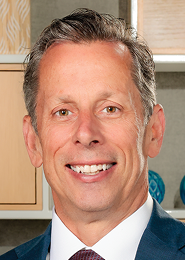
John D'Angelo
Improving Lives And
Serving Communities
Editors’ Note
John D’Angelo assumed the role of President and Chief Executive Officer of Northwell Health on October 1, 2025. D’Angelo led Northwell’s operational response to the COVID-19 pandemic as Operations Chief for the system command center and was later appointed Chief of Integrated Operations. Leveraging lessons from the pandemic, he integrates Northwell’s extensive operational resources in the post-pandemic era. Previously, as Senior Vice President and Executive Director of Northwell Health’s Emergency Medicine Service Line, he oversaw the clinical and operational performance of Northwell’s emergency departments, observation units, and a growing network of urgent care centers, serving nearly 1.5 million patients annually. As an Emergency Medicine physician for over 30 years, D’Angelo has a keen understanding of clinical care delivery, quality, process improvement and operations management. He has spearheaded numerous initiatives that have distinguished Northwell over the years. A leader in data transparency and access, D’Angelo co-led the creation of Real-Time Actionable Data, enhancing operational data visibility for leaders and frontline staff across Northwell. This innovation earned Northwell’s top award in 2019. he has served as the Chair for the Northwell Health Physician Partners Board of Governors & Executive Committee from 2019 -2022. He is also a Professor of Emergency Medicine at the Donald and Barbara Zucker School of Medicine at Hofstra/Northwell. A Long Island native, D’Angelo received his medical degree from SUNY Stony Brook and subsequently completed a residency in Emergency Medicine at Geisinger Medical Center, Danville, PA. He started his career as an attending at Holyoke Hospital in Massachusetts and transitioned to an attending physician at Northwell Health’s Glen Cove Hospital in 2000 and appointed Chair of the Glen Cove’s Emergency Department in 2005. He also served as medical director to numerous EMS agencies throughout his career and served in the United States Army Reserve from 2001-2011.
Institution Brief
Northwell (northwell.edu) is the largest not-for-profit health system in the Northeast, serving residents of New York and Connecticut with 28 hospitals, more than 1,000 outpatient facilities, 22,000 nurses and over 20,000 physicians. Northwell cares for more than three million people annually in the New York metro area, including Long Island, the Hudson Valley, western Connecticut and beyond, thanks to philanthropic support from our communities. Northwell is New York State’s largest private employer with over 106,000 employees – including members of Northwell Health Physician Partners and Nuvance Health Medical Practices – who are working to change health care for the better. Northwell, named a TIME100 Most Influential Companies 2025, is making breakthroughs in medicine at the Feinstein Institutes for Medical Research. Northwell is training the next generation of medical professionals at the visionary Donald and Barbara Zucker School of Medicine at Hofstra/Northwell and the Hofstra Northwell School of Nursing and Physician Assistant Studies.
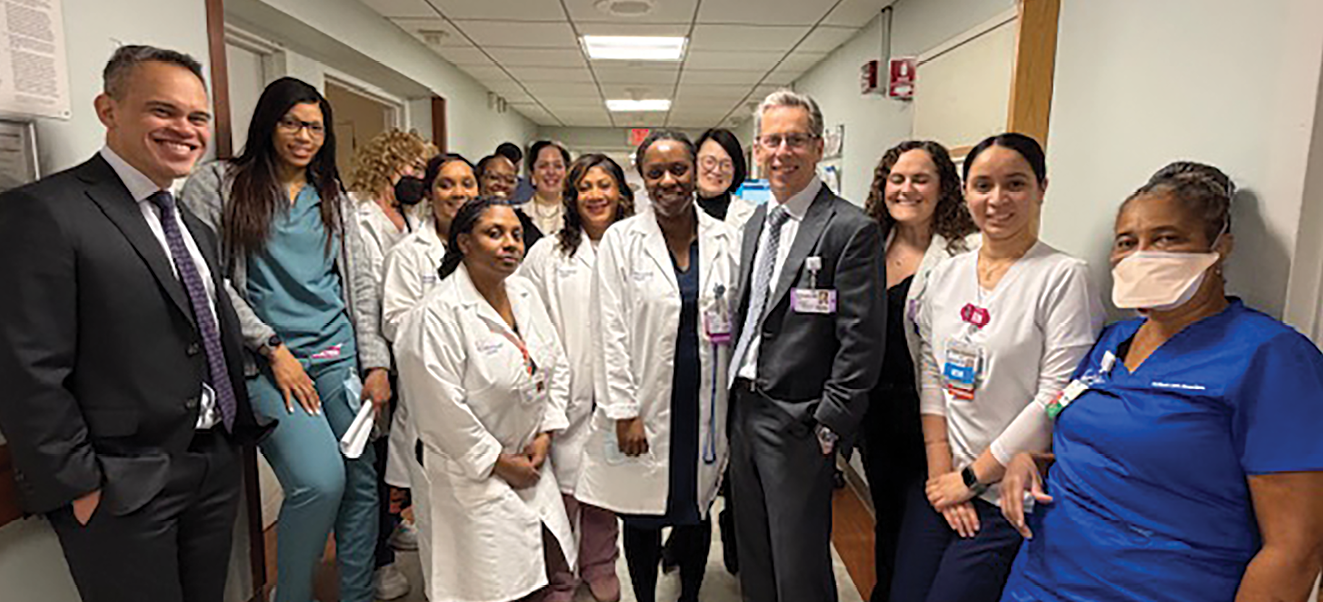
President and CEO Dr. John D’Angelo with Northwell hospital staff
Will you discuss your career journey?
I started in emergency medicine and spent nearly 30 years at the bedside – that’s where I learned to navigate uncertainty, lead under pressure, and understand what frontline teams actually face. My career progressed gradually: chief resident, department chair, running all emergency services, then market president, and now CEO and president of Northwell. The constant thread through all of it has been learning that you can have greater impact at scale than you can with one patient at a time, but you never lose sight of why that work matters – the mission drives everything.
“Our values center on accessibility, quality, innovation, and genuine partnership with the patients we serve; we measure success not by margin, but by lives changed and healthier communities.”
How do you describe Northwell Health’s culture and values?
Our culture is built on purpose-driven commitment. We’re a not-for-profit, which means every dollar we earn goes back into the mission of serving patients and communities – not shareholders. Our values center on accessibility, quality, innovation, and genuine partnership with the patients we serve; we measure success not by margin, but by lives changed and healthier communities. We’re committed to being the employer of choice and prioritize the well-being, development and investment in our 106,000 team members. That commitment to purpose and our people is why we have so many at Northwell, like myself, who have been with the organization so long.
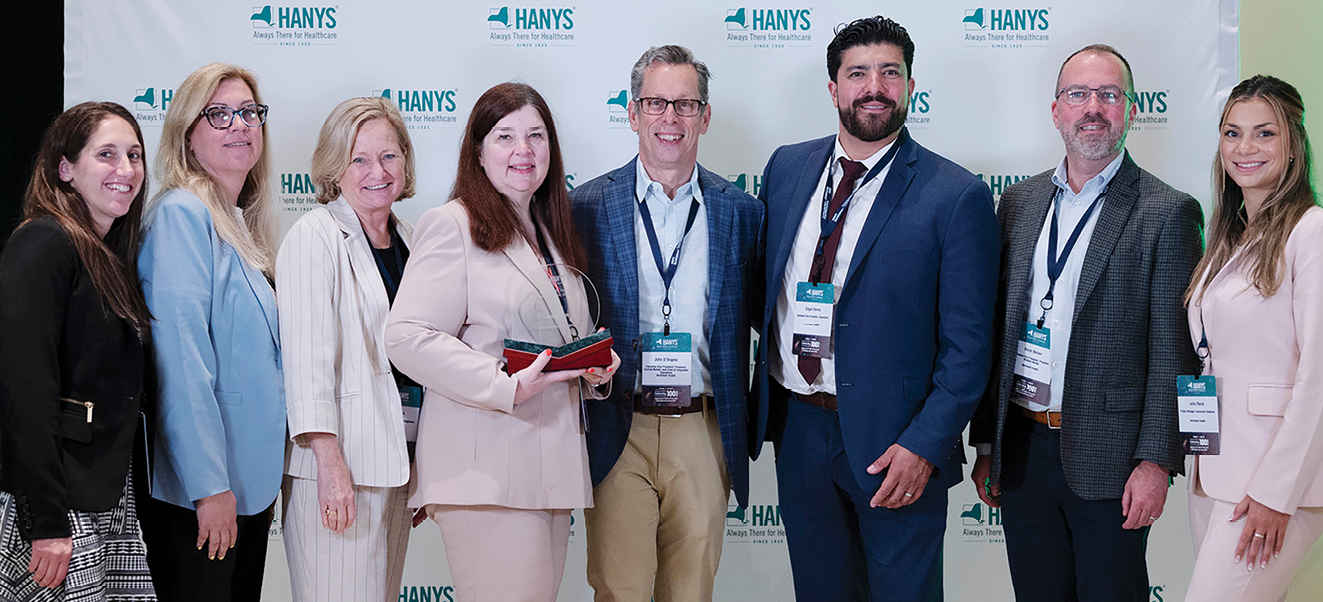
Northwell’s Street Medicine team, led by president and CEO Dr. John D’Angelo (center), received the 2025 Community Health Improvement Award from The Healthcare Association of New York State. The Street Medicine team delivers essential healthcare services to community members who are experiencing homelessness and connects them to comprehensive services, including housing and employment.
What have been the keys to Northwell Health’s industry leadership?
First, we’ve never lost sight of our mission – we’re here to serve, not just survive financially. Second, we invest relentlessly in clinical excellence and innovation, whether that’s through the Feinstein Institutes for breakthrough research or the Zucker School of Medicine at Hofstra/Northwell training the next generation. Third, we’re willing to reimagine the right future for healthcare, and we are willing to take the lead in delivering that future. We know the status quo isn’t sustainable; we want to take the lead in driving sustainable solutions to the challenges facing the industry, such as the affordability challenges, workforce shortages, rising burden of chronic disease and the increasing demand with an aging population. And we feel we are better positioned than anyone to drive those solutions without sacrificing access, quality or outcomes.
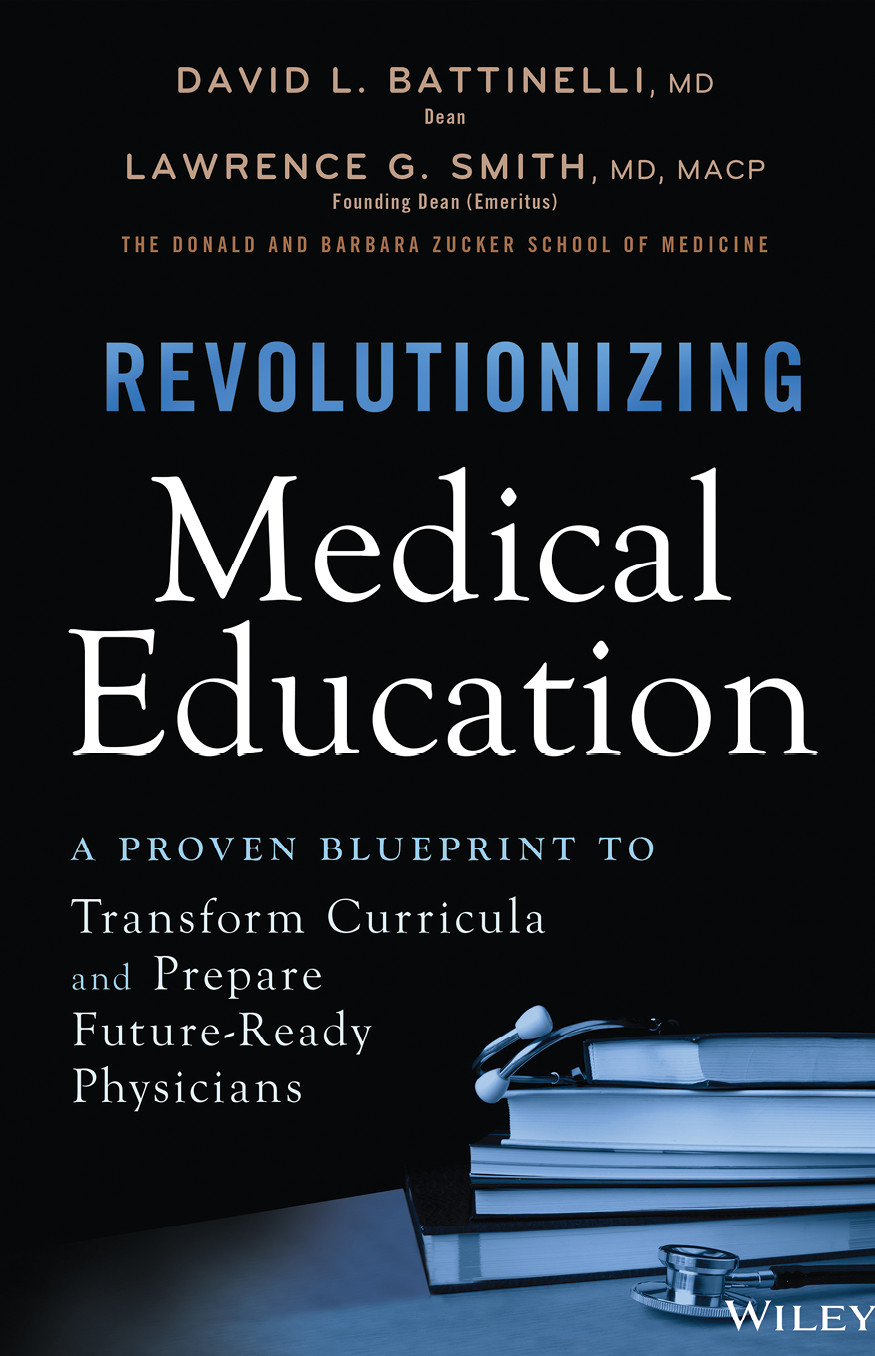
In the new book Revolutionizing Medical Education, authors David Battinelli, MD, Dean of the Donald and Barbara Zucker School of Medicine and Lawrence G. Smith, MD, Founding Dean Emeritus, share their transformative approach to medical education.
Will you highlight the unique approach to medical education of the Donald and Barbara Zucker School of Medicine at Hofstra/Northwell?
Roughly 15 years ago, we opened a new medical school that turned medical education upside down by reimagining how future physicians are trained. Today, that school, the Donald and Barbara Zucker School of Medicine at Hofstra/Northwell, has become a model for other schools around the globe. We are training physicians for the future of healthcare, not the past. We’re integrating clinical excellence with innovation, population health, and real-world problem-solving from day one – not as electives, but as core curriculum.
Since its founding, the school has pioneered an innovative curriculum that aligns with the future demands of the medical profession: more connected to patients, more science-based, more humanistic, and more aware of the varied needs of society. It is learner-centered, rather than teacher-centered, where future doctors connect with patients from day one through required accelerated emergency medical technician training qualifying them to assist in responding to emergency calls. Grades are eliminated, as are class rankings, with traditional multiple-choice exams replaced with essay assessments and high-fidelity simulations with a focus on developing lifelong learners.
I believe our medical school captures the innovation and bold thinking that defines Northwell’s commitment to shaping the future of healthcare and ultimately improving the health of the communities we serve.
“I believe our medical school captures the innovation and bold thinking that defines Northwell’s commitment to shaping the future of healthcare and ultimately improving the health of the communities we serve.”
How is AI impacting the way Northwell Health operates?
I see AI as an incredible tool that health systems like Northwell can deploy to address many of the challenges we face in healthcare delivery and also to help non-for-profit providers drive efficiencies that can help them better mitigate the headwinds facing the industry. I see the deployment opportunities in three main areas – clinical delivery, workforce optimization, and business optimization. I see AI as an incredible tool that will amplify the capabilities of our workforce, not replace them. On the clinical delivery side, AI can be a powerful tool to surface patterns in data, support clinical decision-making, and free our teams from non-value-added administrative work so they have more time at the bedside. It can be leveraged to enhance monitoring and support early detection of clinical issues where patients would benefit from proactive intervention. Beyond clinical, AI will enable efficiencies in all areas of operations from marketing to revenue cycle to supply chain.
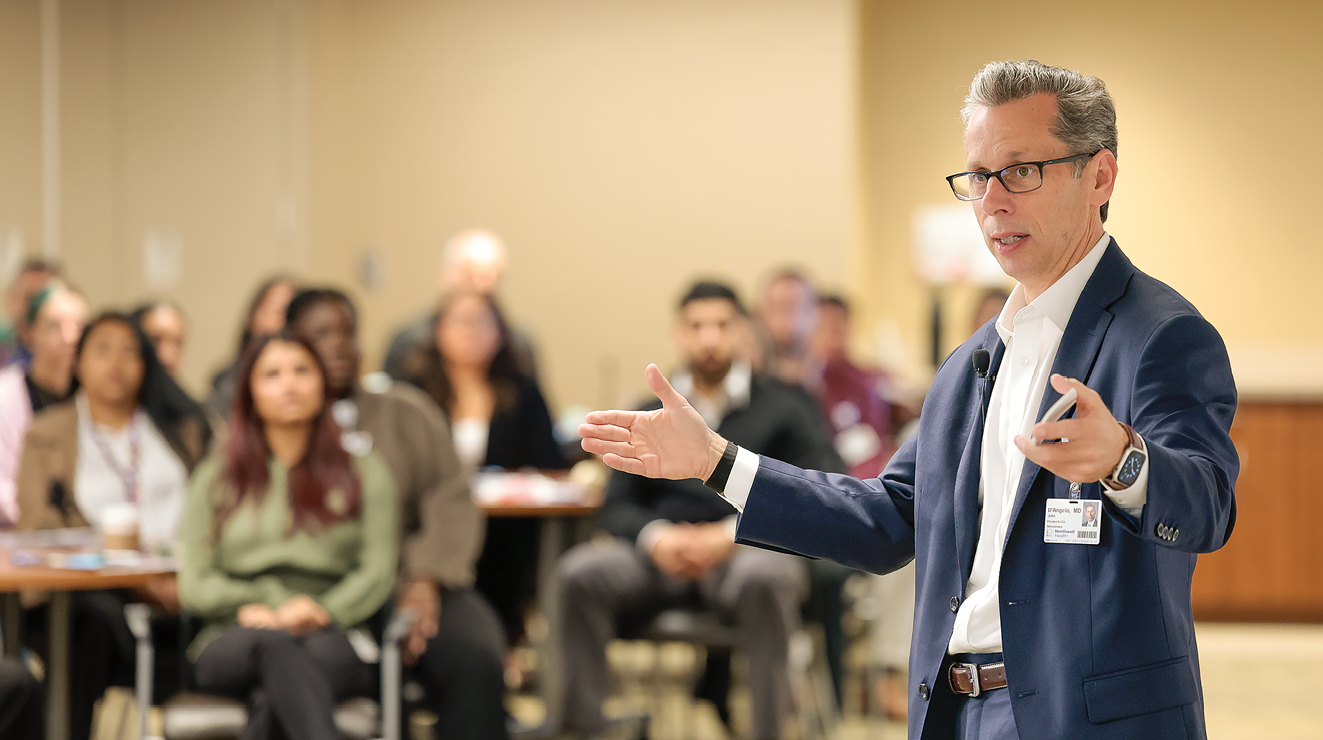
Dr. John D’Angelo greets new Northwell employees on their very first day on the job. The orientation program, known as “Beginnings,” features a highly interactive welcome session where new team members learn about the health system’s core values, mission and strategic vision to help them understand the vital role they play in providing care to the community.
Will you discuss Northwell Health’s commitment to community and population health?
Health isn’t created in hospitals; it is shaped in the communities where people live, work, eat, and age. We are committed to excellence in treating sickness, but need to be equally committed to promoting better health and preventing disease. Our $2.7 billion annual community benefit investment reflects our genuine commitment to working with communities, and our scale allows us to embed world-class resources directly into neighborhoods – from doctors visiting homebound seniors to counselors helping families navigate bills – bringing dignity to every interaction because trust is earned through consistent action and respect. When we invest upstream in prevention, behavioral health, food security, and wellness, we’re not just treating symptoms – we’re building healthier, more resilient communities where people can truly thrive.
What do you see as the biggest challenges facing leading health systems and hospitals as you look to the future?
The biggest challenge is that the business model that built American healthcare is now broken. The old playbook of relying on hospital margins to ensure financial stability for hospitals and health systems is no longer sustainable. This is driven by a flawed reimbursement structure that doesn’t cover the cost of most of the care provided, challenging the survivability of hospitals and health systems. This reality is coupled with the perfect storm of an affordability crisis for patients, a demographic tidal wave of an aging population with complex chronic diseases, and a systemic workforce crisis that threatens our ability to deliver care.
The path forward requires a fundamental evolution. We must shift from a system that just treats sickness to one that partners with people throughout their lives to build health. This means a fundamental shift from episodic, transactional care to proactive, continuous partnerships with patients. These challenges are solvable, but only if we’re willing to reimagine the model, not just optimize the old one.
What is your vision for the evolving role of the hospital as health systems grow their ambulatory care and outpatient facilities?
The hospital will always be essential for acute, complex care – that’s not changing. But its role is expanding; it’s becoming the backbone of an integrated health system that manages care across all settings. We’re moving toward “many entry points, but one front door” – patients can access us in their community through urgent care, primary care, or telehealth, but they experience the same coordinated, reliable system. The hospital becomes the center of coordination and expertise, but not the only place care happens. We’re also investing in prevention and early intervention so fewer people need acute hospitalization in the first place.
What do you tell young people about the types of careers the medical profession offers?
I tell them the breadth of medicine is extraordinary – you can be a clinician, a researcher, an innovator, a leader, a community health advocate, or any combination. But more importantly, I tell them that if they choose healthcare, they’re choosing a mission. You’re not doing this for money or status; you’re doing it to improve lives and serve communities. And right now, that mission is more urgent than ever. We’re reimagining what healthcare can be, and we need talented, committed people willing to think differently and push for change.
When you look to the future of healthcare, what excites you the most?
What excites me is the opportunity to prove that a large, complex health system can be mission-driven, innovative, affordable, and genuinely focused on partnership with patients. We’re not limited by the status quo; we’re actively building something different – proactive health management, high-reliability systems, workforce models that bring joy back to medicine. And the technology and data available now make it possible to personalize and coordinate care at scale in ways that weren’t feasible five years ago. The future of healthcare isn’t determined by external forces; it’s determined by leaders willing to reimagine it. That’s the work we’re in, and I’ve never been more energized by it.