- Home
- Media Kit
- MediaJet
- Current Issue
- Past Issues
- Ad Specs-Submission
- Reprints (PDF)
- Photo Specifications (PDF)
- Contact Us
- PRIVACY POLICY
- TERMS OF USE
Loading

ONLINE

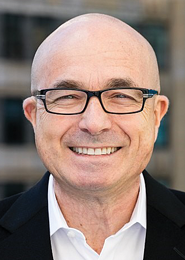
Jeremy Levin
The Delivery Of
Meaningful Medicines
Editors’ Note
Jeremy Levin is co-founder and executive chairman of Ovid Therapeutics, a public company developing novel medicines to treat epilepsies and seizure-related disorders. Levin is concurrently the chairman of Opthea. Prior to founding Ovid, he was president and CEO of Teva Pharmaceutical Industries. Before Teva, he was a member of the executive committee of Bristol-Myers Squibb. Levin joined BMS from Novartis, where he was the global head of strategic alliances. He has previously served as a member of the board of directors of various public biopharmaceutical companies, including Biocon Ltd. and Lundbeck. Levin also serves on the board and executive committee of the Biotechnology Innovation Organization (BIO) as the immediate past chairman. He was voted as one of the 25 most influential biotechnology leaders by Fierce Biotech, one of the top three biotechnology CEOs by The Healthcare Technology Report, and one of the PharmaVoice100 CEOs in 2020 and 2021. He was selected by Endpoints in 2021 as one of the 60 living pioneers of the industry. He is the recipient of the Albert Einstein Award for Leadership in Life Sciences and the B’nai B’rith Award for Distinguished Achievement. In June 2020, he edited and published the best seller, Biotechnology in the Time of Covid-19. Levin has been widely quoted and interviewed in national and international news outlets and life science industry-related publications. He has practiced medicine at university hospitals in England, South Africa and Switzerland. Levin earned a first-class bachelor degree in zoology, winning the University Prize, and subsequently was awarded a master’s degree and D.Phil. in chromatin structure (Oxford). Thereafter, he earned his MBChir (Cambridge), where he won the Kermode Prize for his work on Captopril.
Will you highlight your career journey?
My career has not followed a conventional path. In many ways, it began far from where it has ended up. My family comes from a small farming town in the northwestern Cape of South Africa. I could not properly read or write until I was about 11 years old. That leaves a mark. I remember what it feels like to be behind – to watch others move ahead while you are still trying to catch up. I left high school with poor grades – two Cs and two Ds – and no clear plan, but with curiosity and a belief that it was important to contribute and, in some way, change things. A single chance meeting opened that door. I met Professor Stuart Hampshire at Oxford. I was not prepared for that opportunity, but I said yes. Three years later, I graduated with a first-class degree. That led me into doctoral work on the thermodynamics of DNA supercoiling. During that time, I met a patient with Xeroderma pigmentosum. That encounter stayed with me. It shifted something. Science became personal. I went on to train in medicine at Cambridge, where patients became the center of my life. I learned a simple truth that has never left me: when you give medicine to people, you are changing the course of their lives. That realization shaped everything that followed.
I moved into the pharmaceutical industry, first at Novartis and then at Bristol Myers Squibb. At Bristol Myers Squibb, I led the decision to acquire Medarex. At the time, the idea of using the immune system to treat cancer was not widely accepted. There was strong, vocal resistance, and the outcome was uncertain. We knew we could be wrong, but the science was compelling. Acting on that required conviction ahead of consensus. At the time, I was told that if the decision proved catastrophic, I would likely be asked to step down. We took the decision and it helped open an entirely new class of cancer therapies. It reinforced something I have come to believe: when the science is right, leadership means moving before it is obvious – and sometimes in the face of opposition.
I later led Teva Pharmaceutical Industries. That brought a different challenge – scale, complexity, and responsibility across many countries and systems. It made clear how difficult it is to keep large organizations aligned, and how easily distance from patients begins to shape decisions.
I eventually chose to return to smaller, innovation-driven companies. That was not a step back; it was a way to stay close to the science, to patients, and to the long, uncertain process of building something that matters. Innovation takes time. It requires focus and the willingness to pursue ideas that are not yet proven.
Looking back, the common thread is not the roles, but the decisions – often made with incomplete information, often ahead of consensus. Acting under uncertainty has been a constant. It leaves me with a simple question: if the science is now possible, how do we ensure it actually reaches the people whose lives depend on it?
Will you discuss the forces that have shaped your worldview?
My worldview has been shaped by three forces: early life, training in medicine, and leading complex global organizations. Growing up with uncertainty, moving across countries, and at times living within deeply restrictive political systems leaves an imprint. You see early how much people depend on systems working – and how quickly societies begin to fracture when they do not. It teaches you that stability and opportunity are not permanent. They have to be sustained.
Medicine reinforced that in a different way. It brings you face to face with people at their most vulnerable. There is very little room for abstraction. You learn a simple truth: when a therapy reaches a patient, you are entering into a covenant with them – to make them healthier, to try to cure their disease, and to give them the chance to return to their families and their lives.
My experience in the pharmaceutical industry added another dimension. Leading global organizations exposes you to real complexity – layers of decision-making, multiple geographies, languages, and cultures, all trying to do one thing well. Translating intent into action across that environment requires discipline, clarity, and consistency over time. It also makes clear that the development and delivery of medicines are shaped as much by external forces as by internal ones. Social structures, public policy, economic conditions, and levels of trust all determine whether innovation actually reaches patients. That has led me to a broader view: healthcare is not simply a sector. It is a core component of a functioning democracy. When it works, it reinforces stability and confidence. When it falters, the effects spread quickly. I have seen that directly. When healthcare fails, trust in institutions follows.
Taken together, these experiences have shaped a worldview that is both optimistic and cautious – optimistic about what science now makes possible, and cautious about whether the systems around it will deliver on that promise – and a determination to make a difference, however small, and to take responsibility for doing so.
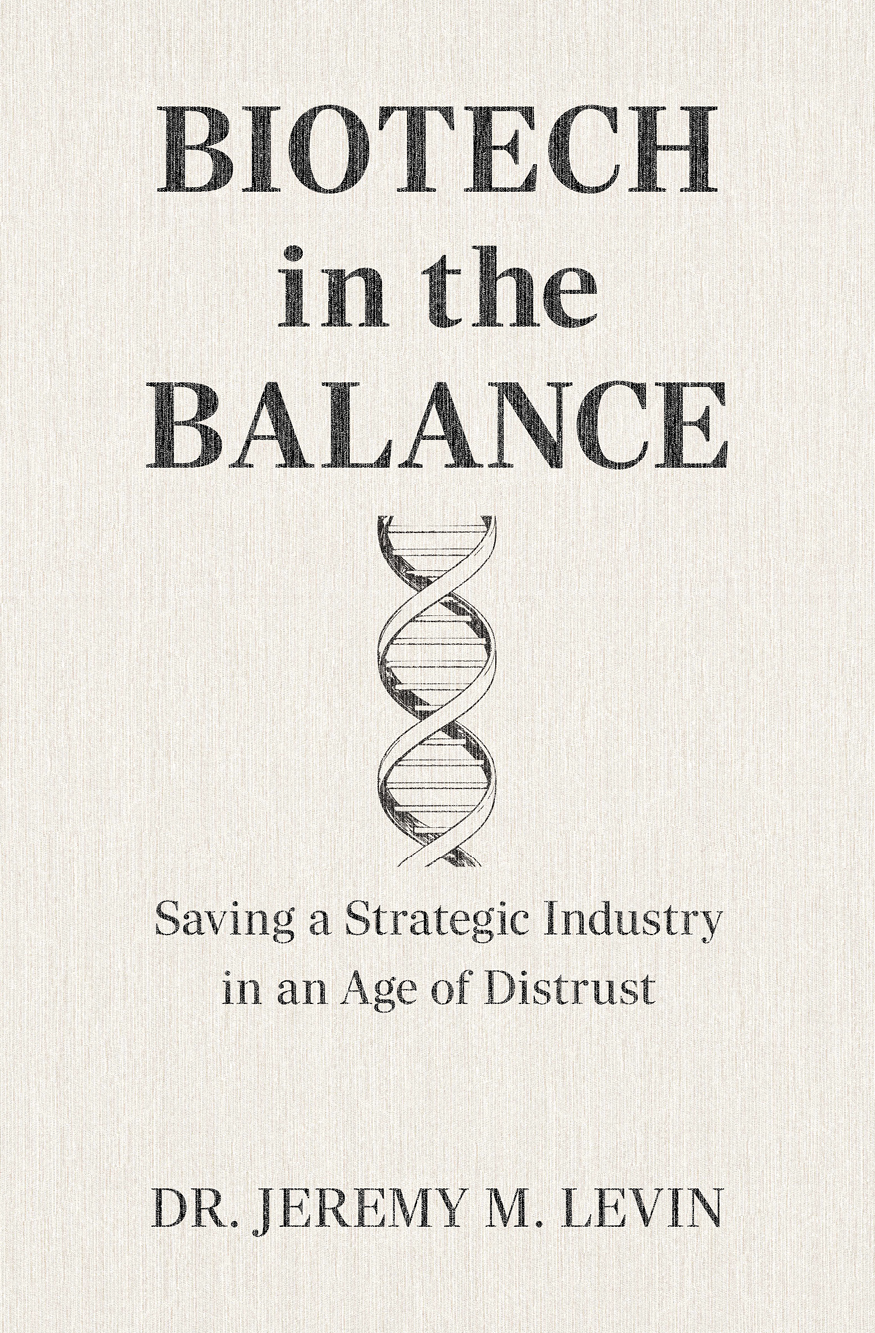
What interested you in writing the book, Biotech in the Balance?
The book came out of a growing sense that something important was being missed in how we think about progress in biotechnology. I wrote it because I became concerned that we were taking the system behind that progress for granted. That question stayed with me, and over time I found myself looking at decisions differently – seeing not just the science, but whether the system around it would actually carry it to patients.
I have had the opportunity to watch and work in this industry from near its inception to where it stands today – across more than a hundred companies, and through periods of profound change, including the rapid emergence of new capabilities in places like China. I have seen how the system has evolved, where it works, and where it is beginning to come under strain. At a certain point, it no longer felt sufficient to observe. It felt necessary to say so clearly.
Biotechnology is the process by which scientific insight into biology is converted into medicines that alter the course of disease. It is one of the few areas where knowledge can be directly translated into longer life, better health, and greater societal stability. But that translation does not happen on its own. It depends on a system that can carry discovery through to patients – reliably, repeatedly, and at scale.
From the outside, the picture looks strong. Scientific advances are accelerating, new modalities are emerging, and the field continues to produce breakthroughs. But working within the system, I saw a different reality. The pathway from discovery to patient is becoming more complex and more fragile. What concerned me was a gradual drift. The elements that support this process – capital, regulation, development pathways, and public confidence – are no longer consistently aligned. The effects are not immediate – but over time, they become decisive.
At the same time, biotechnology is still not widely recognized as a strategic capability. If it continues to be treated as a conventional sector, it will follow a familiar path. As with solar panels and rare earths, capability will migrate – not through a single decision, but through sustained neglect and misaligned incentives.
Writing the book was, in part, an attempt to take responsibility for that – to make the system visible, to describe where it is weakening, and to be clear about what is at risk. It is not a critique from the sidelines, but a practical framework for those making decisions across science, industry, and policy.
What are the key messages you wanted to convey in the book?
The book is intended to leave the reader with a small number of clear messages. First, biotechnology is a strategic capability. It is not simply another sector of the economy. It underpins health, economic resilience, and national capacity, and should be treated accordingly. Second, scientific progress alone is not enough. Breakthroughs only matter if they reach patients, and that depends on a system that functions effectively. When capital, regulation, development, and trust are not aligned, even strong science can fail to deliver. Third, time matters. Developing meaningful therapies takes years, often decades. If the system becomes too focused on short-term outcomes, it will favor what is easy – and neglect what matters most. Fourth, trust is essential. How medicines are understood by the public shapes whether they are accepted and used. When communication shifts toward promotion rather than understanding, confidence in the system erodes. Finally, the future is not predetermined. The direction of this industry will be shaped by the decisions made now – by leaders in science, industry, finance, and policy. That responsibility is not abstract. In the book, I outline a set of ten commitments – drawing inspiration from the spirit of the 1947 Johnson & Johnson Credo – adapted for a world shaped by shifting geopolitical dynamics and changing economic forces. They are intended as a practical guide for how we sustain the system and ensure it continues to serve patients.
What needs to be done to reform the biotechnology industry?
The more relevant question is whether the system remains aligned with what it is intended to do. At its core, the industry exists to serve patients – to restore health and, in many cases, hope. Everything else in the system should be measured against that purpose. To achieve that, the industry depends on a chain of interdependent elements – discovery, development, regulation, capital, manufacturing, and access. When those elements are aligned, the system works. When they begin to diverge, the effects become visible over time. That divergence is now evident. There is a growing gap between the time required for biological innovation and the time horizons of capital. Development pathways are becoming less consistent. Approval does not always translate into access. And public understanding of medicines is becoming less grounded in how they are actually developed. When that happens, it is not abstract. It means patients wait longer – or never receive therapies that could have changed their lives. In some cases, those delays are irreversible. For some patients, that is the difference between progression and survival.
There is also a broader issue of positioning. If biotechnology is treated as a conventional sector – no different from building a new model of an automobile or releasing a software upgrade – its purpose becomes distorted. Those industries deliver products that can be iterated, replaced, or deferred. Medicines are different. They are interventions that affect life, health, and human potential. When that distinction is lost, capability will migrate, as it has in other advanced industries, driven by cost, policy, and incentives.
The response does not lie in a single intervention. It requires a shared understanding across the system. Whether you are a scientist, a company leader, an investor, or a policymaker, the responsibility is the same: to act in a way that advances the delivery of medicines to patients. Once that principle is clear, many of the necessary changes follow naturally.
What needs to be done, ultimately, is to re-anchor the system around its central purpose – and to ensure that every decision reflects that responsibility.
You serve as executive chair of Ovid Therapeutics. Will you provide an overview of Ovid, and how you define its mission?
Ovid is a company focused on developing new treatments for conditions where brain signaling is not properly controlled, including neurological and neuropsychiatric disorders such as severe epilepsies and certain forms of psychosis. In many of these areas, patients and those who care for them have few effective options. These are not abstract conditions – they shape daily life in very real ways.
Our approach is to act on the underlying biology, not just manage symptoms. One program, OV329, is designed to increase the brain’s natural inhibitory signal, GABA, to reduce abnormal electrical activity, with the potential to help those living with treatment resistant epilepsy and other serious conditions. This approach was used before, but was limited by safety. Our goal is to retain the benefit while improving safety and tolerability, so that treatment is less of a burden. Early clinical data shows we are engaging the biology as intended.
A second area of focus targets a key regulatory system in brain cells known as KCC2. Rather than dampening activity from the outside, this approach aims to restore the brain’s internal balance. It is novel biology, with the potential to address disease more directly. This reflects a deliberate choice. We are prepared to pursue novel and potentially exciting biology where the expected impact justifies the risk.
The company is built around focus and discipline – selecting the right biology, advancing it carefully, and staying committed over time. In neuroscience, progress is not immediate. We see our stakeholders clearly: patients and their families, who depend on new therapies; our employees, who do the work; and our shareholders, who enable it. Our responsibility is to align those interests around a single outcome – the delivery of meaningful medicines.
Our mission is simple: to translate focused scientific ideas into treatments that materially improve the lives of patients with intractable disorders of the brain.
Ovid is led by our Chief Executive Officer, Meg Alexander, an exceptional leader who combines scientific rigor, operational discipline, and a deep commitment to patients. Together with a talented management team and board, she is guiding the company through its next phase of development.
What do you feel are the keys to effective leadership?
There are a few essential keys to effective leadership. The first is clarity – seeing things as they are and being willing to say so. That often means speaking before there is agreement. Some of the most important decisions I have been part of were made before there was consensus. The second is focus – the discipline to decide what not to do as much as what to do. Most organizations fail not because they lack opportunity, but because they try to do too many things at once. The third is judgment under uncertainty. In most meaningful situations, the data is incomplete and the outcome is not clear. Leadership requires the willingness to act anyway – and to accept responsibility for that decision. You do not always know if you are right. The fourth is people. Nothing of consequence is achieved alone. Building teams, trusting them, and allowing others to grow is not optional – it is central to the work. The fifth is time. Important work takes longer than expected. Staying with it – through uncertainty and periods where progress is not obvious – is often what determines the outcome. The sixth is trust – within teams, with partners, and with the public. Without trust, even the right decisions fail to take hold. The seventh is example. Leadership is visible. People watch what you do more than what you say. If your actions and your words diverge, trust is lost quickly. Over time, consistency between the two becomes one of the strongest forms of leadership. Finally, purpose matters. Leadership is not about position or recognition. It is about serving something larger than yourself. In healthcare, that purpose is clear – the work affects patients and their families, often at the most difficult moments in their lives.
These are not abstract ideas. They are applied repeatedly, often under pressure and before outcomes are certain. None of this is easy in practice.
What advice do you offer to young people beginning their careers?
Do not assume your starting point defines your trajectory. Stay curious. Ask how things work and why. Curiosity is often the beginning of insight, and over time it becomes one of your greatest advantages.
Be humble – but determined. There is always more to learn, but progress requires persistence, especially when the path is not clear.
Be willing to act before you feel fully ready. Many of the decisions that shape a career – and sometimes a life – are made without complete information. Waiting for certainty often means missing the moment.
Take responsibility early. Do not wait for authority or title. Leadership begins the moment you take ownership of a problem and decide to do something about it.
Choose your work carefully. It matters what you spend your time on. In fields like healthcare, the work is not abstract – it affects individuals, families, and society. That should shape how you make decisions.
Understand that how you behave matters as much as what you achieve. People will watch what you do. Over time, your actions – not your intentions – define your reputation.
Help others succeed. Careers are not built alone. There is a natural reciprocity in supporting those around you, and the strongest teams are built on trust and shared success.
Be prepared for difficulty. Not everything will work. The ability to adjust, learn, and continue is more important than avoiding failure.
And take some enjoyment in the work. This is demanding work, and it often takes time before results are visible. Finding meaning in the process makes it sustainable.
You do not need to have everything mapped out. But you do need to be curious, engaged, and willing to take responsibility. I have seen this in my own life – where you start does not define you. What matters is how you choose to move forward. Choice is always yours – and it is made one decision at a time, often before you feel ready. 