- Home
- Media Kit
- MediaJet
- Current Issue
- Past Issues
- Ad Specs-Submission
- Reprints (PDF)
- Photo Specifications (PDF)
- Contact Us
- PRIVACY POLICY
- TERMS OF USE
Loading

ONLINE

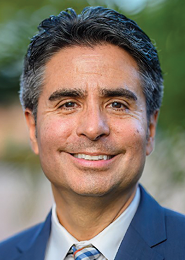
Edgar Sandoval Sr.
Serving Children And Families
Editors’ Note
Edgar Sandoval Sr. is president and CEO of World Vision (worldvision.org). Sandoval was born in Los Angeles and grew up in Latin America. When he was 18, family hardship prompted him to return alone to the United States, speaking no English, with only his U.S. passport and $50 in his pocket. After earning degrees in industrial engineering and sociology from Rutgers University and an MBA from the Wharton School, Sandavol was recruited by Proctor & Gamble. A highlight of his 20-year P&G career was directing the creation and launch of the internationally acclaimed #LikeAGirl campaign, which dramatically transformed the popular perception of the phrase. In 2015, Sandavol joined World Vision as chief operating officer in response to a clear calling he and his wife, Leiza, felt to the organization’s ministry. After stepping into the role of president and CEO in 2018, he led the launch of Chosen®, World Vision’s invitation to child sponsorship that puts the power to choose in a child’s hands – flipping the script on a 70-year-old industry and garnering national recognition for innovation and impact. Under his leadership, World Vision has seen five consecutive years of record-breaking operating revenue contributing to the organization’s goal of equipping and empowering more people than ever to step out of poverty into fuller lives. In addition, the organization has received the highest possible financial accountability ratings from top watchdog organizations like Charity Navigator and the Better Business Bureau. As World Vision president, Sandoval has traveled to some of the places it’s toughest to be a child, including the Venezuela/Colombia border, gang-controlled urban areas of Honduras, Rohingya refugee settlements in Bangladesh, as well as the Sudan-Chad border, where he witnessed the impact of the world’s largest displacement crisis. A highly respected leader in the humanitarian space, he serves on the board of the U.S. Global Leadership Coalition and has appeared as a guest on national outlets including Fox News, The Washington Post, Vox, and Religion News Service. He is also a regular contributor of guided Scripture videos to YouVersion, the world’s most popular Bible app.
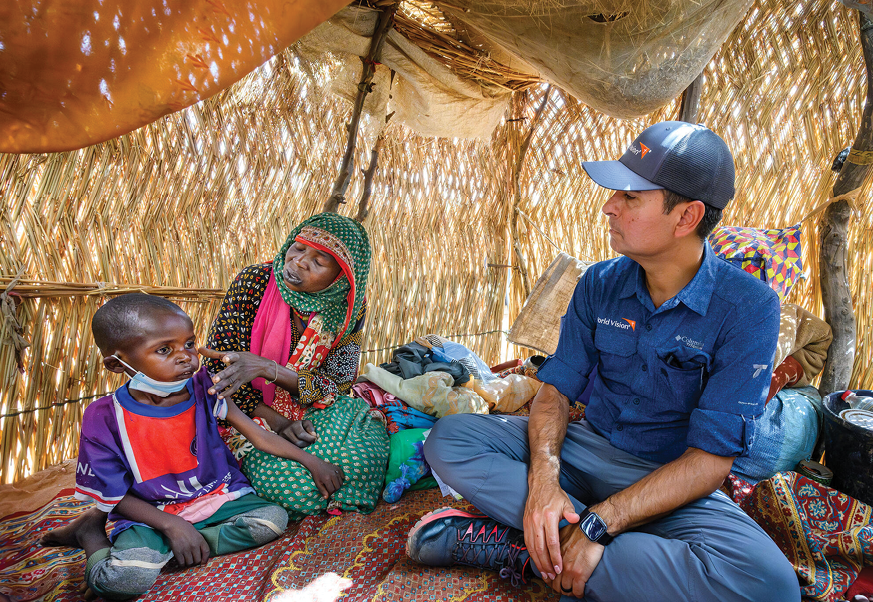
Edgar Sandoval Sr, with Sudanese refugee Kaltoum
and her five-year-old son, Adoum
Will you discuss your career journey?
I was born in Los Angeles, but grew up in Latin America, where I encountered poverty firsthand at an early age. When I was 18, family hardship forced me to return to the United States alone, with just $50 in my pocket, my U.S. passport, and very little understanding of what the future would hold. I didn’t speak English, and my first job was working the grill at Burger King. Those early experiences taught me resilience, humility, and the dignity of hard work.
I later spent more than two decades in the corporate world, including Procter & Gamble, where I had the opportunity to lead the #LikeAGirl campaign. That work was formative. We uncovered a powerful insight: across cultures and backgrounds, girls tended to lose confidence at adolescence. We created the #LikeAGirl campaign with a simple ambition: to change the world one girl at a time. #LikeAGirl became one of the most successful communications campaigns in the history of P&G. With over 80 million views, the video became the most-watched video in P&G’s history. It played during the Super Bowl. It swept the 2015 Cannes Advertising Festival awards. It even won the Emmy for outstanding commercial in 2015. The most rewarding part was the millions of testimonials from girls, boys, dads, moms, teachers, coaches, and people from all walks of life declaring their commitment to forever change the meaning of “like a girl” from an insult to a compliment. This was proven by a survey showing that before the campaign, only 19 percent of people thought “like a girl” was positive. At the end of the first year of the campaign, that number had grown to 79 percent.
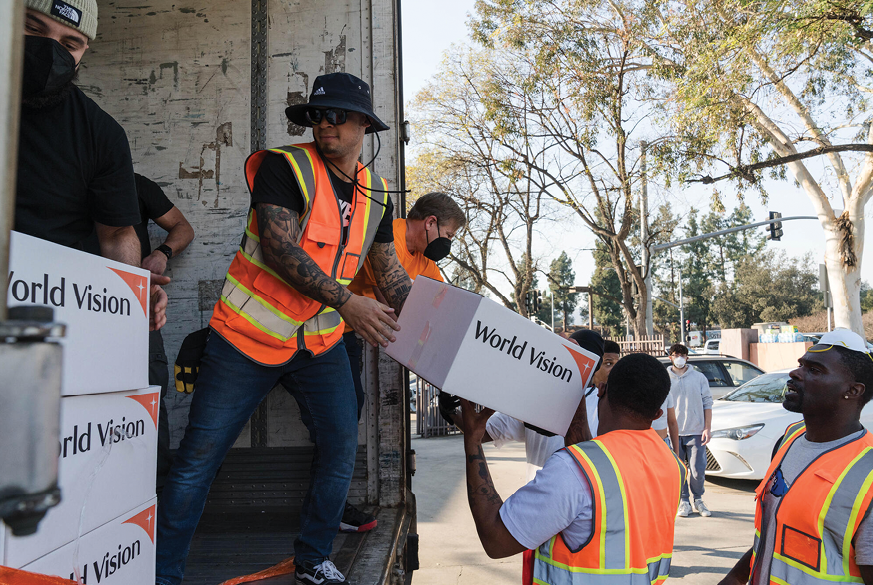
World Vision arrives at Flintridge Center in Pasadena,
California with supplies for people impacted by wild fires
in January 2024
I thought there was more for me to do in corporate America – but the Lord had other plans. In 2015, my wife, Leiza, and I began to feel a clear calling to World Vision, and after a season of discernment, we decided to say yes. In hindsight, God used everything that came before World Vision to prepare me:
•Experiencing hardship as a teenager, when there wasn’t enough food to eat, gave me empathy for the many vulnerable children and families around the world for whom hunger is a daily reality.
•Coming back to the U.S. by myself, speaking no English, and feeling broke and lonely helped me understand the feelings of millions of refugees, displaced people, and people forced to migrate.
•And as a young man, being smart and ambitious but having all the odds stacked against me, helped me identify strongly with the kids I’ve met in my travels who are gifted, full of potential, and who just need an opportunity and someone to believe in them.
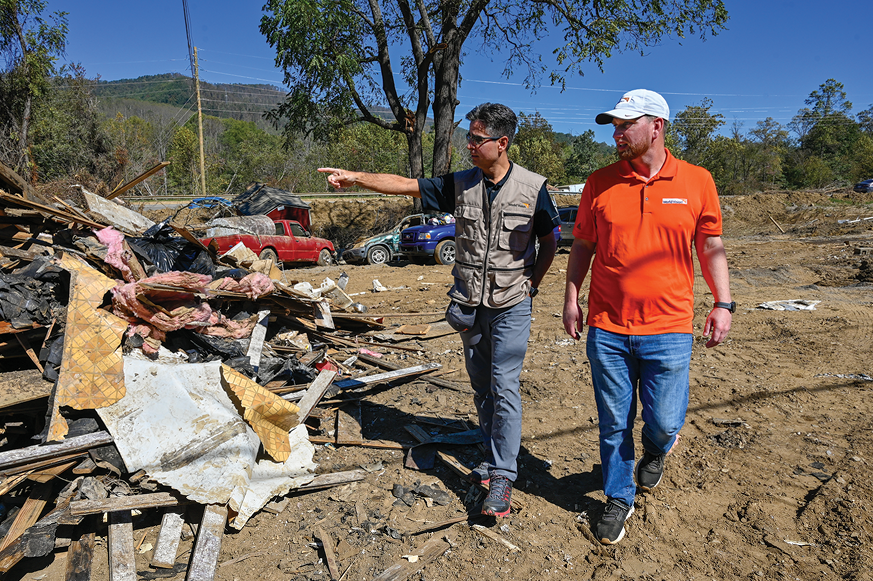
Edgar Sandoval Sr. visits communities impacted by
Hurricane Helene in North Carolina in October 2024
How do you define World Vision’s mission?
World Vision’s mission flows from Jesus’ words in John 10:10 – that every child might experience life in all its fullness. For 75 years, World Vision has had the privilege of serving children and families through disaster, conflict, and extreme poverty – sometimes in the most difficult places in the world to be a child. Last year we reached more than 62 million people – providing lifesaving emergency humanitarian assistance in places experiencing conflict, natural disasters, or instability – and community development work where we empower families to lift themselves out of extreme poverty.
Our mission is to work alongside children, families, and communities to address root causes of vulnerability – so people are not simply surviving crisis to crisis, but building resilient, sustainable futures. Our objective is to leave communities more resilient than when we found them and move on to the next community in need. We’ve always believed lasting change happens when people are empowered. My deepest hope is that World Vision helps the world to see vulnerable children through the eyes of Jesus – with limitless dignity and worth.
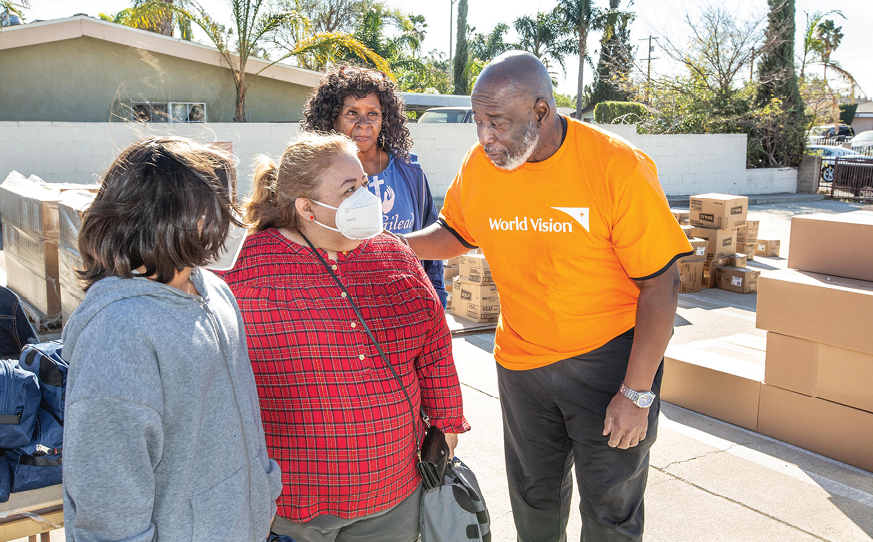
World Vision Relief Distribution at Calvary Baptist Church
in San Fernando providing relief from Southern
California fires
Will you provide an overview of World Vision’s work?
World Vision is one of the world’s largest Christian humanitarian organizations, working in nearly 100 countries. Our work spans emergency response, clean water, health and nutrition, education, child protection, and economic empowerment. What sets World Vision apart is the combination of global reach, deep expertise, and an unshakeable Christian calling. Faith isn’t something we add on – it’s the “why” and the “how.”
We are also deeply committed to the communities we serve. We don’t arrive, deliver aid, and disappear. We partner with local leaders, churches, and institutions over time – because sustainable progress happens when communities are equipped to lead their own development rather than depend on outside solutions.
We’ve been around for more than 75 years, giving us deep experience and proven expertise. We are the largest non-governmental provider of clean water in the developing world. We are the United Nations World Food Program’s largest implementing partner. Eighty-eight percent of the severely malnourished children we treat make a full recovery. It’s an incredible thing to see children go from sick and lifeless to healthy and thriving – a transformation I witnessed when I visited a clinic in Chad set up for Sudanese refugees.
Every year we equip more than 132,000 pastors and church leaders around the world to be the hands and feet of Jesus in their own communities by strengthening families. Here in the U.S., we’ve responded to more than 40 domestic natural disasters over the past five years, working with local churches to bring food, water, and critical supplies to families who’ve lost everything in crises like the Los Angeles and Maui fires and Hurricanes Helene and Milton.
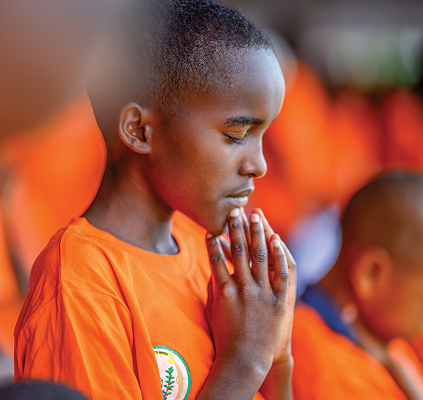
Among thousands gathered in Kageyo AP, Rwanda,
a child praying to celebrate World Vision’s
water work throughout Rwanda
Will you highlight the strength and expertise of the World Vision team?
World Vision’s greatest strength is its people. Most of our staff around the world work in their home regions. Our teams operate in some of the most complex and difficult places around the world – conflict zones, hunger hot spots, and communities facing long-term instability – yet they consistently deliver with professionalism, discipline, and deep respect for local context.
That expertise shows up in tangible ways. Today, World Vision is the largest nongovernmental provider of clean water in the developing world, reaching one new person with lasting access to clean water every ten seconds. Clean water is foundational and transformational as it underpins health, education, and economic opportunity – and our teams have built the technical capacity and long-term partnerships required to deliver it at scale.
It is equally evident in food and nutrition. World Vision is the largest implementing partner of the United Nations World Food Program, distributing lifesaving food assistance in some of the hardest to reach places in the world. In the communities where we treat severe acute malnutrition, 88 percent of children make a full recovery, a result that reflects clinical rigor, strong monitoring, and sustained engagement with families and local health systems.
Just as important, our work is trusted. World Vision consistently receives the highest ratings from independent charity watchdogs, including the Better Business Bureau, Charity Navigator, and Candid, reflecting strong governance, financial stewardship, and transparency. For our donors and partners – many of whom lead complex organizations themselves – this level of accountability matters.
Underlying all of this is a shared sense of purpose. I am continually inspired by our staff’s resilience, technical excellence, and commitment to putting children first, even in the hardest places to be a child.
How do you focus your efforts as a leader?
Leadership today is not for the faint of heart. The complexity leaders are navigating is real – but it’s also an opportunity to lead with clarity, conviction, and hope. My role as a leader is to provide clarity and steadiness, especially during uncertainty. A great mentor once told me: “Everyday leadership is about absorbing fear and exuding hope.” That means being honest about challenges without allowing fear to dictate decisions, and keeping our mission firmly centered on the people we serve. The “hope” needed for times of uncertainty comes from a sturdier place. For me personally, I draw from my faith. I’m hopeful because I hold fast to Jesus’ teachings.
I’ve seen too many situations where children carry an unbearable share of global instability – from hunger and displacement to conflict and extreme weather. Effective leadership requires ensuring those realities are never reduced to statistics alone, but remain central to how we allocate attention, resources, and accountability.
One of my greatest joys as a leader is coaching others. I deeply believe that each of us – regardless of role or title – is called to lead. Leadership is not confined to a position. It’s expressed in how we show up for one another, how we serve the most vulnerable and our donors, and how we place our trust in God.
What role does sponsorship and innovation play in World Vision’s work?
First, I’ll share some background on how World Vision does sponsorship, a core foundational aspect of our development programs. In short, sponsorship helps a child thrive when often everything around them isn’t. It helps a child get into school – and stay there – when distance, fees, and daily survival pressures would otherwise push them out. It strengthens the foundations that make learning possible – clean water, health and nutrition support, protection, and community-led solutions that help families weather drought and hunger. And the impact reaches beyond one child: in our community-focused model, for every child sponsored, four more children in the community benefit, too.
One of the most powerful expressions of our sponsorship approach is Chosen – an innovation that flipped the script on our 50-year-old traditional sponsorship model by allowing children to choose their sponsors. I’ve learned that the best innovation expresses your core organizational beliefs. Chosen is a modern expression of World Vision’s long-standing belief that children are change agents – beautiful messengers through whom God speaks. It may sound simple, but it proved to be deeply transformative. It reaffirmed children’s agency and dignity, while creating a more meaningful and enduring connection between the child and the sponsor. That combination of innovation, dignity, and relationship is what has renewed sponsorship as a catalyst for long-term change. Chosen reinforces a simple but profound truth: lasting impact happens when people are connected to one another, not just to programs. After five years, response rates of Chosen in churches continues to be five times the rate of traditional child sponsorship. In a recent survey, we’ve found that Chosen not only inspires generosity in the church, but also strengthens church engagement and deepens spiritual growth among participants.
We also know that in our field programs, Chosen builds trust with parents, strengthens families, and grows faith through local church partners. Here’s a quote I love from a parent in Uganda: “Watching my child choose their sponsor was the moment I believed my country could change.”
What are your priorities for World Vision?
The world is becoming more complex and fragile, and vulnerable children are paying the highest price. At the same time, despite all the challenges in our world today, we believe extreme poverty is solvable in our lifetime, especially when we all partner together – churches, individual sponsors, major donors, and foundations. Together we believe we can bring lasting change for children, their families, and their communities.
For that reason, we’re inviting the public to help us reach more than 300 million people by 2030 with life, hope, and a future all in the name of Christ in the places where its hardest to be a child. We’ll do this by building on our core competencies such as providing clean water. Our goal is to reach more than 30 million people with access to clean water, including finishing the job of ensuring clean water for everyone, everywhere we work in Zambia, Honduras, and Ghana. And equipping everyone, everywhere we work in 11 countries – at least 10 million people – with access to the tools they need to lift themselves out of extreme poverty.