- Home
- Media Kit
- MediaJet
- Current Issue
- Past Issues
- Ad Specs-Submission
- Reprints (PDF)
- Photo Specifications (PDF)
- Contact Us
- PRIVACY POLICY
- TERMS OF USE
Loading

ONLINE

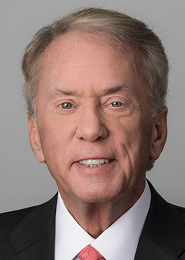
Terrence A. Duffy
Effective Leadership
Editors’ Note
Terry Duffy serves as Chairman and Chief Executive Officer of CME Group, the world’s leading derivatives marketplace. He has led CME Group for more than two decades, since being named Chairman of the Board in 2002. He oversaw the company’s initial public offering at that time and became Executive Chairman in 2006. He spearheaded the historic merger of the Chicago Board of Trade and the Chicago Mercantile Exchange in 2007 before overseeing the acquisition of the New York Mercantile Exchange in 2008. Duffy was named Chairman and Chief Executive Officer in November 2016. In 2018, he led the acquisition of NEX, streamlining trading across futures, options, cash and OTC markets. His landmark 2021 partnership with Google Cloud is bringing expanded access, new products and greater efficiencies to derivatives markets through cloud technology. His groundbreaking 2025 partnership with FanDuel also expands the reach of CME Group benchmark products to a new audience of millions of potential U.S. traders. Duffy has been a CME member since 1981 and a Board member since 1995. He served as Vice Chairman of the Board from 1998 - 2002. Duffy is a leading voice in the financial industry, regularly testifying before Congress on key issues facing derivatives markets and CME Group clients. He has been named FOW’s International CEO of the Year, one of TabbFORUM’s 40 Innovators in Financial Markets, a member of the Futures Industry Association’s Hall of Fame and included in Crain’s Who’s Who in Chicago Business. Under his leadership, CME Group has received a wide range of industry awards recognizing the company, clearing house, technology and overall product innovation. Duffy was appointed by President Bush and confirmed by the U.S. Senate in 2003 to join the Federal Retirement Thrift Investment Board (FRTIB), a position he held until 2013. He serves as Co-Chair of the Mayo Clinic Greater Chicago Leadership Council and is a Board member of the CME Group Foundation. He attended the University of Wisconsin-Whitewater and received a Doctor of Public Service, honoris causa, from Saint Xavier University and a Doctor of Humane Letters from DePaul University.
Company Brief
As the world’s leading derivatives marketplace, CME Group (cmegroup.com) enables clients to trade futures, options, cash and OTC markets, optimize portfolios, and analyze data – empowering market participants worldwide to efficiently manage risk and capture opportunities. CME Group exchanges offer the widest range of global benchmark products across all major asset classes based on interest rates, equity indexes, foreign exchange, cryptocurrencies, energy, agricultural products and metals. The company offers futures and options on futures trading through the CME Globex platform, fixed income trading via BrokerTec and foreign exchange trading on the EBS platform. In addition, it operates one of the world’s leading central counterparty clearing providers, CME Clearing.
What are the keys to effective leadership?
Effective leadership begins with understanding that leading is not the same as directing. The strongest leaders know they don’t always have the answer, and also that the best ideas can come from anywhere. Listening is crucial to successful leadership, as is creating an environment where people feel encouraged to contribute, collaborate and take thoughtful risks. Great leaders are also great anticipators. They are observant and open, consistently reading the room, noticing the environment, and picking up on signals others might miss. As a former trader, I became very attuned to watching for potential market indicators all around. That skill continues to serve me well. For example, I notice what cars people are driving on the roads next to me; or when in a store I pay attention to what items, what brands and at what cost points shoppers have in their carts. Are they buying luxuries or sale purchases? More steak or more staples? You can learn significant information simply by watching behaviors. Building a habit of paying close attention sharpens intuition over time and allows leaders to identify emerging trends, and, in many cases, to get ahead of problems rather than simply react to them. Finally, effective leaders distinguish what matters most from what is just noise – and they have the discipline to act on that distinction. Not every opportunity should be pursued. Nor does every issue require immediate attention. Sustaining disciplined focus, resisting distraction and maintaining momentum through setbacks is what separates capable managers from genuinely effective leaders.
How important were mentors early in your career?
Mentors and relationships are extremely important. It is no overstatement to say that without mentors, I would not have a career. Growing up on the trading floor, I was surrounded by a vibrant community of participants, many of whom became my teachers in different ways. They gave me an extraordinary gift: not just business knowledge, but life lessons too. One mentor in particular stands out. Early in my career, I made a costly mistake. As a young trader, I found myself on the losing side of a $100,000 trade. I was terrified. I certainly didn’t have that kind of money. Worse, my trading membership was backed by a second mortgage my mother had taken on my parents’ home. The loss meant I had put their house at risk. My mentor, Vince Schreiber, heard what had happened. He came to my rescue – not by writing a check, but by giving me something far more valuable. He gave me the benefit of his reputation. He backed the trade, saving my parents’ home and allowing me to pay off the debt over time. He also taught me the importance of discipline as I traded every day while also working two other jobs to pay off the loan over three years. I never forgot what Vince did for me or all that he taught me:
First – discipline is key. Don’t give up because things are hard. Have a plan and stick to it. That’s how I paid off my debt and built a successful trading career over time.
Second – your reputation is invaluable. It often is the determining factor that allows you to get the business, make the sale or motivate teams to get on board with your plan.
Third – relationships matter – and they matter a lot.
What are the qualities you look for when building a management team?
Building a management team is one of the most consequential things a leader does – and it requires a particular kind of intentionality. What I look for first is deep functional expertise. I want people who genuinely and deeply know their functional areas, have earned perspective through broad experience and can be trusted to operate with authority and confidence. Beyond that, I want strong managers who can lift their heads above the day-to-day to see the larger picture, and then translate that vision clearly to their teams. I also look for people who have diverse opinions and who will tell me what they actually think. Surrounding yourself with voices that simply confirm your own instincts can be a serious mistake. I want leaders who will raise uncomfortable questions, and bring perspectives I may not have considered. Finally, I look for individuals who will relentlessly drive results. The best strategies only have value if they are executed well. I want my leadership team to hold themselves and their teams accountable – to keep everyone aligned, productive, and focused on achieving the organization’s priorities.
How do you define success?
Success is difficult for me to define – and honestly, I’m reluctant to do so at all. In my experience, the moment you declare something to be a success, you risk treating it as finished. Very little worth doing is ever truly finished. And you can never rest on your past achievements. The world doesn’t stop moving. Markets continually shift, circumstances change, competitors adapt and what worked yesterday will never be enough tomorrow. Successful accomplishments, fun as they may be, are not an endpoint. Rather, they build the foundation from which the next challenge, goal, or evolution will be launched. That is not to say you shouldn’t appreciate progress or take pride in your accomplishments – you should. But the most effective leaders and organizations will consider every milestone as the impetus to determine what’s next. In that sense, I think success is less of a destination and more of an incentive to stay curious, stay hungry, and never quite believe you’re done.
What advice do you offer to young people beginning their careers?
The most important advice I can offer young people is simply to get involved. Be the master of your own universe. Opportunities rarely fall into your lap. You should always be open and actively looking for them. More often than not, it will be up to you to create your own opportunity. That means, dare I say, step away from the screens and engage in the real world. That is where relationships are built, impressions are made, and doors actually open.
Be proactive. If a project interests you, volunteer to be part of it. If you don’t understand something, ask questions. Raise your hand, show up with energy, and make it clear that you want to contribute. That is what people notice and that is what they remember. At the same time, don’t expect everything to happen quickly or all at once. Careers are built over time, and the early years are less about titles and compensation than they are about learning and participating. Mistakes are inevitable, but what matters is what you take from them. Every experience – good or bad – will teach you something if you are paying attention. Finally, never underestimate the value of soft skills. Technical ability will get you into the room. But how you communicate, collaborate, listen, interact and carry yourself is what will determine how far you go. The ability to connect with people – to be someone others can rely on and want to work with – is what can make or break a career.