- Home
- Media Kit
- MediaJet
- Current Issue
- Past Issues
- Ad Specs-Submission
- Reprints (PDF)
- Photo Specifications (PDF)
- Contact Us
- PRIVACY POLICY
- TERMS OF USE
Loading

ONLINE

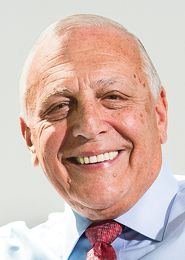
Robert B. Catell
Mindset, Skills, And
Everyday Behavior
Editors’ Note
Robert Catell was formerly the Chairman and Chief Executive Officer of KeySpan Corporation and KeySpan Energy Delivery, the former Brooklyn Union Gas. His career with Brooklyn Union Gas started in 1958. Following National Grid’s acquisition of KeySpan Corporation, Catell became Chairman of National Grid U.S. and Deputy Chairman of National Grid plc. He currently serves as Chairman of the Advanced Energy Research and Technology Center and is Chairman Emeritus at Cristo Rey Brooklyn High School. Catell received both his bachelor’s and master’s degrees in mechanical engineering from the City College of New York and is a registered Professional Engineer.
What do you feel are the keys to effective leadership?
I believe effective leadership is a combination of mindset, skills, and everyday behavior. It starts with the ability to communicate direction and the reasons for achieving goals which are meaningful and understandable. It is achieved by walking the talk through actions, even when inconvenient, recognizing one’s mistakes and following through on commitments.
An effective leader must be a good communicator, sharing information, and be a good listener, tailoring the message to different stakeholders. An effective leader must build trust by being fair, consistent, and predictable. Words must match actions, be flexible as circumstances change, and be willing to learn and revise strategies. An effective leader must build an environment where people can contribute, speak their minds, and work together toward shared goals. An effective leader must be a coach and develop peoples’ talent by investing in peoples’ growth, by providing feedback, and creating learning opportunities, and recognizing and rewarding progress.
How important were mentors early in your career?
Mentors were very important to me early in my career and along the way. They were very helpful in my avoiding mistakes and advising on what works and what doesn’t work. They have had experience with similar challenges and helped me see the bigger picture and to focus on the long-term when going through some challenges along the way. My mentors were able to be constructive and tell me things that others may be reluctant to communicate. They were helpful in expanding my network and introduced me to people and opportunities I would not otherwise have been able to reach.
There is nothing better than learning from experience and to have someone in your corner when making important decisions about your future.
What are the qualities you look for when building a management team?
A management team consists of individuals who have the ability to work together to achieve common goals, while having different opinions but focusing on the right directions for the benefit of the organization. The individuals on the team should be trustworthy, consistent, and ethical, with the ability to accept the responsibility for actions without placing blame on others. The team members must be able to communicate clearly, listen well, and adapt their styles to different people. They must be able to handle stress, conflict, and provide feedback maturely.
A strong management team has members that have different strengths, shared values, and challenge others constructively and engage in debate on issues, but once decision is made, be a team player and support others in reaching the desired outcome.
How do you define success?
Success can be defined in various ways depending on individual values, goals, and contexts. It can be defined by successfully achieving career goals such as promotions, recognition, or financial stability. This often includes setting and meeting specific objectives within one’s personal field. In some cases, it’s achieving personal or professional milestones in conjunction with one’s organizational responsibilities.
Success can be defined by making a positive difference in the lives of others or in contributing to society and helping those less fortunate in achieving their goals. Success should be viewed as a journey rather than a destination, with a focus on personal development and learning from experience. It is subjective and can vary greatly from person to person depending on one’s values, actions, and aspiration.
“An effective leader must build an environment where people can contribute, speak their minds, and work together toward shared goals.”
What advice do you offer to young people beginning their careers?
I would recommend that a young person starting their career take the time to explore different fields and roles through internship, volunteering, and entry level positions to help define their interests. It is helpful to identify what you want to achieve in the short and long term by setting clear and realistic goals which guide actions and provide motivation.
Young people should build relationships with peers, mentors, and professionals in their field by networking and attending interesting events and joining professional organizations.
Stay curious and willing to learn continuously, whether through formal education, advanced courses, or self-study. Acquiring new skills and knowledge is critical in an ever-evolving job market.
Be open to criticism and seek feedback from mentors which can enhance skills and professional growth. Understand that setbacks and challenges are part of any career path and be resilient and focus on the future.