- Home
- Media Kit
- MediaJet
- Current Issue
- Past Issues
- Ad Specs-Submission
- Reprints (PDF)
- Photo Specifications (PDF)
- Contact Us
- PRIVACY POLICY
- TERMS OF USE
Loading

ONLINE

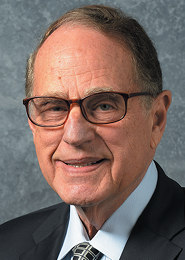
Jerry Reinsdorf
Honesty And Integrity
Editors’ Note
Jerry Reinsdorf began his career as a tax attorney with the Internal Revenue Service after earning credentials as both a CPA and a lawyer. He became Owner and Chairman of the Chicago Bulls in 1985, guiding the team to six NBA Championships in the 1990s and helping shape the franchise into a global powerhouse. Recognized as one of the most influential figures in professional basketball, Reinsdorf was elected to the Naismith Memorial Basketball Hall of Fame in April 2016. As Owner of the Chicago White Sox since 1981, Reinsdorf played a pivotal role in bringing a World Series title to Chicago in 2005, while overseeing charitable, community-focused efforts that twice have earned MLB’s prestigious Allan H. Selig Award for Philanthropic Excellence.
What do you feel are the keys to effective leadership?
Business leaders have three primary responsibilities: setting the vision for the organization in terms of long-range planning, hiring good people and making sure they talk to one another, and public relations in the sense of how the organization responds to issues and threatening crises that severely impact customers, clients or partners. Through all these years, I still think those primary responsibilities provide a primer for good leadership in any business.
How important were mentors early in your career?
Over my career, I didn’t have just one mentor. I experienced many. I learned personally and professionally from many people throughout my lifetime. In some cases, I sought out their advice. In others, I observed the attitudes, actions, and words of others during both tough times and good times. All provided lessons.
I also have always been an avid reader of biographies, in large part for the lessons taught by the life experiences of others. Why limit my range of mentors or advice to just those people who happen to touch my life or who have been alive during my lifespan when a library or bookstore opens all of human experience to me through a great book about great lives? It has been an amazing experience to learn from President Harry Truman, feel empathy for Jackie Robinson, or walk in the steps of Branch Rickey.
“Business leaders have three primary responsibilities: setting the vision for the organization in terms of long-range planning, hiring good people and making sure they talk to one another, and public relations in the sense of how the organization responds to issues and threatening crises that severely impact customers, clients or partners.”
What are the qualities you look for when building a management team?
Brains, and the ability to get along with others. Certainly, loyalty to the organization is important – not necessarily loyalty to me – but loyalty to the organization and your teammates is vital. And the courage to disagree with others when you feel strongly about an issue or an opportunity. In some sense, these qualities are all about respect for other people regardless of their age, race, gender, schooling, economic circumstance, etc.
How do you define success?
I have been asked that question so often during my adult career in professional sports, but my answer always seems to evolve over time. So right now at age 90, I would smile and say, outliving my critics. But check back with me in a decade, and I may have a different response. Truly, for me, it is knowing that you did the very best you could with the people, moments, challenges, and opportunities you faced.
What advice do you offer to young people beginning their careers?
This is always a little difficult for me because often the last thing young people want is to hear advice from the previous generations. Without being too preachy, I would say know your core principle. What is most important for you? What do you stand for and what won’t you compromise on? For me, that is honesty and integrity. Chicago executive Andy McKenna once said to me that “integrity never takes a day off.” I like that and always remember it.
I also would say whatever you do, whatever your role at work or in life, be the very best you can be doing it. Learn from the rights and wrongs of others in life and apply them to your own experience. Work hard. No one but you controls your work ethic.
Arrive five minutes before the boss and leave five minutes after.
And finally, do a great job, but never feel you have to tell people about it. When you do good work, people will notice, and life, karma, if you will, will reward you.