- Home
- Media Kit
- MediaJet
- Current Issue
- Past Issues
- Ad Specs-Submission
- Reprints (PDF)
- Photo Specifications (PDF)
- Contact Us
- PRIVACY POLICY
- TERMS OF USE
Loading

ONLINE


Christopher Prelog
Enriching Lives Through Travel
Editors’ Note
Chris Prelog has firsthand knowledge that working aboard cruise ships is hard work. As a young 20-something, he called his dad to tell him he wasn’t cut out for his cruise line job as a waiter, but his dad told him he needed to follow it through. He did, and eventually he got in the groove and loved working as part of a crew. That he’s now president of the cruise line that owns that first ship he worked aboard is no surprise. With more than 20 years in the industry, he knows the ins and outs of how a cruise line works. Originally from Austria, Prelog earned a bachelor’s degree from the Higher Tourism Institute in Austria along with several tourism and accounting certificates from U.S. colleges. He joined Windstar in 2017 and loves the supportive family-like atmosphere. He is a member of the Culinary Institute of America’s invitation-only Society of Fellows.
Company Brief
For more than four decades, Windstar Cruises (windstarcruises.com) has been reimagining small-ship cruising with a distinctive blend of relaxed luxury and genuine connection to the world’s most captivating destinations. From its origins with motor sailing yachts tailored for upscale yet casual travel, Windstar has grown into a diverse fleet of four Star Class all-suite yachts – including its newest addition of Star Seeker in December 2025 – and three Wind Class sailing yachts, offering voyages that are both intimate and inspiring. Its highly anticipated yacht, Star Explorer, is set to debut in December 2026, expanding the fleet to eight yachts accommodating 150-350 guests. Windstar’s legendary Wind Class sailing yachts are also undergoing a meticulous two-phase redesign to be completed by 2027. Windstar yachts sail to more than 330 ports across Europe, the Caribbean, Costa Rica and the Panama Canal, Alaska, Canada and New England, Japan, the South Pacific, and Asia. Windstar sails year-round in the Mediterranean and Tahiti, offering different destination experiences seasonally. Each Windstar voyage is designed to immerse guests in authentic cultural experiences, all while delivering the comfort, service, and style that define the Windstar difference.
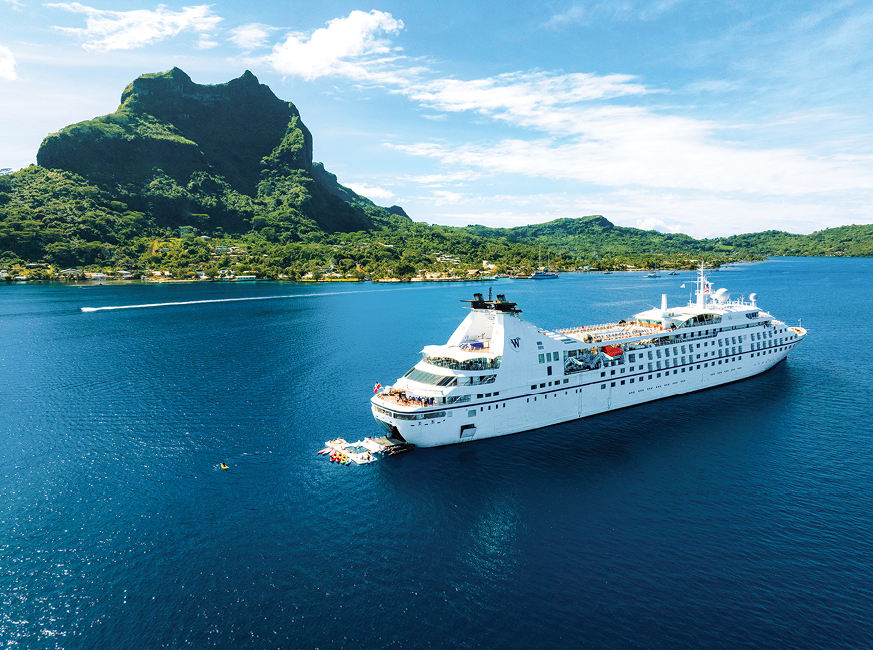
An aerial shot of Star Breeze in Bora Bora
Will you discuss your career journey?
I grew up in Austria, in and around hospitality, so looking after people never felt like work. It was just how our house ran. I trained at the tourism school in Bad Gleichenberg, then went straight to sea. More than two decades later, I am still happiest on deck, talking with guests or catching up with crew between ports. Those early years taught me that hospitality lives in the small things. A real greeting. Remembering how someone takes their coffee. Knowing when to step in and when to let the destination do the talking. That is also why I do not run this from behind a desk. Well, technically you can, but I would not recommend it. The good stuff happens on the gangway, not in the inbox.
How do you define Windstar Cruises’ mission?
Windstar’s mission is “enriching lives through travel.” What does that actually look like on a Tuesday at sea? Ask me on the right night and the answer is a dinner table in a tiny Greek harbor, six people who boarded as strangers now happily arguing over the last bottle of wine. That is enriching lives through travel. Not a tagline. A Tuesday.
We say it in four words, but what it means is simple. Travel should feel personal. Less transactional, more connected. We want guests living in a place, not ticking it off a list. Swimming off the marina in the Caribbean. Wandering a harbor too small for the big ships to reach. A dinner that runs two hours past anyone’s plan.
The destinations matter. But it is the connection people carry home. That is the part we protect.
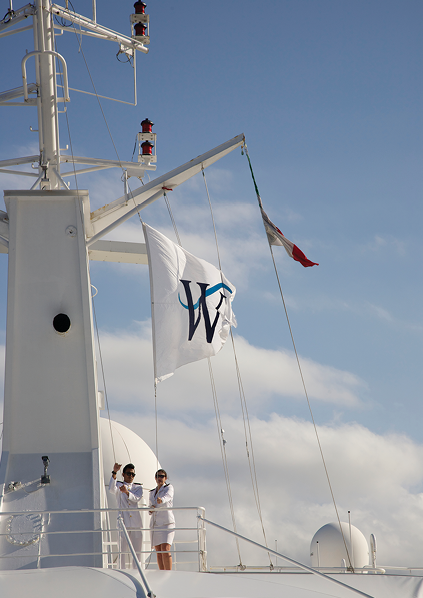
Windstar’s iconic flag
What have been the keys to Windstar’s industry leadership?
We stayed stubborn about who we are. Small yachts. Fewer than 350 guests. Relaxed luxury and a crew that knows your name by day two. That combination is genuinely hard to copy at scale because it is not a feature you bolt on. It is the size of the room.
Our crew is the heartbeat of all of it. On a smaller yacht, guests learn the bartender, the servers, the officers, fast, and those friendships are half the reason people come back.
We have also kept investing. The Star Plus Initiative reinvented our Star Class yachts. The Wind Class refresh is breathing new life into the sailing fleet. And Star Seeker and Star Explorer are joining without us chasing size for its own sake. Growing up, not just growing bigger.
Windstar is known for small-ship, yacht-style cruising. How do you keep that niche competitive in a market dominated by mega-ships?
Honestly, by not trying to be one. Our guests want the opposite of a floating city. They want to linger over dinner instead of racing to a seating time. They want to step off the yacht and feel part of a place, not parked outside it. A smaller yacht changes the whole rhythm. We slip into little ports, tie up close to the center of town, and leave room for the day to surprise everyone. That is where this style of travel earns its keep.
And every so often it means our deck barbecue tips into a line dance under the stars, guests and crew kicking and stepping along in cheerful, slightly chaotic unison. Not a sentence I expected to say in a business interview. But here we are.
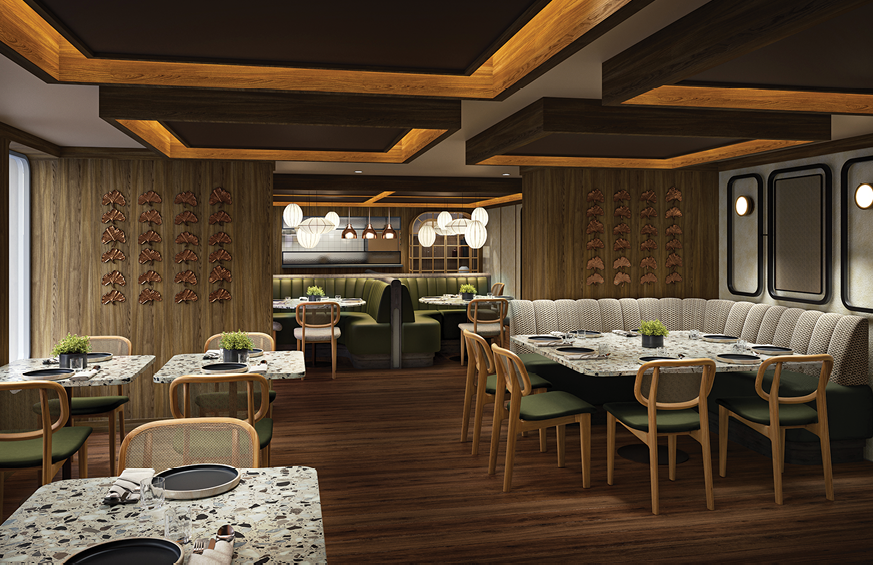
Basil + Bamboo, Windstar’s newest dining concept
How critical is it for Windstar Cruises to continue to innovate?
It matters, but only when it makes the trip better. We are not interested in technology for the sake of a press release. If a guest notices the gadget more than the view, we got it backward. Sometimes innovation is a new idea, like our Mystery Cruises, where you book the experience and let us keep the destination a surprise until you are nearly there. Sometimes it is quieter. A cleaner engine. One less form to fill out before you sail. The aim is always the same. Less friction, more time enjoying where you are. The human side comes first. The technology just clears the path.
What do you feel are the keys to a true luxury cruise experience?
To me, luxury is time. Not thread counts, not gold taps. Time. A morning with nowhere to be. An evening that ends when the conversation does, not when a seating chart says so. Everything we do is really about handing that time back. A coffee up on the bridge because you feel like it, with a crew that knew your name by day one. Dinner when you like, with whom you like. A smaller yacht makes that easy, because there are fewer people standing between you and the day you actually wanted.
It also feels like a home at sea. Comfortable, easy, a little unpolished in the best possible way. People stop performing and start settling in. Give someone their time back and watch what they do with it. That is the whole game.
How do you see sustainability influencing cruise operations over the next decade?
It will touch everything. How ships are designed, how they are powered, how they are run, how we treat the places we visit. None of it happens alone, though. The honest truth is that a cruise line cannot decarbonize by itself. Ports, fuel makers, shipyards and regulators all have to move at once, and getting everyone rowing in the same direction is most of the job. At our end, we are putting the work in now with more efficient engines, better wastewater systems, and operational fixes through our Setting Sails refresh.
Smaller yachts help here too. We can reach quieter places and tread lighter when we get there. Better for the harbor, and frankly better for the guest who did not come all this way for a crowd.
What traits do you look for when attracting talent to Windstar Cruises?
People who genuinely like taking care of others. It sounds simple, and it is, but you know it the moment you see it. We can teach the technical side. Warmth, curiosity, empathy, the knack for reading a room – those are harder to hand someone. Because our yachts are small, crew and guests end up close, fast. The people who thrive here are the ones who light up at that, not the ones who tolerate it.
And a sense of humor never hurts. Months at sea go a lot smoother when the people you work with know how to laugh.
What trends are shaping the future of luxury and boutique cruising?
Two things stand out. First, food has gone from a nice-to-have to a reason people pick a trip at all. Guests plan voyages around a region’s table now, and we plan right back, building menus and shore time around what is actually in season where we are. Second, people want to come home with a story, not just a camera roll. A morning out with a fisherman. A market most ships never reach. A night that ran long for the right reasons. That pull toward the real and the small is exactly what a yacht is built for. For us, it is less a trend than a homecoming.
When you look to the future of cruising, what excites you the most?
Personally? Tahiti. I will admit the bias right away. French Polynesia is my favorite place on the planet, and we already keep a yacht there year round. In 2027, a second one joins her, which means more guests waking up to that impossible blue water. It is the rare project that is good for the business and good for the soul.
More broadly, travel is getting more personal, and a smaller yacht is built for that. We can stay flexible and tailor a voyage in ways a thousand-cabin schedule never could.
And on a quieter note, I get to watch all of this with my own family in mind. Two daughters, a lot of summers ahead, and a long list of harbors I want to show them. When the thing you build is also the thing you would happily hand your own kids, you are in the right job. 