- Home
- Media Kit
- MediaJet
- Current Issue
- Past Issues
- Ad Specs-Submission
- Reprints (PDF)
- Photo Specifications (PDF)
- Contact Us
- PRIVACY POLICY
- TERMS OF USE
Loading

ONLINE

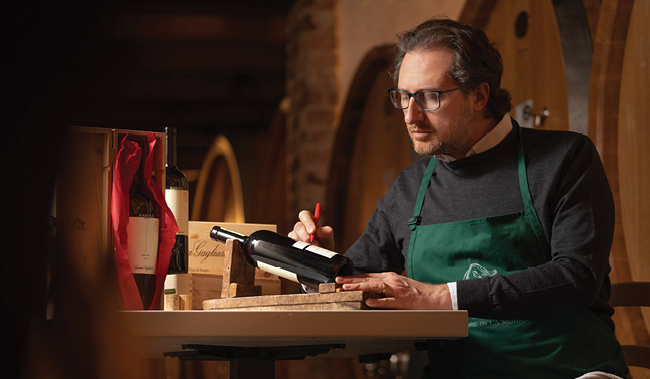
Stefano Gagliardo
Continuity Through Evolution
Editors’ Note
Stefano Gagliardo, born and raised amid the vines of his family’s winery, has dedicated his life to crafting exceptional Barolo and building a legacy in the Piedmont wine region. His education in Alba and Turin formed the foundation for a rich tapestry of international wine experiences. These travels – which included winery exchanges, judging in Burgundy, and promotional work spanning Asia and the U.S. from the age of 17 – have profoundly shaped his industry perspective. His final thesis at the Alba enological school – a comparative study of Barolo subzones and their organoleptic profiles – laid a strong foundation for his future work in the region. His first full harvest at the family winery, Poderi Gianni Gagliardo (gagliardo.it), commenced in 1995. During his university studies in 1998, he collaborated with the University of Turin on a field trial involving new Nebbiolo clones, planting the experimental vines on the family’s Poderi Gianni Gagliardo estate. The resulting clones were later officially registered, contributing to the long-term development of Nebbiolo varietals. His 2001 foray into Bolgheri, Tuscany, gave him hands-on experience with international varietals and a dramatically different terroir. These three years’ experience ultimately refined his approach to Barolo, deepening his appreciation for the region’s unique character. He continued to expand his influence, consulting with a major U.S. entrepreneur in 2015 to invest in Barolo vineyards. The family acquired Tenuta Garetto (Nizza DOCG) in 2017 and in the same year Stefano released a series of new, limited-production Barolo Crus from Poderi Gianni Gagliardo. These exclusive wines were featured in the “Barolo Experience” mixed case, a curated tasting journey designed to showcase the region’s diverse terroirs. In 2015, he paid tribute to his grandfather Paolo by reviving the Barolo Serra dei Turchi, entirely hand-destemming the grapes. This wine has been awarded a perfect 100/100 score by leading wine critics on two separate occasions. In 2022, he and his brother Alberto, who oversees the winery’s viticultural operations, expanded the family’s holdings with the acquisition of land in the Colli Tortonesi area for Timorasso planting. In 2022, he collaborated with his brother Paolo to create VillaM Vermouth di Torino, a significant step in the evolution of their family project, which has been upholding the 19th-century Piedmontese tradition of wine-based creations since 1978. Today, Stefano leads Poderi Gianni Gagliardo, Tenuta Garetto in collaboration with his brothers Alberto and Paolo and his father Gianni, carrying on a tradition of excellence in Italian wine.
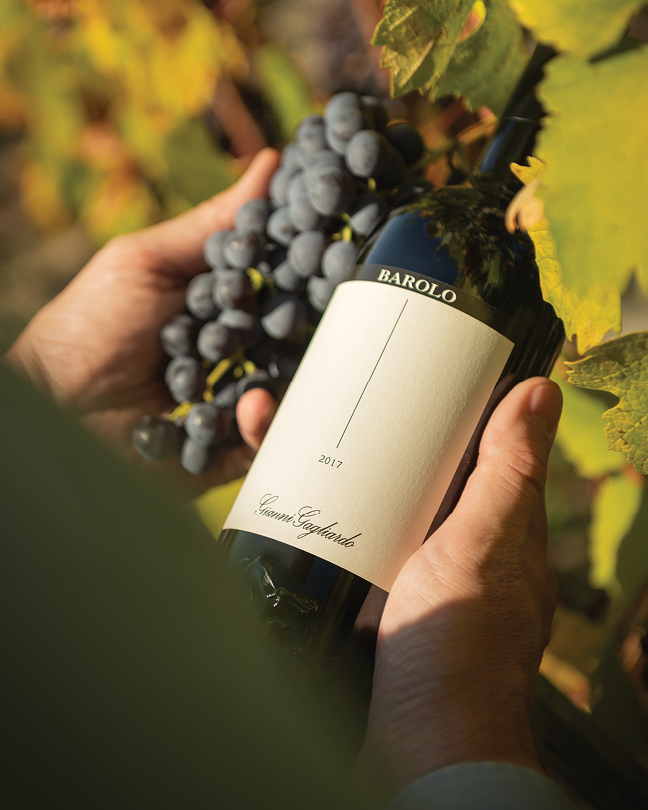
Gianni Gagliardo Barolo
Will you discuss your career journey?
My professional journey is deeply personal, inseparable from my roots and my own story. My bond with the vineyard began in childhood through the example of my grandfather Paolo, whose respect for land and time shaped my understanding of wine on an emotional and cultural level long before it became technical. Barolo entered my life just as early, through those first, almost symbolic childhood sips that left a lasting impression. I trained as an oenologist, and scientific discipline remains a fundamental foundation of my work. Over time, however, I felt the need to move beyond technique, developing a deeper interest in wine as a bearer of meaning, culture, and identity – an evolution driven by the desire to honor those who came before me without freezing the past.
My vision is one of continuity through evolution: deep respect for roots combined with the need to adapt. Today, being true to ourselves means responding thoughtfully to climate change and to cultural and market shifts. The real challenge is evolving while remaining rooted – changing without losing identity. This delicate balance is the path I continue to pursue.
Will you highlight the history of Poderi Gianni Gagliardo?
The family’s story begins with the Colla family in the mid-19th century, in Santo Stefano Belbo in the Langhe, a land shaped by viticulture and by a rural culture rooted in work, restraint, and resilience. Over time, the family moved to Diano d’Alba, carrying with them a deep connection to the land that would become a defining trait. During the Second World War, Paolo Colla continued to cultivate Dolcetto while nurturing a more ambitious vision: to produce Barolo, a wine that was rare and challenging at the time, especially in a post-war Italy marked by hardship. His meeting with Maria Bosticardo, from La Morra – a strong and determined woman – gave stability and strength to that vision. In 1961, with the purchase of a vineyard and farmhouse in La Morra on the Serra dei Turchi hill, the project finally took concrete shape.
A new energy emerged with the arrival of Gianni Gagliardo, who brought a distinctly innovative vision. With the creation of Fallegro, Gianni rescued the Favorita grape from extinction, today recognized as the only Vermentino grown far from the sea, opening a new phase of evolution deeply rooted in place. This is a story of precise choices, free yet never accidental: choosing where to make wine, and how to make it.
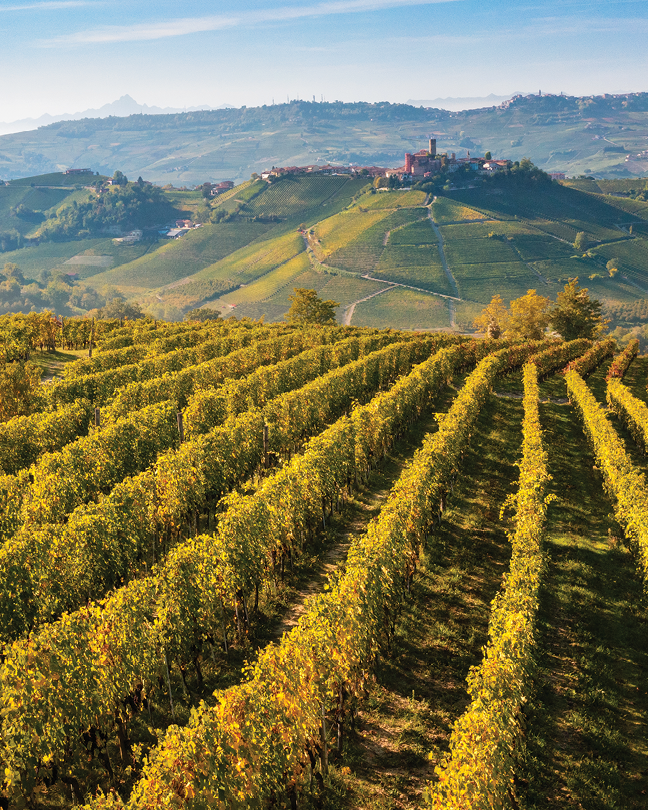
Lazzarito Vineyard
Will you provide an overview of Poderi Gianni Gagliardo’s offerings?
Today, Poderi Gianni Gagliardo produces small quantities of great wines, each born from individual vineyard plots considered among the finest in the Barolo appellation. It is a deliberate choice: limited volumes paired with singular character and world-class quality. Labels such as Serra dei Turchi, produced in around 140 magnums per year, or wines from small vineyards like Lazzarito, Monvigliero and Castelletto, are true rarities – inevitably defined by scarcity and destined for a necessarily select audience. At the same time, these are wines we define as complex but not complicated: capable of delivering profound emotion to the most experienced palates in the world, while remaining clear, approachable and enjoyable even for those with less familiarity with Barolo.
Alongside this stands the Library project, dedicated to older vintages: a selection of mature wines, perfectly cellared underground at the estate, made available to the most discerning clients. Each bottle is released with a certification of quality and authenticity issued by the winery itself, safeguarding not only the wine, but its history.
How critical is sustainability to Poderi Gianni Gagliardo’s culture and values?
Sustainability is absolutely central to the culture and values of Poderi Gianni Gagliardo, but it has never been treated as a slogan or a trend. It is understood as a responsibility that naturally comes with working closely with vineyards that are both fragile and exceptional. At Poderi Gianni Gagliardo, sustainability begins in the vineyard, through respectful farming, low-impact practices, and a constant effort to preserve balance rather than force results. It is about protecting old vines, safeguarding biodiversity, and allowing each site to express itself authentically over time. These choices are often demanding and less efficient in purely economic terms, but they are essential to maintaining integrity and long-term quality.
Equally important is a cultural dimension of sustainability. Making wines in small quantities, accepting scarcity, and resisting the pressure to overproduce are conscious decisions rooted in coherence and respect for place. Sustainability also means adapting intelligently to climate change, refining viticultural and winemaking practices without compromising identity.
Ultimately, sustainability at Poderi Gianni Gagliardo is not a separate chapter but a guiding principle embedded in every decision. It reflects a long-term vision in which preserving land, heritage, and meaning is inseparable from producing great wines for future generations.
What has made the wine industry so special for you?
We see ourselves as wine artisans, and what has made this world so special for us – and for me personally – is the fact that it exists at the crossroads of culture, time, and human relationships. Wine is not just a matter of technique or production; it is a language that connects people. Our symbol is a falling mask, inspired by an ancient Greek concept later crystallized by the Latin expression in vino veritas – in wine, there is truth. It reflects something deeply human: by nature, everyone wears a mask, a way of presenting themselves to others. Wine, however, creates a different kind of space. It is a moment of genuine sharing, where people relax, open up, exchange thoughts and ideas, and gradually let that mask fall.
In this sense, wine is a powerful social catalyst. It is not about escape, but about the quality of time spent together. It creates connection, encourages dialogue, and gives rise to real human relationships. This is the true purpose of our work and what has always fascinated me most about this industry – the ability to shape experiences that go far beyond the glass.
What are your priorities for Poderi Gianni Gagliardo as you look to the future?
For us, style is essential. A winery must have a clearly defined style – one that is built over time, carefully cultivated, preserved, and protected. Like anything living, style can evolve, but it must do so slowly and thoughtfully, with great respect for its history and for the people who have believed in it over the years. This is the path we see for the future. Ambition is what drives us: the desire to make wines that are always better, to raise the quality bar in every detail and in every vintage, never allowing ourselves to feel fully satisfied. That constant tension toward improvement is fundamental to who we are.
Another key priority is adaptation. Climate change and shifting cultural expectations require constant attention and responsibility. Our role is to respond intelligently, refining viticultural and winemaking practices without compromising identity. Being faithful to our values today means having the courage to evolve, rather than remaining static.