- Home
- Media Kit
- MediaJet
- Current Issue
- Past Issues
- Ad Specs-Submission
- Reprints (PDF)
- Photo Specifications (PDF)
- Contact Us
- PRIVACY POLICY
- TERMS OF USE
Loading

ONLINE

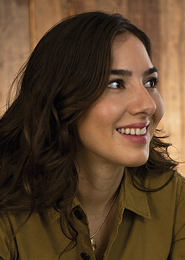
Juliana Del Aguila Eurnekian
The Reconnection
Of History, Identity, And Terroir
Editors’ Note
Juliana Del Aguila Eurnekian is an entrepreneur who is passionate about wine, committed to creating value and elevating two of the world’s most promising wine regions: Patagonia, Argentina, and the Ararat Valley in Armenia. Born and raised in Buenos Aires, she graduated as a psychologist from the University of Buenos Aires and as a sommelier from the Argentine School of Sommeliers. Recently, she completed the prestigious Owner/President Management (OPM) program at Harvard Business School, strengthening her strategic vision and leadership in the wine industry. Her entrepreneurial spirit and love for wine led her to join her family’s business in the viticulture sector. Today, she leads Bodega Del Fin Del Mundo in Patagonia, Argentina, and Karas in Armenia, a winery located in the legendary Ararat Valley, home to vineyards with over 6,200 years of history.
Winery Brief
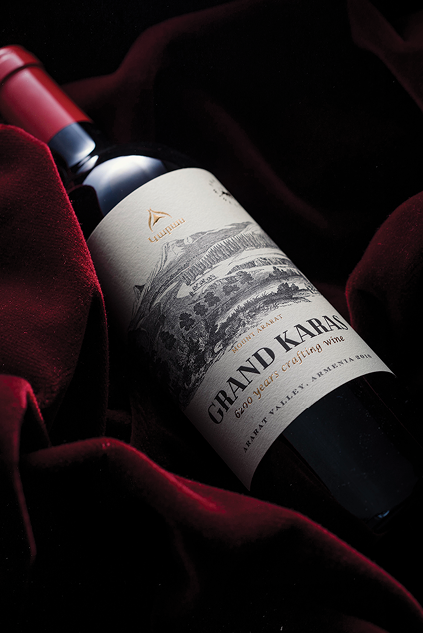
Karas Wines (karaswines.com), founded in 2004 by the Eurnekian family, is a pioneering and leading wine-producer in Armenia. The winery is situated in the Ararat Valley, an ancient and historic terroir known as the cradle of Armenian winemaking’s renaissance. With over 400 hectares of vineyards cultivated on volcanic soil at an altitude exceeding 1,300 meters above sea level, Karas benefits from a unique environment for viticulture. Sustainability, tradition, and expertise come together at Karas Wines, an Armenian winery located under the watchful gaze of Mount Ararat. The name “Karas” means “amphora” in Armenian, a traditional winemaking clay vessel used for more than 6,200 years. The Eurnekian family has also been a leader in wine production in Patagonia, Argentina, with Bodega Del Fin Del Mundo, a project led by Juliana Del Aguila Eurnekian. Each bottle embodies ancient traditions and culture, reflecting a passion for innovation and commitment to international standards.
.png)
Karas Wines vineyards in Armenia with Mount Ararat in the distance
Will you discuss your career journey?
My career journey has been deeply influenced by identity, curiosity, and a strong entrepreneurial environment. I grew up in Buenos Aires in an Armenian household, surrounded by a culture that values resilience, heritage, and long-term vision. I initially pursued studies in psychology, driven by a fascination with human behavior and relationships.
Visiting Armenia for the first time became a defining moment in my life. Karas Wines was just beginning, and the experience profoundly shifted my perspective. The opportunity to reconnect with my roots through working the land and contributing to the creation of wines that could be shared with the world was transformative. It reshaped not only my professional aspirations, but also my sense of purpose.
Upon returning to Argentina, I continued my psychology studies while training as a sommelier and beginning my work at the winery. Much of my learning has come through experience. In my family, entrepreneurship is taught by doing, by observing, and by constantly challenging oneself. I was fortunate to receive guidance from my great-uncle, whose vision and standards instilled in me the importance of always striving for excellence. Through him, I met Michel Rolland, who became and remains a key mentor, shaping my technical understanding of wine and helping refine my palate and perspective.
Early on, I perceived my psychology background as unconventional within a business context. Over time, however, I came to recognize its value. Developing a trained ear, understanding people, and building strong teams are fundamental to organizational growth, particularly when working across different cultures and geographies. Leadership, I learned, is as much about human dynamics as it is about strategy.
Later, my studies at Harvard Business School further expanded my approach to decision-making and leadership. Throughout this journey, one principle has remained constant: a commitment to continuous learning, surrounding myself with exceptional people, and maintaining the discipline to keep evolving.
Karas Wines vineyards in Armenia with Mount Ararat in the distance
Will you highlight the history of Karas Wines?
Karas Wines is rooted in a deeply personal and historical journey. My great-grandparents left Armenia in the early 1900s, escaping the Armenian genocide, and settled in Argentina, where they rebuilt their lives. Armenia would later become part of the Soviet Union, during which the country’s production focused primarily on brandy rather than wine.
Following Armenia’s independence in 1991, my great-uncle returned with the intention of contributing to the country’s reconstruction. His vision was clear: to create long-term value, quality employment, and sustainable growth, although the path forward was not yet defined.
Upon discovering a piece of land in the Ararat Valley, the landscape itself became the source of inspiration. Facing the vast presence of Mount Ararat, he recalled the story learned in school, that according to biblical tradition, Noah descended from the Ark on Mount Ararat and planted a vine. Wine, in that moment, emerged as the natural expression of history, land, and symbolism.
Without prior experience in winemaking, but guided by a strong entrepreneurial instinct and a commitment to excellence, he registered the Karas brand – karas meaning amphora in Armenian – and planted the first modern vineyard in the region. Establishing the vineyard was itself a formidable challenge. The volcanic, rocky soils of the Ararat Valley, combined with high altitude and extreme temperature variations, required patience, technical precision, and persistence. Yet, the first wines quickly demonstrated the region’s extraordinary potential, gaining immediate market recognition at a time when Armenian wine was barely part of the global conversation. Shortly thereafter, the discovery of the Areni-1 cave, the world’s oldest known winery dating back more than 6,200 years, provided remarkable historical validation.
Karas ultimately became a pioneering force in the modern rebirth of Armenian viticulture, helping to reestablish an industry that had been largely dormant for decades. The winery represents not only a business venture, but the reconnection of history, identity, and terroir.
Will you provide an overview of Karas Wines’ offerings?
Karas Wines’ portfolio is fundamentally an expression of Armenia as a unique and distinctive wine origin. Our work has always been guided by a clear ambition: to take Armenia to the world through wines that reflect its history, terroir, and identity. The wines are deeply shaped by the volcanic soils of the Ararat Valley, which contribute freshness, vibrancy, and structural precision. The portfolio spans reds, whites, blends and single varietals combining both indigenous Armenian varieties and internationally recognized grapes. Along this journey, we have continued to rediscover and elevate native varietals such as Areni, which has become a flagship expression of Armenian viticulture and a defining signature of our wines, and Sireni, a grape originally from Artasakh, a region lost during the war in 2020 where we keep the only vineyard in Armenia which we cherish deeply.
Our philosophy centers on producing wines that authentically speak of place and story while delivering balance, elegance, and drinkability. This approach blends heritage, including the use of traditional karases, with contemporary winemaking techniques, allowing us to express Armenia’s ancestral legacy through a modern lens.
Ultimately, the portfolio reflects both exploration and refinement: wines designed to showcase Armenia’s distinctiveness while being exciting to drink and enjoy.
What can guests expect when visiting the winery?
A visit to Karas Wines is fundamentally an encounter with landscape, scale, and history. The winery is set at 1,300 meters above sea level in the far west of Armenia, surrounded by mountains and defined by striking volcanic terrain. The vineyards are marked by vast formations of volcanic rock, creating a visual environment that is as dramatic as it is distinctive. One of the most remarkable aspects of the experience is the proximity to Mount Ararat. From Karas, the mountain reveals an unusually intimate perspective, seen from behind and at close range, offering a view that immediately conveys the sense of place that defines the wines.
Beyond the scenery, the visit emphasizes understanding. Guests engage with the vineyards, the varietals, and the philosophy behind the wines. The experience is less about spectacle and more about connection with the land, Armenia’s ancestral winemaking heritage, and the craftsmanship behind each bottle.
How does Karas Wines approach its sustainability efforts?
Sustainability at Karas Wines is not treated as an initiative, but as a way of working. Our approach is grounded in creating balance, ensuring that our presence in the Ararat Valley contributes positively to the land, the community, and the broader Armenian ecosystem. This includes thoughtful vineyard management, the adoption of drip irrigation systems, the introduction of organic viticulture practices, and the revitalization of legacy irrigation infrastructure. Beyond environmental practices, sustainability at Karas extends to knowledge-sharing and local value creation.
Whenever possible, we prioritize Armenian partners, from materials to talent, believing that sustainability also means strengthening domestic industries and contributing to long-term economic resilience. Ultimately, sustainability for us is inseparable from quality and longevity.
Do you feel that the quality of Armenian winemaking is well-understood?
Armenian winemaking is still in a phase of global discovery. While the country’s historical significance is extraordinary, modern perceptions continue to evolve. I believe it is our responsibility as producers to communicate our story, terroir, and identity clearly. Beyond heritage, the foundation remains clear: wine must be delicious. Balance, character, and drinkability are what shape lasting recognition.
Armenia represents a rare dialogue between past and future, where understanding ancient origins becomes essential to defining modern expression. As exposure increases, Armenian wines are moving beyond curiosity toward appreciation of genuine quality and distinctiveness.
Will you highlight the development of Bodegas Fin del Mundo?
The development of Bodegas Fin del Mundo was driven by a commitment to exploring distinctive wine frontiers. Patagonia represented a natural extension of that vision as one of the southernmost wine regions in the world. While Armenia’s vineyards are defined by altitude, Patagonia’s identity is shaped by latitude. The region’s cool climate, winds, and thermal amplitude contribute to wines of remarkable freshness, structure, and concentration.
A key factor has been clarity of focus and adaptability, evolving alongside global markets while preserving a coherent identity. Leading wineries in both Armenia and Patagonia offer a unique journey across time and geography, from one of the birthplaces of wine to the southern edge of the winemaking world.
Will you provide an overview of Bodegas Fin del Mundo’s offerings?
As a pioneering winery in Patagonia, Bodegas Fin del Mundo has played a defining role in shaping the identity of Patagonian wines, particularly Pinot Noir and Malbec. The wines are recognized for their freshness, purity of fruit, balanced structure, and refined elegance. The portfolio includes whites, rosés, Pinot Noir, Malbec, and blends, each reflecting the defining elements of the region: sunlight, winds, and cool nights.
Ultimately, the portfolio expresses Patagonia’s unique voice within the global wine landscape, combining drinkability, precision, and authenticity.
What has made the wine industry so special for you?
Wine exists at the intersection of agriculture, science, culture, time, and emotion. Every decision carries both technical precision and human intention. Winemaking is, in many ways, an abstract art, imagining how a wine will evolve from soil to glass, how it will taste, feel, and inspire emotion. A wine is never simply a product; it is an experience shaped by vision and sensitivity.
Through this work, I have the privilege of connecting others with Armenia and Argentina, translating landscapes, histories, and identities into something that can be shared. Professionally, the industry offers endless complexity; personally, it offers meaning. Few fields allow for such a profound dialogue between nature, craftsmanship, and human connection. I feel deeply privileged to experience this sense of movement across time and place, and to be a part of a craft that carries thousands of years of history while resonating with my own personal journey and heritage. Winemaking offers the rare opportunity to reinterpret an ancient tradition through new eyes, a continually evolving perspective, and a deep respect for its origins.