- Home
- Media Kit
- MediaJet
- Current Issue
- Past Issues
- Ad Specs-Submission
- Reprints (PDF)
- Photo Specifications (PDF)
- Contact Us
- PRIVACY POLICY
- TERMS OF USE
Loading

ONLINE

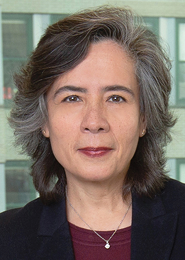
Dr. Oxiris Barbot
Translating Insight Into Action
Editors’ Note
Oxiris Barbot is a nationally recognized physician, public health practitioner, and innovative leader at the intersection of public health, social justice, and healthcare delivery. Barbot’s career has been defined by service, scholarship, and a commitment to community health equity. From 2018 until 2020, she served as Commissioner of Health and Mental Hygiene of the City of New York, leading the city’s successful response to the first wave of COVID-19. Her strategic decision-making, leadership of early action to address racial inequities, and clear and effective communication in both English and Spanish made a significant difference in public understanding, rapidly flattening the transmission curve and addressing the needs of the most vulnerable. As commissioner, she was also the driving force behind the city’s launch of a home visiting program for first-time families. Previously, she was first deputy commissioner at the New York City Department of Health and Mental Hygiene from 2014 until 2018, served as commissioner of the Baltimore City Health Department from 2010 until 2014, and was medical director of the New York City Department of Health and Mental Hygiene’s Office of School Health from 2003 until 2010. Before this, she was a community pediatrician at a federally qualified health center in Washington, DC. Barbot became president of UHF in September 2022 and is the first woman to lead the organization since its founding in 1879. An adjunct assistant professor at the Columbia University Mailman School of Public Health, Barbot was senior fellow for public health and social justice at The JPB Foundation from 2020 until 2022. She is a recipient of the Hispanic Health Leadership Award from the National Hispanic Medical Association and was named to the Crain’s New York Business “Notable Women in Healthcare” list and City & State New York’s “Health Power 100” and “Nonprofit Power 100.” She currently serves on multiple national and local boards, including Undue Medical Debt, ChangeLab Solutions, and Phipps Neighborhoods. Previously, she served on the boards of UHF and NYC Health and Hospitals. A prolific author of peer-reviewed articles and commentaries, she has been published in several academic journals, including The New England Journal of Medicine, Health Affairs, and The American Journal of Public Health, as well as publications such as The Washington Post and The New York Daily News. Barbot received her undergraduate degree from Yale University and her medical degree from New Jersey Medical School, and completed her pediatric training at George Washington University – Children’s National Medical Center. She also holds an Honorary Doctorate of Science from The City University of New York, Lehman College.
Organization Brief
United Hospital Fund (uhfnyc.org) works to build an effective and equitable healthcare system for every New Yorker. An independent, nonprofit organization, UHF is a force for improvement, analyzing public policy to inform decision-makers, finding common ground among diverse stakeholders, and developing and supporting innovative programs that improve health and healthcare. UHF works to dismantle barriers in health policy and healthcare delivery that prevent equitable opportunities for health.
Will you discuss your career journey?
My career journey has been somewhat unexpected and has evolved organically. I started my career as a primary care pediatrician, a lifelong dream, in Washington, DC. During my almost dozen years taking care of children who were publicly insured or uninsured in the nation’s capital, I learned a lot about what it means to be a community pediatrician. Primarily, that caring for my patients didn’t stop at the exam door and that ailments I treated within the exam room often represented impacts of the outside world as much as evolving physiological pathology. I transitioned out of clinical practice when it became all too clear that no matter how good a doctor I was, I wasn’t going to cure my individual patients of conditions like asthma, obesity, lead poisoning, depression, or anxiety – because their living conditions and life circumstances, often out of their control, would be ongoing sources of illness.
I entered public health in hopes of working at the systems and policy level to make a difference more upstream by helping address underlying drivers of illness, like inadequate housing or food instability, that could help thousands of people at a time. I have been fortunate to have leadership positions in some of this country’s largest cities, first as Medical Director of the New York City Public School System, then Health Commissioner for Baltimore, and most recently, Health Commissioner of New York City during the first wave of COVID.
One important lesson I learned during my almost 20 years in public health is about the power of government to do good for its constituents when it takes a holistic approach to cultivating healthy and thriving communities that can sustainably contribute to this country’s vibrancy. On the flip side, I’ve also witnessed the many missed opportunities when government fails to recognize that people don’t live in silos and continues to silo government functions.
“It’s incredibly gratifying to lead an organization that for almost 150 years has been focused on building a more efficient and equitable health system for all New Yorkers, but especially those with the greatest needs.”
What excited you about the opportunity to lead United Hospital Fund and made you feel it was the right fit?
UHF felt like the right fit for me from the very beginning. Before becoming President and CEO, I was a board member because, even though I was over-boarded at the time, I long admired and respected UHF’s work and influence in New York State and beyond and I wanted to lend my support in fortifying its work in health policy. I jumped at the opportunity to lead UHF when the opportunity presented itself because, each day, I get to apply what I learned and did as a clinician, government public health leader, and advocate for healthy communities.
It’s incredibly gratifying to lead an organization that for almost 150 years has been focused on building a more efficient and equitable health system for all New Yorkers, but especially those with the greatest needs. I have the great fortune of working with a smart and dedicated staff, and we get to work with elected and appointed leaders, along with leaders of health systems and clinicians alike, who are focused on ensuring that the New York health ecosystem is healthy and thriving so that our residents can reach their full health potential.
How do you define UHF’s mission?
We work to build an effective and equitable healthcare system for every New Yorker – one that is accessible, affordable, high quality, and grounded in dignity. And we focus especially on those who face the greatest obstacles, because when the system works for them, it becomes stronger for all of us.
What sets United Hospital Fund apart is the way we translate insight into action. We pair rigorous, independent policy analysis with real work on the ground – partnering with clinicians, community organizations, health systems, and policymakers to create solutions rooted in evidence and lived experience. We bring together people who don’t often sit at the same table and help them find common goals and practical pathways forward. Our fellowship and training programs prepare future leaders to challenge inequities and champion better care. And our research shines a light on emerging threats and opportunities, from Medicaid policy shifts to the health impacts of climate change.
Ultimately, our mission is about possibility – a belief that New York can have a healthcare system worthy of its people. And every day, we work to bring that vision closer to reality.
“UHF’s approach relies on a mix of evidence-based process improvement, human capital development, and fostering partnerships between clinical care and communities.”
Will you provide an overview of UHF’s work?
UHF brings people and information together – policymakers, providers, community leaders, and researchers – to forge consensus and drive change. We analyze the big challenges that shape health and healthcare, ensuring that decision-makers have the research and data they need to act. We convene diverse partners to set a shared vision and work directly with many of those partners to accelerate innovation. And we invest directly in people and organizations whose work advances our mission of an effective, equitable health system. Collectively, these approaches position UHF as a trusted convener, thought leader, and catalyst for the systemic changes New Yorkers need.
For example, we’re currently supporting New York’s statewide Medicaid initiative to integrate healthcare and social services. Through research, data analysis, and convening diverse stakeholders across the state, UHF is conducting needs assessments and future planning to help regions bridge public health, social care, and medical care to improve health outcomes. We work collectively with partners across the ecosystem to tackle the root causes of health disparities like food insecurity and housing instability.
Our on-the-ground work with healthcare providers promotes innovation at the practice level that is designed to inform broader systems level change. UHF’s approach relies on a mix of evidence-based process improvement, human capital development, and fostering partnerships between clinical care and communities. Our provider initiatives focus on individuals and practice sites serving primarily under-resourced communities. We apply equity-informed practice improvement tools, using expert coaching and peer-to-peer learning to integrate improvements into existing workflows to ensure sustainability. For example, our years of work with pediatricians have focused on addressing families’ social needs, integrating early literacy into well-child visits, and identifying and meeting the needs of mothers suffering from postpartum depression. These projects inherently develop human capital, but we also run two fellowship programs that are focused on building the next generation of clinical quality leaders and health equity champions in New York. Across all these programs, we help providers develop meaningful relationships with community organizations that can address the social needs underlying many health disparities.
How critical are metrics to measure the impact of UHF’s efforts?
As with any nonprofit organization, measuring impact is vital to our ongoing work and engenders confidence from our philanthropic supporters that our efforts are making a tangible difference in the health of New Yorkers. However, measuring the impact of our work is not always straightforward. In our clinical practice transformation and human capital development programs, we can more easily quantify the impact of our efforts, sometimes in as little as a few months or as long as 18 months. For example:
• We’ve trained nearly 400 clinicians in 90 healthcare delivery sites throughout the New York City region on the science of quality improvement, and their newly enhanced practices in turn have improved patient outcomes, such as decreasing by a third the time it takes to follow up with a patient after an indeterminate mammogram, and driving a threefold increase in uptake of HIV preventive medication in primary care.
• Additionally, our work with nursing homes on reducing over-prescribing has resulted in 16 percent fewer patients having 10 or more prescriptions as medical guidelines suggest is best practice for reducing the risk of falls and improving overall well-being for the frail elderly.
The impacts of our access to care and policy portfolio activities are not as easily quantifiable, and the timeline may be much longer, but their impact is no less important. The most recent example is our work in supporting New York State in its Medicaid waiver intended to improve population health outcomes by addressing patient social needs. Over the three-year duration of the waiver, we will have helped New York State develop a data and analytic framework supported by a similarly cultivated infrastructure of community-based service providers for better understanding and addressing underlying drivers of health disparities that contribute to ongoing increasing healthcare costs. The ultimate impact will likely take years to see, but this foundational work is critical and illustrative of our longstanding and deep partnerships with community organizations throughout New York State.