- Home
- Media Kit
- MediaJet
- Current Issue
- Past Issues
- Ad Specs-Submission
- Reprints (PDF)
- Photo Specifications (PDF)
- Contact Us
- PRIVACY POLICY
- TERMS OF USE
Loading

ONLINE


Janine D. Llamzon
Resilience, Gratitude, And Vision In Emergency Medicine
Editors’ Note
Dr. Janine Llamzon is the Senior Service Line Executive and Assistant Vice President for the NYC Region Emergency Service Line at Montefiore Einstein, one of New York’s premier academic health systems. She oversees emergency departments at Montefiore’s Henry and Lucy Moses Division which includes the Children’s Hospital at Montefiore and Montefiore Hospital, Jack D. Weiler Hospital at Montefiore, Montefiore Wakefield Hospital, Montefiore Mount Vernon and Montefiore Westchester Square, the first freestanding emergency department in New York. She also leads Montefiore’s NYC Regional Stroke Program and the Performance Excellence Division, where she drives initiatives in strategic planning, operational excellence, data, analytics and clinical innovation. In addition to her operational oversight, Llamzon serves as an Assistant Professor of Emergency Medicine at Montefiore’s Albert Einstein College of Medicine. She is also an active mentor to doctoral and early-career professionals both within and beyond Albert Einstein College of Medicine. Her mentorship emphasizes leadership development, strategic thinking, data analytics, and performance excellence. This integration of academic and operational roles strengthens her impact as a healthcare leader. She is a doctoral-prepared leader from Case Western Reserve University, a Fellow in Clinical Quality and Performance Improvement through GNYHA and UHF, and a Coldiron Senior Nurse Executive Fellow, credentials that further support her focus on transformational leadership, mentoring, and high-performing healthcare systems. Her comprehensive approach, which includes therapy, executive coaching, meditation, mindfulness, and yoga, helps maintain resilience and perspective in the demanding environment of emergency medicine.
Institution Brief
Montefiore Einstein (montefioreeinstein.org) is a premier academic health system renowned for pushing the boundaries in every arena, from research to discoveries of life-saving cures, from innovations in patient care to advancements in public health, and to world-class medical education. It is comprised of Montefiore Health System and Albert Einstein College of Medicine. Together they are pioneering patient-centered research and providing exceptional personalized care with over six million patient interactions a year in communities across the Bronx, Westchester and the Hudson Valley. Montefiore Health System is comprised of 10 member hospitals, including the Children’s Hospital at Montefiore, Burke Rehabilitation Hospital, White Plains Hospital, and more than 200 outpatient ambulatory care sites that provide coordinated, comprehensive care to patients and their families. Albert Einstein College of Medicine, home to nearly 1,000 students in its MD, PhD, and combined MD/PhD programs, is one of the nation’s preeminent centers for research, medical education, and clinical investigation.
Will you discuss your career journey and what led to your current position?
I began my career as an advertising executive at a multinational advertising agency. After significant life events, I made the difficult decision to change careers and pursue nursing. I started as a bedside nurse in the South Bronx, where I found my professional home in emergency and trauma care. Over time, my career evolved into roles as a manager, nurse practitioner, director, and ultimately system director of emergency departments across multiple academic medical centers. As I assumed greater leadership responsibility, I reached a pivotal realization. To become the leader I aspired to be and help create new standards of care – clinical expertise alone was not enough. I needed a broader armamentarium that included strategic thinking, resilience, reflection, humility, and the courage to be openly challenged. I intentionally immersed myself in leadership development by pursuing formal coursework, studying executive leadership, and seeking mentors who were willing to speak with honesty rather than affirmation alone. That honesty, sometimes uncomfortable and always clarifying, became my greatest teacher.
Leadership, for me, has been a continuous learning journey. I seek knowledge relentlessly, remain aware of my own limitations, and reflect honestly on where I can do better. I have learned to be wrong, to pivot when new information reveals a better path forward, and to practice self-forgiveness as part of growth. I have grown comfortable improvising in uncertainty and adapting in real time, understanding that progress often comes through iteration rather than perfection. This mindset shapes how I lead, how I listen, and how I build environments where learning, accountability, and continuous improvement are embraced.
What are your current areas of focus?
As the senior executive for the Emergency Service Line, my responsibility is to own the performance, design, and reliability of emergency care across the entire system. That means ensuring every emergency department consistently delivers safe, equitable, and dependable care, regardless of volume, acuity, or site, while remaining operationally resilient under constant pressure.
My goals are clear and outcome driven. First, to protect patients’ safety and dignity, particularly for vulnerable populations. Second, to improve system flow by reducing delays in care and unwarranted variation across sites. Third, to build a sustainable emergency care workforce that is stable, engaged, and supported to deliver high quality care on a scale. During my tenure, our emergency departments have earned two Lantern designations, geriatric accreditation, and the “Always Ready for Children” recognition, along with multiple awards for excellence in stroke and STEMI care, reflecting the dedication and expertise of our entire team and our commitment to the highest standards of care.
On a day-to-day basis, this work is highly operational and data driven. I regularly review system level performance metrics including throughput, boarding, safety events, regulatory indicators, and workforce stability to identify where risk is emerging and where performance is breaking down. I work directly with hospital executives, clinical chairs, nursing leadership, and operational partners to align emergency departments with inpatient capacity, behavioral health, EMS, and post-acute care so patients move through the system safely and efficiently.
In practice, I set clear system standards for clinical pathways, staffing models, escalation processes, and surge response, and I hold leaders accountable for consistent execution. I lead enterprise initiatives to standardize evidence-based practices, strengthen quality governance, reduce reliance on premium labor, and improve the reliability of care transitions from arrival through disposition.
Equally important, my role is to enable frontline success. That means removing barriers teams cannot solve locally, investing in leadership development, and embedding improvement into daily operations rather than treating it as additional work. I focus on creating clarity with clear expectations, clear priorities, and clear accountability so teams can perform at a high level even in high stress environments.
Ultimately, my work is about turning strategy into daily reality. I design systems that function under pressure, support the people who deliver care, and ensure that emergency services across the organization consistently reflect our mission, values, and responsibility to the communities we serve.
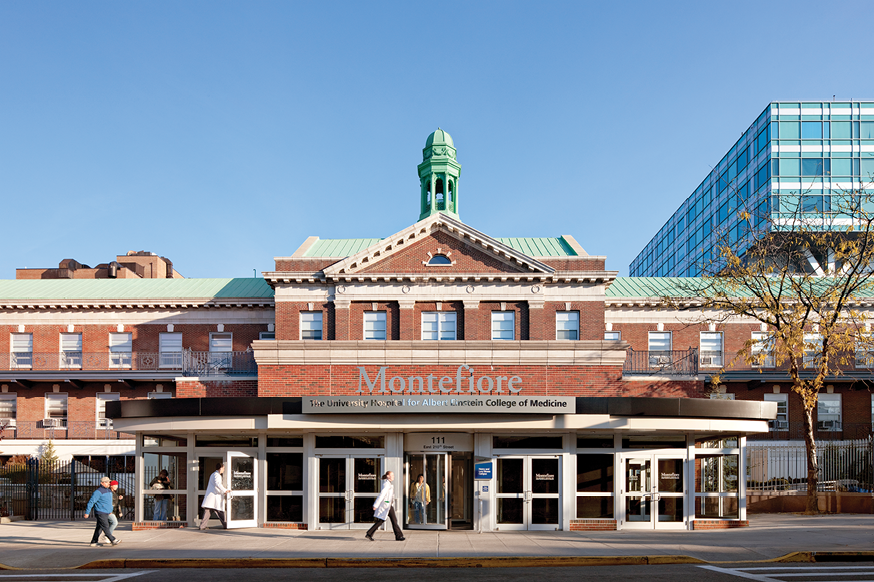
Montefiore Health System’s Henry & Lucy Moses Division
Will you elaborate on the two Emergency Nurses Association Lantern designations that Montefiore earned?
The Emergency Nurses Association (ENA) Lantern designations recognize excellence in leadership, innovation, nursing practice, and professional development, and serve as a testament to our team’s unwavering commitment to delivering the highest standard of care every day. Professional governance and leadership at the bedside, coupled with the ability to advocate effectively for the needs of patients and their families, are central to providing exceptional care. These qualities empower teams to make informed decisions, drive improvements in workflow, and ensure that every patient receives timely, compassionate, and safe treatment.
In 2024, our CHAM Emergency Department, caring for more than 50,000 children annually from birth through 20 years of age, was honored with this prestigious ENA designation. During the first application process, I walked through every unit, listened to our staff, and observed workflows. Through these conversations and observations, we identified an opportunity to standardize early escalation and bedside communication for high-risk pediatric patients, replacing a more informal, variable handoff process. As a result, staff were empowered to activate additional support earlier and communicate critical concerns more clearly. That change directly contributed to the rapid recognition and intervention for a deteriorating patient, ultimately helping to save that child’s life. This experience reinforced what the Lantern designation truly represents: empowering frontline teams, strengthening accountability, and embedding a culture of excellence that translates into safer, more reliable care for our patients every day.
Our second Lantern recognition came in 2025 for Jack D. Weiler Hospital, where we care for more than 70,000 patients each year. We remain deeply patient-centric, redesigning our triage process, enhancing interdisciplinary huddles, prioritizing professional development, and successfully integrating new technologies. While each Lantern application process has its unique requirements, our commitment to excellence consistently drives our success.
Lantern excellence is about more than recognition; it’s about the everyday culture we create on the unit. It’s about mentoring, supporting, and challenging each other, holding one another accountable while lifting each other up. It’s about giving nurses authority and confidence to advocate for patients, make critical decisions at the bedside, and continuously improve care.
Personally, working toward Lantern reminded me how grateful I am for those who saw my potential, supported me, and believed in me, even when I doubted myself. It reinforced the importance of paying that forward, mentoring, sponsoring, and empowering the next generation of nurses.
Excellence is cultivated through culture, mentorship, and gratitude. Honor those who guide you and commit to guiding others in return.
How is the field of Emergency Medicine evolving and what does that look like at Montefiore Einstein?
Emergency medicine is healthcare’s front line, but it is far more than quick decisions in high-pressure moments. It is the art and science of anticipating patient needs, coordinating complex care, and delivering safe, equitable, and patient-centered treatment across diverse populations. The future of emergency care is being shaped by technology that analyzes real-time and historical patient data to predict clinical deterioration, prioritize resources, and guide interventions before critical events occur. These tools help optimize workflow, reduce variability, and ensure that care is tailored to each patient’s unique needs.
Ongoing research focuses on integrating predictive analytics into bedside practice, testing machine learning models for accuracy in high-acuity settings, and measuring how these tools affect patient outcomes, safety, and operational efficiency. Innovations such as rapid point-of-care diagnostic tests, real-time patient tracking systems, and data-driven care pathways for stroke, STEMI, substance use disorder, or behavioral health crises are enabling interventions that are faster, more precise, and more patient-centered.
By combining these technologies, research insights, and patient-centered innovations with strong interdisciplinary teamwork, emergency care can become more proactive, coordinated, and reliable, transforming the ED from a reactive environment into a system that anticipates needs, reduces risk, and delivers high-quality outcomes as a shared responsibility across the care team.
“Emergency medicine is healthcare’s front line,
but it is far more than quick decisions in high-pressure moments. It is the art and science of anticipating patient needs, coordinating complex care, and delivering safe, equitable, and patient-centered treatment across diverse populations.”
Will you describe the role of mentorship within the Emergency Medicine department?
I have been fortunate to have mentors and sponsors who believed in me even when I was unsure of my potential. Time and again, they showed me that they had my back. They invested in me, challenged me, guided me, and opened doors to opportunities I never imagined I could achieve. Their trust gave me the confidence to grow, take risks, and step into leadership with purpose. I carry these lessons into my own work, making it a priority to mentor and sponsor others, especially those finding their voice or navigating uncertainty. I guide them, encourage reflection, and create space for them to lead and shine. One of my mentees was once hesitant about presenting to a large audience. She overcame her hesitation, delivered a remarkable presentation, and later became a keynote speaker at her fellowship program. Watching her step fully into her potential reminded me that mentorship is about creating opportunities, nurturing confidence, and turning potential into impact.
Being seen, believed in, and supported changed my path. Paying it forward through mentorship and sponsorship is both an honor and a responsibility. Leadership is a circle: the guidance you receive becomes the legacy you pass on. Whether in emergency medicine or elsewhere in healthcare, seek mentors who see your potential and become one for others. Sponsorship turns confidence into action, potential into impact, and sustains a culture of excellence. One of my mentors, Dr. Peter Semczuk, taught me a principle he lives by: “Leadership matters.”
I share a message with my team that closes many conversations: “Soar, fly, and unleash.” These words embody optimism, trust, and a deep belief in people’s potential, a reminder that when individuals feel supported and inspired, there is no limit to what teams can achieve together.
“Wellness underpins patient safety and organizational excellence. When caregivers are supported and resilient, the care we provide is at its best.”
As one of the busiest Emergency Medicine departments in the country, what are you most proud of and are there initiatives you hope other Emergency Medicine departments will replicate?
There are so many clinical initiatives that I am proud of. First, building an integrated service line across multiple emergency departments relies on a foundation of wellness. Resilient, engaged teams can collaborate across sites, align processes, and deliver coordinated care that elevates the patient experience and strengthens system-wide performance. Integration allows us to share best practices, standardize high-value care, and unlock efficiencies that would be impossible in isolated departments.
Second, reducing boarding in the emergency department and harnessing the full power of the system creates the capacity for both immediate operational impact and long-term growth. By removing bottlenecks and strategically deploying resources across sites, we improve patient flow, enhance safety, and unlock the potential of our teams and infrastructure. Wellness, integration, and operational efficiency are not separate priorities – they are interdependent pillars. Together, they empower caregivers, elevate care delivery, and position the system to innovate, adapt, and thrive.
Lastly, employee wellness is the cornerstone of safety, performance, and organizational excellence. During a challenging week of high patient volume, I noticed the fatigue and stress weighing on my team. I led a brief mindfulness session, practiced box breathing with the group, and encouraged them to share coping strategies. We even took a short mindfulness moment. By the end of the meeting, energy returned, morale improved, and patient care remained excellent. This reminded me that wellness is not separate from excellence; it is how we reset our minds and bodies to perform at our best. I practice yoga, meditation, and mindfulness in my own life and have realized the more we as a team breathe together and practice wellness, the more we approach our decisions with clarity and effectiveness.
By encouraging our teams, particularly individuals with roles in busy emergency departments, to try to have fun at work as appropriate and find moments of joy, it can be recharging. Small resets, a mindful pause, a laugh, a dance break, or a walk can restore focus and resilience, creating a safer and more positive environment for patients and staff alike. Invest in moments to reset for yourself and your teams. Practices like box breathing, mindfulness walking, yoga, and daily reflection recharge energy, boost resilience, and enhance patient care.
Wellness underpins patient safety and organizational excellence. When caregivers are supported and resilient, the care we provide is at its best.
Did you always know that you wanted to pursue a career in healthcare?
I didn’t always know I wanted to pursue a career in healthcare, but I quickly fell in love with it. I hadn’t realized how profoundly it would shape my life and give me purpose. As a senior executive, I have the privilege of guiding teams, shaping systems, and improving the lives of countless patients and families every day. That combination of personal fulfillment and the ability to make a meaningful difference is what continues to inspire and drive me.
Now, as a senior leader, I’ve come to understand that much of my work is rooted in quiet influence – the daily choices, habits, and relationships that shape culture and empower others. Leadership is built on a foundation of humility, trust, reflection, resilience, gratitude, and the courage to be challenged while still leading with heart. My doctoral practice in executive leadership has strengthened this foundation, equipping me with the tools and insight to navigate complex systems and serve as a catalyst for the growth and success of others.
What advice do you offer to those interested in pursuing a career in medicine?
Growth and leadership are grounded in possibility, confidence, and joy. Be intentional about creating environments where people feel safe to take risks, are supported as they learn, and are celebrated for who they are becoming. Embrace self-forgiveness, bring a sense of fun and laughter to your work, and cultivate spaces where curiosity and courage can thrive.
Knowing and believing that your leadership matters is the first step to making a real impact. When you understand the influence you have, even small actions can inspire growth, build trust, and empower others to reach their full potential.
Mentorship and sponsorship are central to this philosophy. Being seen, supported, and challenged transforms potential into achievement, and paying it forward ensures that the guidance you receive becomes the legacy you pass on. Leadership is holistic: the culture you cultivate, the confidence you nurture, and the people you empower create a lasting legacy, with an impact that extends far beyond what you can see or touch.