- Home
- Media Kit
- MediaJet
- Current Issue
- Past Issues
- Ad Specs-Submission
- Reprints (PDF)
- Photo Specifications (PDF)
- Contact Us
- PRIVACY POLICY
- TERMS OF USE
Loading

ONLINE

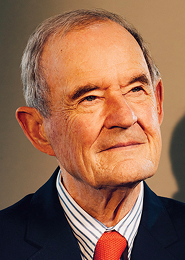
David Boies
A Life In The Law
Editors’ Note
David Boies, the Founding Partner of Boies Schiller Flexner LLP, is a preeminent dispute resolution advocate and counselor. He represents both plaintiffs and defendants in litigation and arbitration in the United States and internationally. He has successfully defended clients such as American Express, Barclays, CBS, Lloyds, the National Football League, NextEra, Oracle, Starr International, and the New York Yankees in their most important commercial, antitrust, securities, intellectual property, and regulatory disputes. Representing plaintiffs, he has recovered more than $1 billion ten times, including with the largest antitrust recovery for a single company in history and the largest copyright verdict in history. In September 2025, he won a $425,000,000 jury verdict against Google for invasion of privacy. Boies has a long history of government service. He served as Chief Counsel and Staff Director of the United States Senate Antitrust Subcommittee in 1978 and Chief Counsel and Staff Director of the United States Senate Judiciary Committee in 1979. In 1991-1993, he was counsel to the Federal Deposit Insurance Corporation, recovering $1.2 billion from companies who sold junk bonds to failed savings and loan associations. In 1998-2000, Boies served as Special Trial Counsel for the United States Department of Justice in its successful antitrust suit against Microsoft. Boies also served as the lead counsel for former Vice President Al Gore in connection with litigation relating to the 2000 election Florida vote count, and as co-lead counsel for the plaintiffs in Perry v. Brown, he won the first judgment establishing the right to marry for gay and lesbian citizens under the U.S. Constitution. Beginning in 2014, and continuing today, he has represented survivors of Jeffrey Epstein’s sex trafficking in suing Epstein himself, Ghislaine Maxwell, former Prince Andrew, and other individuals and institutional collaborators. Boies has been named Global International Litigator of the Year by Who’s Who Legal an unprecedented seven times; Litigator of the Year by The American Lawyer; and Lawyer of the Year by The National Law Journal. In 2013, he was named one of the Top 50 Big Law Innovators of the Last 50 Years by The American Lawyer. In 2010, he was selected as one of the 100 Most Influential People in the World by Time Magazine. Boies is the recipient of Honorary Degrees from a number of universities including an Honorary Doctor of Laws from New York University and the University of Redlands, and an Honorary Doctor of Letters from the Chicago Theological Seminary. His awards include the ABA Medal from the American Bar Association, The Award of Merit from the Yale Law School, the Vanderbilt Medal from New York University Law School, the William Brennan Award from the University of Virginia, The Pinnacle Award from the International Dyslexia Association, the Role Model Award from Equality Forum, the Lead by Example Award from the National Association of Women Lawyers, the Eisendrath Bearer of Light Award from the Union for Reform Judaism, and a Lifetime Achievement Award from the Mississippi Center for Justice.
Firm Brief
Boies Schiller Flexner (bsfllp.com) is a firm of internationally recognized trial lawyers, , crisis managers, and strategic advisers known for creative, aggressive, and efficient pursuit of successful outcomes for its clients. Its attorneys have an established track record of taking on and winning complex, groundbreaking, and cross-border matters in diverse circumstances and industries. With offices located throughout the United States and in London and Italy, Boies Schiller Flexner operates as one firm with a seamless approach to building the most skillful and cost-effective team possible for every matter.
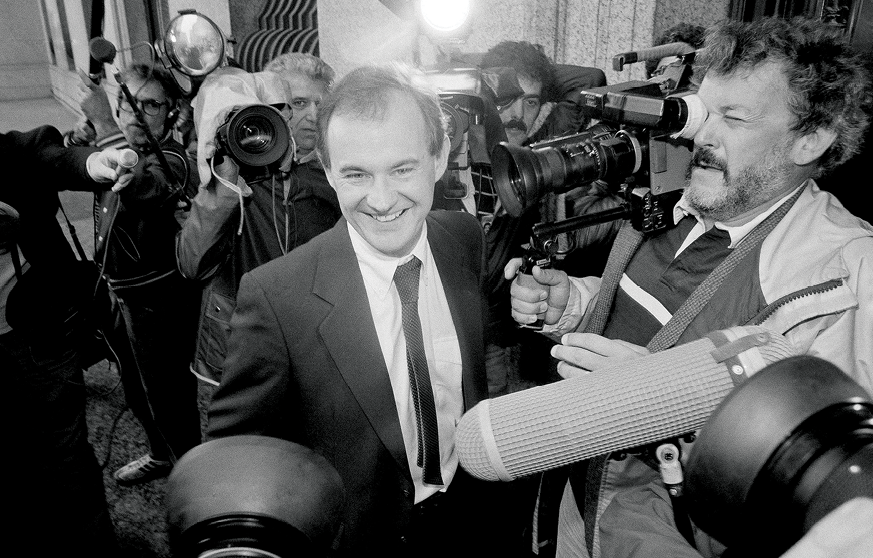
David Boies is surrounded by news cameras as he arrives
at U.S. District Court in New York City in 1984. Boies was
representing CBS in a $120 million libel suit filed by
General William Westmoreland.
What was your vision for launching Boies Schiller, and what have been the keys to the strength and leadership of the firm over decades?
The vision for the firm had three parts. One was to build a firm that practiced law at the very highest level, recruiting the very best lawyers by bringing in both laterals and lawyers right out of law school or from clerkship. The second was to have a mix of cases where we would do commercial litigation representing both plaintiffs and defendants, along with a very robust pro bono program. Jonathan Schiller and I from the very beginning believed strongly that lawyers who were as active and successful as we were had an obligation to contribute to the profession and contribute to the justice system, including for people who could not afford our fees. The third part of the vision was to try to build an institution that was collegial and that gave lawyers the ability to control, to the extent we could, the direction of their practice. We believed in work/life balance, as well as rewarding associates based on their productivity, so that they were not simply employees, but rather participants in the success of the firm.
This vision was pretty easy to implement at the beginning because we were almost immediately swamped with more work than we could handle. This provided a lot of responsibility for the younger lawyers, along with a lot of rewards that reflected that responsibility. As the firm grew, however, implementing the vision became somewhat more complicated. It’s one thing to be responsible for half a dozen or a dozen lawyers. It’s another thing to be responsible for 200 lawyers, and to make sure they all share the vision. I think we have been quite successful in doing this, both in terms of maintaining culture and taking on matters of public importance, including on a pro bono basis.
“I think that, as a profession and as a society, we have to better address the unmet legal needs of large swaths of our society.”
How is AI and new technology impacting the role of litigation?
I think it is in a very modest way so far, but will in a very substantial way in the very near future. We already see machine learning being used to do document review and organizational tasks that associates and paralegals would have done 5 to 10 years ago. This is going to only increase as time goes on. I think five years from now no client is going to have high priced lawyers doing initial reviews of documents. There is still an important role for lawyers to play, but it will be fewer lawyers doing much more sophisticated, analytical tasks.
Our firm never had leverage that many of our competitors do, so I think for us there will be substantially less dislocation than there will be for some other firms. I think that as AI continues to develop and people use it more and more to do initial research and even first drafts of briefs, there will still be a need to cite check anything that you get from AI. AI will replace some aspects of the work of lawyers, but there will always be a need for legal advice, counsel, and expertise.

Do you have concerns about the current state of the justice system?
There are a lot of serious concerns about the state of our justice system. For one thing, we have far more lawyers per person than any place else in the world, and yet we have large segments of our population that are essentially unlawyered. If you have a serious accident, you can find somebody to take the case on a contingency fee, but if you have a landlord-tenant dispute, a marital dispute, a contract dispute, you usually cannot find somebody to take it on a contingency fee. The reality is that for most individuals, and indeed for many small and even medium-sized businesses, they simply can’t afford the rates that the elite law firms are charging. I think that, as a profession and as a society, we have to better address the unmet legal needs of large swaths of our society.
I think another problem that we face as a profession and as a justice system is that lawyers have always had two important roles – one is as zealous advocates for their clients, and the other is as an officer of the court and as a participant in the justice system. I think that over the past decades, a lawyer’s view of their role as an officer of the court and participant in our justice system has diminished. Part of this is due to law firms becoming more like conventional businesses. When I graduated from law school, approximately half of all the lawyers in the country practiced either by themselves or with one or two other lawyers. That is no longer the case. Today, you have law firms of thousands of lawyers, sometimes run and managed by professional administrators. Some of the most effective law firms are organized that way, and there is no doubt that there are many efficiencies to that. But I think you lose something in the collegiality and in terms of the role of the lawyer as an individual.
Another aspect of the legal profession that I think is concerning is the extent to which clients and even lawyers begin to think of the person on the other side as their enemy as opposed to a fellow participant in the adversarial system. This leads to a breakdown of civility, and beyond civility, the breakdown of standards as to what is appropriate and inappropriate advocacy. Many of my closest friends are lawyers who I have opposed and sometimes continue to oppose in litigation. I think to recognize the person on the other side who may be very intensely arguing against you just as you are very intensely arguing against them, at a minimum as your brother in the law and often a close friend or someone who can be a close friend, makes for not only a more enjoyable and meaningful experience, but also leads to a better result in the justice system.
You recently turned 85 years old. Do you ever think about legacy?
No, which probably means that I’m in denial as to how old I am. I continue to do what I have always done, which is to take on cases that interest me or cases that I think are important for the development of the law. I try to do them as best I can and to make a positive contribution. Legacy will sort itself out.