- Home
- Media Kit
- MediaJet
- Current Issue
- Past Issues
- Ad Specs-Submission
- Reprints (PDF)
- Photo Specifications (PDF)
- Contact Us
- PRIVACY POLICY
- TERMS OF USE
Loading

ONLINE

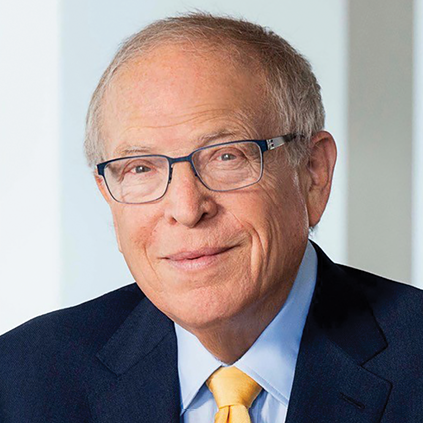
William R. Berkley
Defining Leadership
Editors’ Note
William Berkley is the founder of W. R. Berkley Corporation and has served as its Executive Chairman since 2015. He continues to be fully engaged in the company’s activities, primarily focused on investments and strategy. He has an MBA from the Harvard Graduate School of Business Administration and a BS degree from New York University.
Company Brief
Founded in 1967, W. R. Berkley Corporation (berkley.com) has grown from a small investment management firm into one of the largest commercial lines property and casualty insurers in the United States. Along the way, the company has been listed on the New York Stock Exchange, become a Fortune 500 company, joined the S&P 500, and seen its gross written premiums exceed $10 billion. Today, the Berkley brand comprises nearly 60 businesses worldwide and is divided into two segments: Insurance and Reinsurance & Monoline Excess.
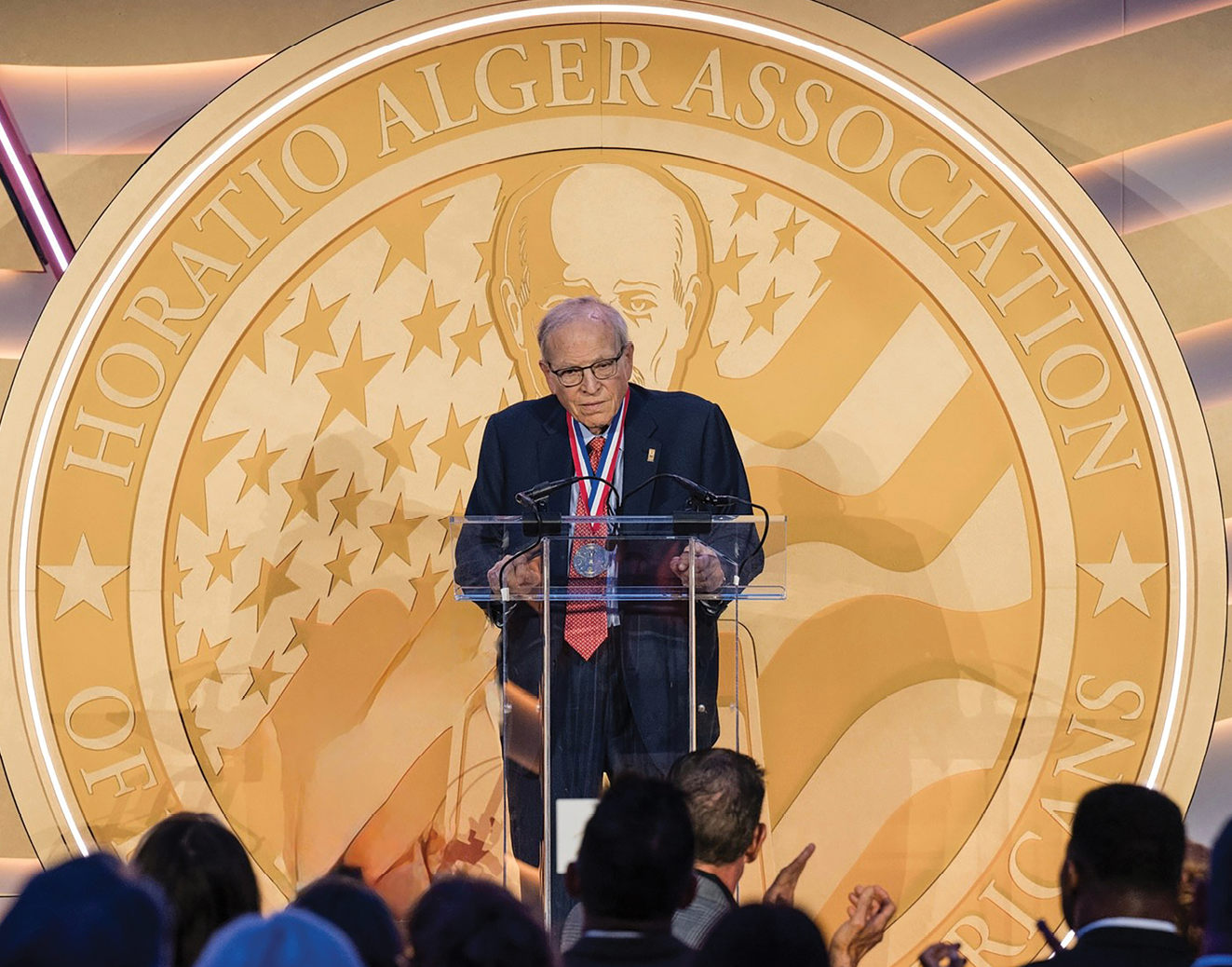
William R. Berkley, Horatio Alger Award Recipient 2024
What was your approach to building W. R. Berkley Corporation, and what have been the keys to its success?
When we started the Company, we understood that building a business requires capital, people, and a strategic plan that allows you to have a competitive advantage. While insurance appears to be a commodity business, it’s actually a knowledge and expertise business. That is how we focus on creating value. We recognized that specialty and regional companies understood their customers better. Even though they didn’t have the resources of the giants, knowing their customers better enabled them to tailor their products which led to better returns and more value for customers. We began by acquiring regional companies and expanded into specialty areas, always focusing on risk-adjusted returns and tailored coverage, rather than broad-based policies. This has been our approach since the early ’70s and remains our focus today, now carried forward by my son. Delivering returns to shareholders means meeting customer needs, having the best people, and making a valuable contribution to society. In insurance, you do this through agents – building relationships that create value for everyone. That focus on people and value hasn’t changed since the beginning.
What has made the insurance industry so special for you?
The insurance business is an unrecognized business that provides truly exceptional value to society, customers and shareholders. Most importantly, not just from an economic point of view, it fulfills an essential need for customers, oftentimes at a moment of great need. Always paying claims fairly is the foundation of meeting your obligation to the customer, and that requires pricing your product appropriately and that the customer understands the coverages you are providing. Sometimes customers focus more on price than coverage. But by and large, the insurance industry serves society in meaningful ways, and it’s hard to find a business that has such a positive impact on society while also making money. If you get it right, the returns can be exceptional, making insurance an attractive business that provides the opportunity to create value for multiple constituents.
Do you feel that the type of careers that the insurance industry offers is well understood by the next generation entering the workforce?
Unfortunately, the industry is not particularly well understood by many. People generally don’t consider the contribution it makes on so many different levels to both individuals and society, or the opportunity it offers people to develop knowledge and expertise and be rewarded for it. They don’t see how rewarding it is to help people during their most difficult times, which is really what insurance does. They also miss the complexity and challenge involved in pricing risk and building an insurance company – having the right price, the right margins, and delivering value to your customer while delivering returns to your shareholders. So no, I don’t think most young people understand the exciting parts of the business – they sort of think it’s dull, where it’s really quite to the contrary. It’s incredibly exciting once you understand everything you need to do and think about to make it work well.
“It’s not enough to simply distribute funds without intention. For me, it’s about personal involvement, commitment of time, and focus on outcome. My top priority remains supporting financial aid for young people, ensuring they have opportunities they might not otherwise access.”
Where did your interest and passion for philanthropy develop?
Well, my passion for philanthropy really began with my own life experiences. My father passed away when I was just 11, and my mother had to start working to support us. We managed, but only barely. When it came time for college, my options were limited – I could only afford to attend New York University because they offered me a full tuition scholarship. Without that scholarship, I would have been burdened with debt for years. Upon reflection, I could never have fully repaid the generosity of that act. From the day I graduated NYU – in just three years – I felt a deep sense of gratitude toward those who chose to help a young person like me. That gratitude became the foundation for my belief that if you have the capacity to lend a helping hand, you owe it to society to do so.
For me, this sense of responsibility has always meant supporting education and healthcare – areas that are critical for people to lead successful and fulfilling lives. Over time, I’ve come to understand more about the complexities of the world and how much good a little help can do. If you can make someone’s life better and help them appreciate the world we live in, you’ve truly made an impact. In a perfect world, everyone who is a beneficiary of philanthropic assistance will take the initiative on their own to help someone coming after them. Paying it forward is our best opportunity to ensure the benefits of success can enhance the lives of others.
What do you feel are the keys to being effective and making an impact in philanthropic work?
I believe that true effectiveness in philanthropy comes from having a clear sense of purpose and direction. It’s not enough to simply distribute funds without intention. For me, it’s about personal involvement, commitment of time, and focus on outcome. My top priority remains supporting financial aid for young people, ensuring they have opportunities they might not otherwise access. Secondly, I’m committed to helping universities deliver in key areas where they have the greatest impact. And finally, I want to support the healthcare system in being equipped to provide first-class care and related services to our society. I think it’s essential to be deliberate, to make sure that your contributions directly benefit those in need, rather than just supporting administrative overhead. There’s no shortage of needs, so it’s important to concentrate your efforts on those areas where your support will truly make a difference.
“I’m driven by helping America – and, more broadly, the world – move forward, especially by supporting the next generation. That means a commitment to doing things right and upholding values like integrity and honesty, and understanding that your word truly matters because people depend on it.”
How do you decide where to focus your philanthropic efforts?
I think you try to focus it where you have enough influence to ensure the implementation is effective, which is why, although I give money to a number of places, I’ve focused on a couple of key areas. That way, we can be sure that our views and visions are carried out effectively. And we remember the big picture that all of society has to help one another for things to work. So, we try to get across the idea that we’re not alone, and everyone has an obligation to offer a helping hand if you have the capacity to assist. We try to find places that can leverage what we do, and they’ll make it even more effective. As I said, education and medicine, but anything involving children or people striving for better lives gets our attention. We want to help everyone and anyone in achieving the American Dream.
While much of philanthropy is focused on writing checks, you give your time, energy and ideas to the causes you support. How important is it for your philanthropic activities to be more than just about donating money?
I think it’s essential that you give of yourself in philanthropic work. It’s easy for organizations to drift away from their core mission, so we make it a priority to stay engaged and hands-on. My family and I feel strongly that significant financial contributions should go to causes where we’re actively involved and can help ensure our vision and intentions are carried out as we hope. Money and effort must go hand in hand as they are the key ingredients in achieving a desired outcome. We’re fortunate to have considerable resources, and while we do support a variety of initiatives, our main focus remains on a select few places and efforts where we can truly make an impact through our personal involvement.
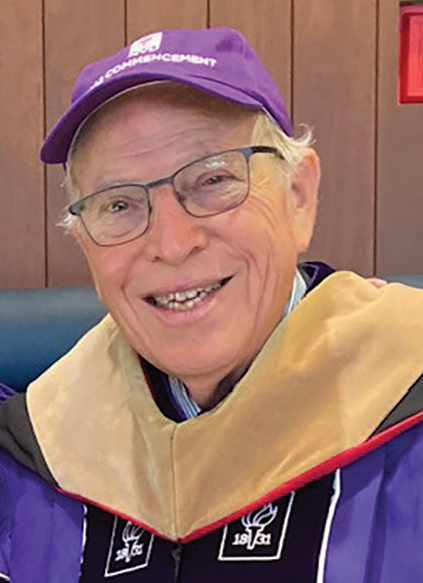
William R. Berkley, Former Chairman of the Board
of Trustees, New York University, Graduation 2016
What does success mean to you?
Well, that’s definitely evolved over time. Early on, my main focus was making sure my family was secure financially. Ever since I was about 11 years old, and even after graduating from Harvard Business School, I constantly worried about whether I’d have enough to cover the bills and put food on the table. So initially, achieving economic security was my first goal. As time goes on, you set benchmarks for what economic success means, and at some point – though I’m not sure exactly when – you realize you’ve reached a point where you can live comfortably no matter what happens.
After that, one’s perspective shifts. You start thinking about how you can leave the world, or your community, a better place than when you found it, searching for meaningful pursuits that allow you to make a positive impact. For me, that sometimes means collecting things that help tell a more complete story of how our world developed. For instance, I discovered that the same brilliant minds who laid the mathematical foundations for the insurance industry also helped invent ways to measure time. That led me to explore how maps and geography are all tied back to those mathematicians, which sparked my deep interest in the subject. I realized mathematics is truly fundamental to how our world works.
Being in a position to share these discoveries is what success means to me. Ultimately, I search for ways to contribute to the world to make it a better, more knowledgeable place, with greater understanding. I strive to find ways to help more people benefit and reach their goals. It’s been an exciting journey, and I consider myself incredibly fortunate to have the chance to share the benefits of that path with others.
What do you feel are the keys to effective leadership, and how do you describe your management style?
Effective leadership, in my view, starts with recognizing that you can’t do everything yourself. It’s essential to build a team of people you trust, who can work alongside you and help carry out your vision. Communication is absolutely fundamental; you need to be clear about where you’re heading and how you plan to get there. If your team understands your goals and feels confident in their roles, you’re on the right track. It’s also crucial to articulate how you see your enterprise fitting into the broader world – why what you do matters, beyond just making money. People need to feel that their work has real value.
When it comes to my management style, I believe in delegating authority and measuring people by their results. I try not to second-guess; I ask questions, but I trust my team to do their jobs. Delegation balanced with accountability for outcomes is the cornerstone. Of course, mistakes will happen, and while it’s important to hold people accountable for both their successes and failures, you also need to know when to be patient and when it’s time to address issues directly. Nobody gets it right all the time, and I admit that sometimes I’m too patient, and other times not patient enough, but overall, I think we’ve managed reasonably well.
With all that you have achieved in your career, are you able to enjoy the process and take moments to celebrate the wins?
I’m genuinely proud of what I’ve accomplished, and I’m especially delighted with my family – particularly that my son has stepped up to lead the business so effectively. In fact, I believe he is running this larger company even better than I would have. As for celebrating wins, I’ll admit I rarely pause to do so. For me, dwelling on past victories isn’t productive. My focus has always been on the future: What’s next? What opportunities are ahead? The landscape keeps evolving, and I find the greatest satisfaction in thinking about how we can seize the next opportunity and do things even better.
I’m driven by helping America – and, more broadly, the world – move forward, especially by supporting the next generation. That means a commitment to doing things right and upholding values like integrity and honesty, and understanding that your word truly matters because people depend on it. So, while I appreciate what’s been accomplished, I’m not someone who tends to look back. My energy is always directed toward what we can do next.
I’m fortunate to be an optimist. My glass is never half full; it is always overflowing. I believe we can accomplish anything, and America gives us the stage to reach our dreams.