- Home
- Media Kit
- MediaJet
- Current Issue
- Past Issues
- Ad Specs-Submission
- Reprints (PDF)
- Photo Specifications (PDF)
- Contact Us
- PRIVACY POLICY
- TERMS OF USE
Loading

ONLINE

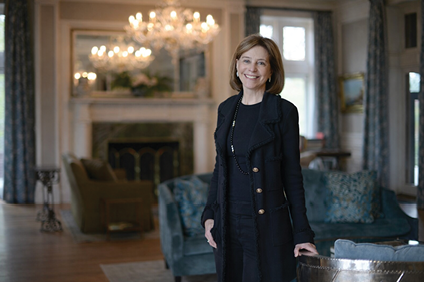
Linda Law
Protecting An Irreplaceable Property
Editors’ Note
Linda Law, a distinguished Harvard alumni, has extensive expertise in real estate development and investment. A pioneering figure in real estate, she is notable as one of the first women to own and operate an institutional-quality real estate development and investment firm. She successfully secured tens of millions of square feet of land-use entitlements and developed corporate campuses for early Silicon Valley tech giants, including Hewlett-Packard, Rolm, Sun Microsystems, Pixar, DEC, AMD, and SRI. She has also been an adviser to the Harvard Endowment and the Stanford Management Company. Law is also co-founder and chair emeritus of the Harvard Real Estate Alumni Organization.
Property Brief
Elm Court (elmcourt.com), owned by Vanderbilt Berkshires Estate, LLC, is the largest shingled residence in the United States and one of the few remaining historically significant gilded-age mansions in the Northeast. The 89-acre estate was designed in 1885 as a summer residence for Emily T. Vanderbilt and her husband William D. Sloane. Its expansive grounds were designed by Frederick Law Olmsted, the “father of landscape architecture” who also designed New York City’s Central Park and the U.S. Capital.
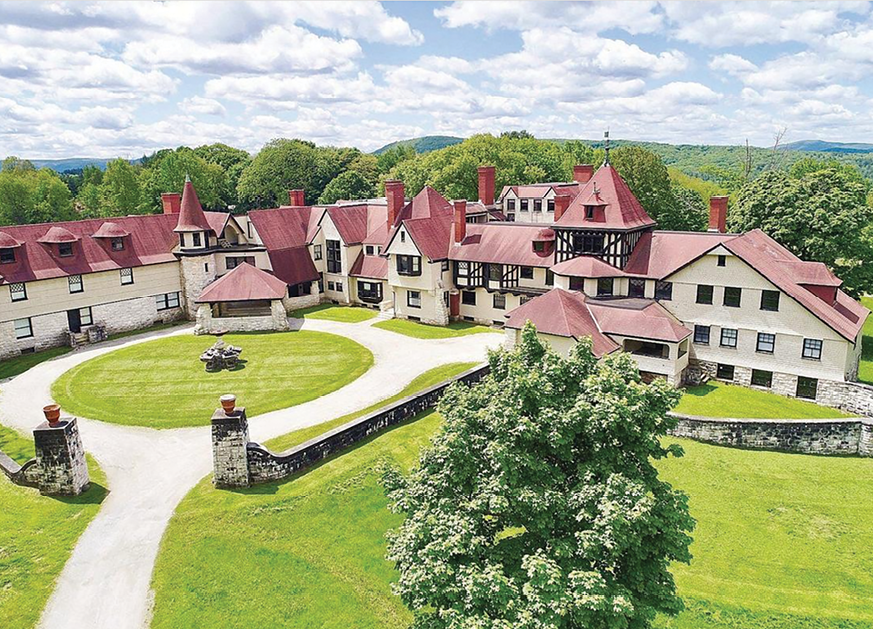
Elm Court in the Berkshire Hills of Massachusetts
Will you discuss your career journey?
My career has been defined by undertaking high-friction projects where vision, economics, and public process intersect, and arbitraging across market inefficiencies. I began in large-scale real estate development in the 1980s, when Silicon Valley was nascent. I was fortunate to work with almost all the major technology companies. I secured land-use entitlements for millions of square feet of corporate campuses. I then moved on to for-profit public-private partnerships, working on projects that required navigating regulatory complexity, community interests, and long-term horizons. Over time, I became increasingly drawn to projects that weren’t just financially viable, but culturally catalytic, with history, identity, and long-term value. I did both development from the ground up and the preservation of historically significant assets.
Hospitality emerged naturally from that trajectory. At its best, hospitality combines architecture, operations, service, and storytelling into a single experience. I’ve spent decades learning how projects succeed – or fail – based on discipline, clarity of vision, and respect for place. The Vanderbilt Berkshires Estate (formally, Elm Court) represents the culmination of that journey: a once-in-a-lifetime estate where history, landscape, and thoughtful redevelopment can coexist. This asset is irreplaceable; it could not be built today.
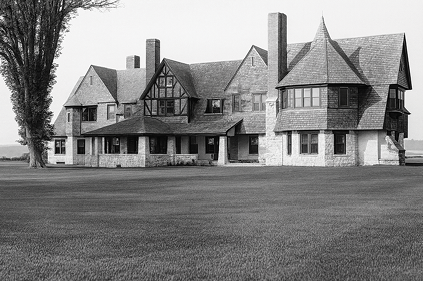
Historical image of Elm Court
When did you develop your passion for the hospitality industry?
My interest in hospitality unfolded slowly – not as a lifestyle aspiration, but as a discipline shaped by time and responsibility. It started when I had to design a five-star hotel in Silicon Valley that ultimately sold to the Four Seasons chain. At the time, it was the only five-star hotel between Los Angeles and San Francisco. Hospitality is immediate and exacting. It is felt in the moment of arrival, in the rhythm of a stay, in the details guests carry with them long after they leave. The outcome isn’t theoretical. It is experienced, wholly and quietly, every day.
I became especially interested in destination-driven hospitality – places people return to because of how they feel there. When done well, hospitality can preserve historic assets, elevate an entire region, and create value that lasts well beyond a single development cycle.
How did you learn about Elm Court, a historic Vanderbilt Estate in the Berkshires?
I learned about Elm Court when I owned The Blantyre – another Gilded Age hotel about 1.5 miles from this project. At the time, Elm Court was a historically significant property facing uncertainty. Its scale, Vanderbilt heritage, architecture, and Olmsted landscape made it irresistible.
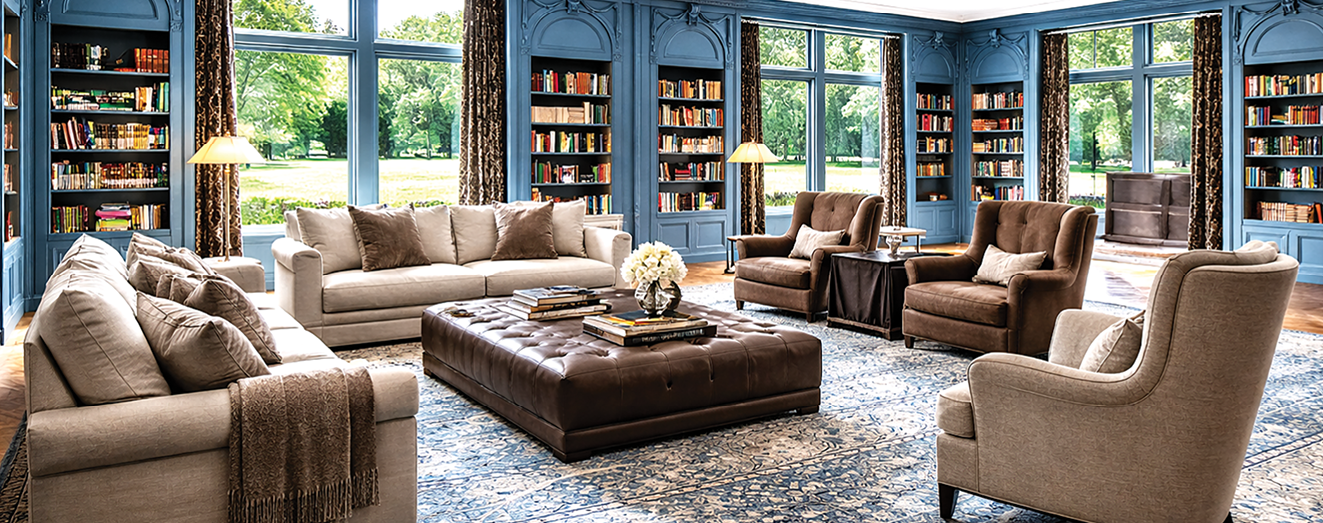
Library at Elm Court
The estate had reached a crossroads: incremental compromise or thoughtful restoration. I became involved because I believed Elm Court deserved a long-term vision worthy of its history – and that the Berkshires deserved a project executed at the highest level. The roster of guests who have passed through the estate traces an elegant journey through the world history of politics and culture.
What are your plans for the property?
The plan is to restore Elm Court as a world-class destination that respects its history while ensuring its long-term viability. That means restoring the manor house, preserving the landscape, and introducing a carefully scaled hospitality and residential program that supports the estate rather than overwhelms it.
This is not about maximum density or short-term returns. It’s about stewardship – protecting an irreplaceable property while creating economic and cultural value for generations.
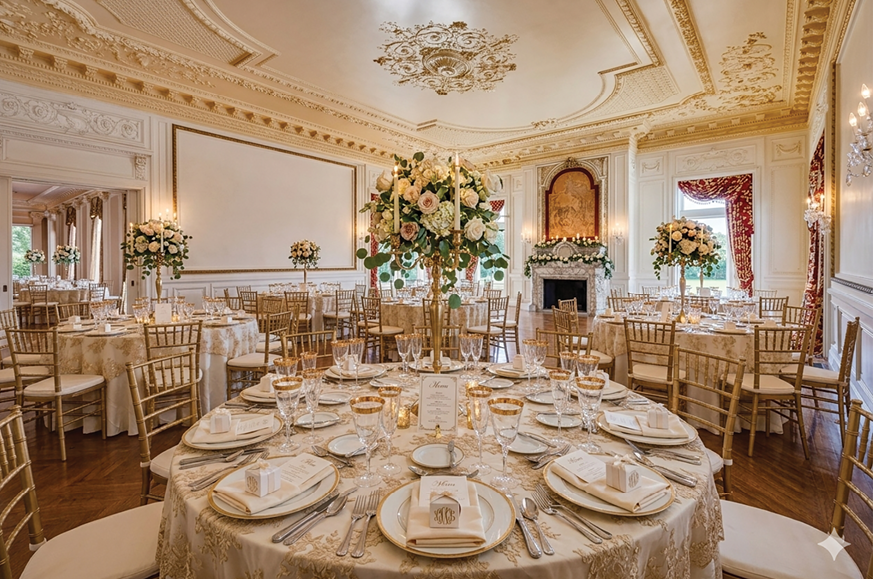
Event space
How important is it to maintain the history and heritage of the property while making it current and modern?
History is not an obstacle; it’s our asset. The challenge is avoiding pastiche or museumification. A historic estate must evolve to remain relevant, but that evolution has to be disciplined. Modern expectations around comfort, sustainability, and service can coexist with historic architecture when the work is done thoughtfully. Every decision at Elm Court begins with a simple question: Does this honor the estate and elevate it rather than dilute it?
What are the keys to providing a true luxury hospitality experience?
True luxury is not excess – it’s intention. It’s clarity of design, consistency of service, and an experience that feels effortless to the guest. The most successful properties are authentic, private, and deeply rooted in their setting. At Elm Court, luxury comes from different types and uses of interior space, quiet, landscape, architecture, and service – not spectacle.
What do you hope guests will take away from experiencing the property?
I want guests to feel an immediate exhale – the sense that they’ve entered a place that restores clarity and perspective. The property should feel timeless and grounded, shaped by landscape and beauty rather than trends or noise. If guests leave knowing they’ve experienced something real and lasting – something that quietly recalibrates how they feel and think – then we’ve succeeded.