- Home
- Media Kit
- MediaJet
- Current Issue
- Past Issues
- Ad Specs-Submission
- Reprints (PDF)
- Photo Specifications (PDF)
- Contact Us
- PRIVACY POLICY
- TERMS OF USE
Loading

ONLINE

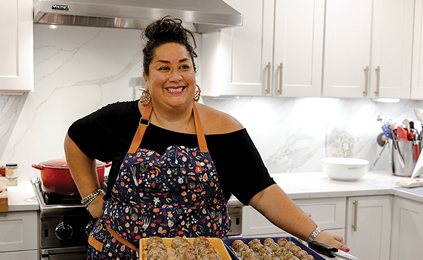
Ayesha Nurdjaja
Inspired By Bold Flavors
Editors’ Note
James Beard Award 2026 Semifinalist Nominee and 2022 and 2023 Finalist Nominee, (Best Chef: New York State) Ayesha Nurdjaja is the executive chef at Shuka, Shukette,Vicki Freeman, and Marc Meyer’s Eastern Mediterranean Restaurant in New York City’s SoHo neighborhood, where she serves a menu of provocative dishes that highlight local, seasonal ingredients. Born and raised in Brooklyn, Nurdjaja is the daughter of an Indonesian father and Italian mother. Growing up, she was always inspired by her father’s cooking and his use of exotic flavors, but her entrepreneurial spirit first led her to pursue a business degree at Pace University. After graduating in 2000, she found herself hosting dinner parties for friends and realized that food is where her true passion lies, so she enrolled at the Institute of Culinary Education. Nurdjaja graduated from culinary school in 2006 and, after watching chef Lidia Bastianich cook on PBS, walked into Lidia’s restaurant, Felidia, and asked for a job. They brought her on as a line cook and she worked her way up the ranks to become sous chef. Since then, Nurdjaja has helped lead the kitchen teams at Bar Artisanal and Michelin-starred Picholine under chef Terrance Brennan, and at Michelin-starred A Voce under chef Missy Robbins. She also spent time as executive chef at Il Bordello and most recently at Brooklyn neighborhood favorite Red Gravy, where for three years she offered her take on modern southern Italian cuisine. In 2015, Nurdjaja met with restaurateurs Vicki Freeman and Marc Meyer, who were looking for a new chef at their restaurant Hundred Acres. Nurdjaja was drawn to their passion for creating a welcoming place with honest cooking and they hit it off immediately. Together, they created Shuka (shukanewyork.com) at 38 MacDougal Street in New York City. At Shuka, the menu draws on the rustic, vibrant flavors found throughout Italy, Morocco, and Tunisia.
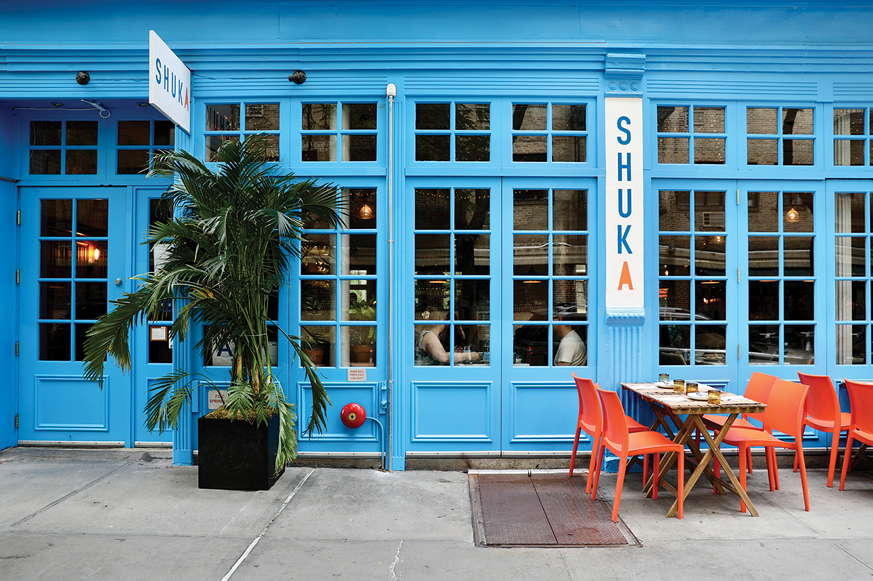
Shuka at 38 MacDougal Street in Soho, New York City
Will you discuss your career journey?
I didn’t grow up thinking I would be a chef, but food was always at the center of my life. My father was a chef, and my mother is an instinctive cook with a talent for making anything ridiculously delicious. I always felt like I grew up on the original set of Chopped, getting to eat the best food from two people trying to outdo each other.
From the time I was a kid, everyone said that since I could talk my way out of anything, I should be a lawyer. After college, I worked at a law firm, thinking that was the path I was supposed to take. But then one day I went home and wrote down the things I really wanted to do, and they all led back to food. The first time I stepped into a professional kitchen, it felt like watching a ballet or a symphony. I had found something in my soul I hadn’t spoken to before. I started out sweeping floors and washing dishes at my dream restaurant out of culinary school, Felidia. I worked my way through every job in that kitchen, eventually ending as a sous chef. Today I am the Executive Chef and partner in two busy New York restaurants, I work in TV, and I have a cookbook coming out in the fall. It really has been a ride, and I’m just getting started.
When did you know that you wanted to pursue a career as a chef?
I knew that I wanted to do something I was passionate about. They say, “Do something you love and you’ll never work a day in your life.” From the day I made the decision to enroll at the Institute for Culinary Education (ICE), I was completely dialed in. It felt bigger than a job. It felt like purpose.
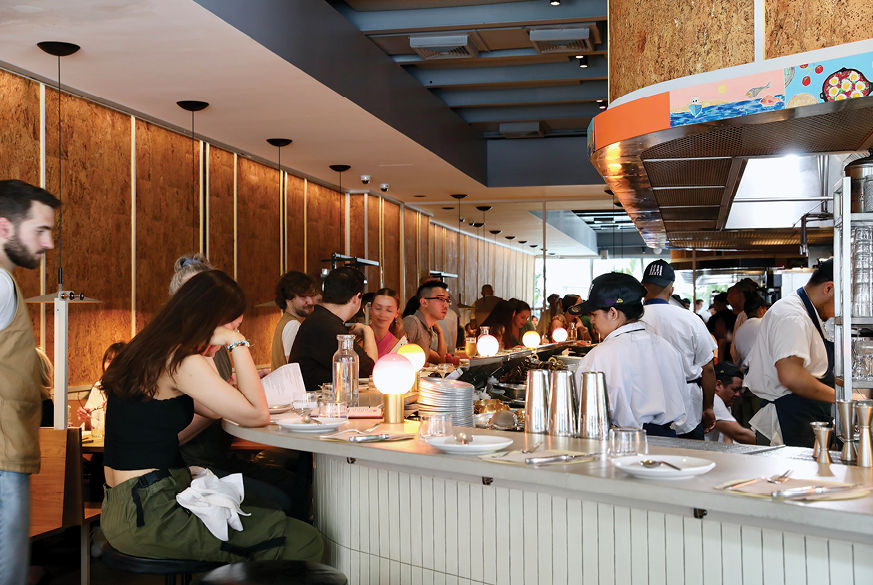
Shukette at 230 9th Avenue in New York City
ICE gave me the foundation, but my real education came on the job. I learned how to butcher, how to move with urgency and intention, how to keep my eyes wide open and absorb everything happening around me. I worked in some of the best kitchens in New York. Those kitchens were tough, but they shaped the standards I uphold today.
As it turns out, that saying that started it all for me is a lie, because I have been working hard for more than 20 years now, but I still love it. This profession has given me as much as I have put into it.
How do you describe the Shuka/Shukette experience?
Shuka is like my firstborn, the one who follows curfew and plays by the rules, Shukette is her wild little sister. She turns up the music a few notches. There’s more theatrics, almost an element of entertainment. When people come to either of my restaurants, I want them to feel relaxed and special, like they walked into a surprise party with all their favorite people. Every detail – the music, the lighting, the decor – is curated to make sure you’re having a great time.
Shukette, which I was able to design from scratch, has an open kitchen that lets me be a part of the action in the dining room. This is a pleasure after working in basements for most of my career. I love interacting with guests and being on the line with my crew. Nothing is more exhilarating than a busy night in the restaurant.
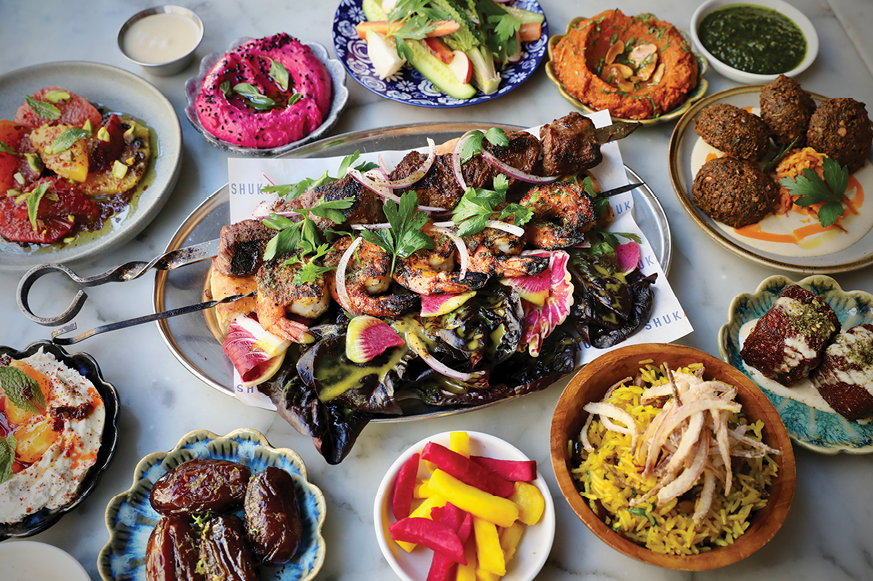
Shuka kebab feast
How have you approached the menu offerings for Shuka/Shukette?
People always wonder how an Italian-Indonesian chef that trained in French and Italian kitchens ends up doing Mediterranean and Middle Eastern cuisine. The fact is that my grandmother introduced me to these flavors as a child, and when I was finally running my own kitchen, I was inspired by the bold flavors, vibrant ingredients, and the generous spirit of sharing that is inherent to the cuisine. It connected deeply to my love of “rip and dip” culture – food meant to be torn, scooped, and enjoyed together.
I get bored easily, so working closely with farmers and adapting to what’s available in the market keeps me challenged. It pushes me to think about Mediterranean cuisine (eggplant, tomatoes, herbs), in new ways while staying true to the foundation. For example, the “Fish in the Cage” is one of our menu staples at Shukette, and we use porgy, rather than branzino, because it is local and sustainable.
I am always in R&D mode with my team, researching, testing, and refining new dishes according to the seasons. Sometimes I wonder how I could possibly come up with another idea, but then I put my apron on, and it’s like a superhero cape: the ideas always flow and I feel like I can do anything.
What advice do you offer to young people interested in pursuing a career as a chef?
I always tell young people to make sure you love it, not just the idea of it. Cooking is beautiful and creative, but it’s also physical, demanding, and requires real sacrifice. Spend time in a kitchen before you commit. Feel the pace, the pressure, the repetition. If you still wake up excited to go back, that’s a good sign.
Also, define what success looks like for you. The industry has changed, and there are more paths than ever, from restaurants to media to food education. Protect your mental and physical health, find mentors who respect you, and remember that being a great chef is just as much about leadership and kindness as it is about talent.
Most importantly, stay curious. Travel. Eat everything. Cook for people you love. If you can hold onto that joy, you’ll build something meaningful.
You have been recognized with awards and accolades for your leadership in the industry. Are you able to take moments to reflect on your impact and celebrate your success?
I’m not naturally someone who pauses for long, I’m usually thinking about the next service, the next shoot, the next menu change, but I’ve learned how important it is to take those moments in. I was recently named a 2026 James Beard Semifinalist fInterview with Ayesha Nurdjaja, Executive Chef, Shuka, Shukette, Vicki Freeman, and Marc Meyer’s Eastern Mediterranean Restaurantor Best Chef: New York State, which is one of the highest accolades a chef can receive. It’s incredibly humbling and feels like proof that if you work hard, stay true to your vision, take care of your people, and give back to your community, opportunities like this are possible.
When recognition comes, my first thought is always about the team. None of it happens alone. Being able to look around the kitchen and see people who have been with me for years, some who have grown into leaders themselves, is when it really hits me.
The accolades are validating, but what means the most is knowing we’ve built spaces that are supportive, full of joy, and inspiring for both our guests and our staff.
So maybe one day, when I am retired and sipping champagne on a yacht somewhere, I will look back and think about what I have accomplished, but for right now, my focus remains on moving ahead.