- Home
- Media Kit
- MediaJet
- Current Issue
- Past Issues
- Ad Specs-Submission
- Reprints (PDF)
- Photo Specifications (PDF)
- Contact Us
- PRIVACY POLICY
- TERMS OF USE
Loading

ONLINE

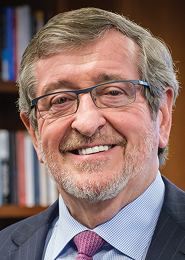
Michael Dowling
Bolstering Pediatric Behavioral Health Services
Editors’ Note
Michael Dowling is CEO Emeritus of Northwell Health. He is one of healthcare’s most influential voices, taking a stand on societal issues such as gun violence and immigration that many health system CEOs shy away from. His leadership has been invaluable to Northwell’s consistent expansion and prominence. Beginning in March 2020, he successfully navigated the health system through the first COVID-19 epicenter in the U.S., detailing Northwell’s experiences in a book titled, Leading Through a Pandemic: The Inside Story of Humanity, Innovation, and Lessons Learned During the COVID-19 Crisis. Overall, Northwell treated more than 350,000 COVID patients during the first two years of the pandemic – and administered the nation’s first COVID vaccines in December 2020. Prior to becoming CEO in 2002 and joining Northwell in 1995, Dowling served in New York State government for 12 years, including seven years as State Director of Health, Education, and Human Services and Deputy Secretary to former Governor Mario Cuomo. He was also Commissioner of the State Department of Social Services. Before entering public service, he was a Professor of Social Policy and Assistant Dean at the Fordham University Graduate School of Social Services and Director of the university’s Westchester County campus. Dowling has been honored with many awards and recognitions over the years, including being named a “Titan” on the 2025 TIME100 Health’s Most Influential list, The Conference Board’s 2023 Committee for Economic Development Distinguished Leadership Award, a 2022 Honorary Fellowship from the Royal College of Physicians of Ireland, the 2021 GlassDoor Employees’ Choice Award and the Columbia University School of Business’ 2020 Deming Cup for Operational Excellence. In 2017, he was selected to serve as the Grand Marshal of New York’s St. Patrick’s Day Parade. In 2022, he was named the most influential leader in healthcare by Modern Healthcare, ranking number 1 in its 2022 annual list of the “100 Most Powerful People in Healthcare,” a list on which he was featured for 18 consecutive years. Dowling is a member of the Irish Arts Center in New York City and the North American Advisory Board of the Smurfit Graduate Business School at University College Dublin, Ireland, and a board member of Oneview Healthcare and BankUnited. He earned his bachelor’s degree from University College Cork, Ireland, and his master’s degree in social work from Fordham University. He also has honorary doctorates from the prestigious Queen’s University Belfast, University College Dublin, Hofstra University, Dowling College, and Fordham University. In addition to his 2020 book about Northwell’s response to the COVID-19 pandemic, Dowling is the co-author of a 2020 memoir entitled After the Roof Caved In: An Immigrant’s Journey from Ireland to America, and a 2018 book Health Care Reboot: Megatrends Energizing American Medicine.
How do you describe Northwell Health’s culture and values?
Our culture is what distinguishes Northwell from other healthcare providers: we collaborate, embrace change and innovation, and promote the values of decency, respect, integrity and trust. Those values foster an environment that unites our employees and leaders behind a common purpose – to serve the community to the best of our ability through a culture grounded in connectedness, awareness, respect and empathy. That’s why expanding mental health services is such a core component of our community mission. It’s a bold response to the extraordinary need among people of all ages, especially children and adolescents, which is why we’re investing hundreds of millions of dollars to bolster pediatric behavioral health services throughout the New York area.
“Our commitment to doing the right thing for the right reason is one of many reasons why Northwell is able to attract talented professionals from the metropolitan area and beyond who share our values.”
Our commitment to doing the right thing for the right reason is one of many reasons why Northwell is able to attract talented professionals from the metropolitan area and beyond who share our values. We’re routinely recognized as a top workplace in surveys by Forbes and others. We’ve created a system-wide culture of lifelong learning, giving employees at all levels of the organization opportunities to acquire new skills and advance their careers. People rise to the occasion when you invest in them, and by helping employees reach their potential, the entire organization benefits.
In an industry like healthcare, the biggest impediment is the status quo, so we’ve nurtured a culture that encourages people to think differently and pursue new ideas. To help instill that message, nothing is more important than face-to-face communications, which is why 20 years ago I began meeting all newly hired employees at an orientation session called “Beginnings” – a practice continued by my successor, Dr. John D’Angelo. We hire more than 200 new employees every two weeks, so it’s incredibly meaningful when the CEO takes the time (typically two hours) to speak directly to them about the history of our health system, our mission, expectations and other background that gives them a sense of our patient-focused culture.
What have been the keys to Northwell’s industry leadership?
When New York State’s managed care movement began to accelerate in the early 1990s, we recognized the need to create a truly integrated health system that included all services from birth to end-of-life care. At the time, our organization consisted of a single hospital on Long Island – North Shore University Hospital. We incorporated as the North Shore Health System in 1992, becoming New York State’s first health network. Over the next several years, we began merging with other hospitals on Long Island and in New York City, eventually merging with our largest competitor, Long Island Jewish (LIJ) Medical Center, in 1997 – the same year that New York State deregulated hospital rates for commercial payers. We changed our name to the North Shore-LIJ Health System and 18 years later rebranded as Northwell Health.
“In an industry like healthcare, the biggest impediment is the status quo, so we’ve nurtured a culture that encourages people to think differently and pursue new ideas.”
A major focus during those early years was expanding outpatient services. To free up space within the hospitals and improve access and convenience for patients, we began moving clinical services that were previously performed exclusively within hospitals – surgeries, imaging, radiation oncology and chemotherapy – to ambulatory settings. If you look at our early growth, it was all due to acquiring physician practices and building the ambulatory care network at a time when other hospitals weren’t doing that. More than two decades later, Northwell now has more than 1,100 ambulatory locations and the majority of our $24.7 billion in annual revenue is earned outside the walls of our 28 hospitals.
Another key to our success was understanding early on that achieving elite status required significant investments in research and education. While the Feinstein Institutes for Medical Research has been in existence since 1999, it has been vastly expanded under the leadership of Dr. Kevin Tracey, who leads all of the health system’s research efforts in such areas as genetics, oncology, neuroscience, mental health and autoimmunity. The Feinstein now encompasses 50 research labs, 5,000 clinical research studies, 6,300 researchers and staff, and six institutes, including Bioelectronic Medicine – a promising field of science in which electrical stimulation is used to diagnose and treat chronic conditions that pharmaceutical drugs haven’t been able to cure.
Our crowning achievement in academics was the 2008 creation of the Zucker School of Medicine at Hofstra/Northwell – New York State’s first new allopathic medical school in more than 40 years. Led by founding Dean, Dr. Larry Smith, and our current Dean and Physician-in-Chief, Dr. David Battinelli, the medical school transformed the traditional model of how future generations of physicians are educated with a focus on hands-on learning. We’re also one of the largest academic teaching centers in the country with more than 2,400 medical residents and fellows. Recognizing the growing importance of nursing, in 2015 we created the Hofstra Northwell Graduate School of Nursing and Physician Assistant Studies, which was later expanded in 2021 to include an undergraduate nursing program.
Our growing reputation for academic, research and clinical excellence has enabled us to attract top clinical talent from across the country. In total, Northwell has more than 13,500 credentialed physicians, including 7,300 employed doctors and the largest medical group in the country (Northwell Health Physician Partners), as well as more than 22,000 nurses.
“Our crowning achievement in academics was the 2008 creation of the Zucker School of Medicine at Hofstra/Northwell – New York State’s first new allopathic medical school in more than 40 years.”
One of our most impactful decisions was the 2010 acquisition of Lenox Hill Hospital. Although many industry observers questioned its financial wisdom because the hospital was losing $20 million a year at the time, it was our first foray into Manhattan and a direct challenge to long-established institutions like Mount Sinai Hospital, NYU Langone Medical Center, and New York-Presbyterian Hospital.
Since then, we have been continually expanding our footprint in Manhattan and elsewhere in the city as well as in Westchester County and the entire metropolitan area. In another transformational move, Northwell merged last year with Nuvance Health, adding seven hospitals, several hundred outpatient care centers and 14,000 employees to our network in western Connecticut and New York’s mid-Hudson Valley.
We’re now the largest health system in the Northeast and one of the nation’s most prestigious clinical, academic and research enterprises, with a workforce of more than 104,000. From our beginning 34 years ago, we wanted to be innovative and different – to change the landscape of healthcare delivery, medical education and research. It has been, and still is, a work in progress – always adapting, improving and learning from history.
The one thing that will never change is our mission -- to improve the health of the communities we serve. And there is no greater community need than providing our young people with the mental health support they need to flourish, which child and adolescent psychiatrist, Victor Fornari, discusses on the following page.