- Home
- Media Kit
- MediaJet
- Current Issue
- Past Issues
- Ad Specs-Submission
- Reprints (PDF)
- Photo Specifications (PDF)
- Contact Us
- PRIVACY POLICY
- TERMS OF USE
Loading

ONLINE

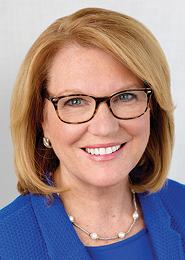
Madeline Bell
Supporting A Child’s
Long-Term Well-Being
Editors’ Note
Madeline Bell is the Chief Executive Officer of Children’s Hospital of Philadelphia (CHOP). Bell began her career as a pediatric nurse at CHOP in 1983, later leaving the organization to move into hospital administration. She returned to CHOP in 1995, and has since held a number of leadership positions, advancing from Vice President to Senior Vice President to Executive Vice President to Chief Operating Officer to President. She became CEO in 2015. Bell has made numerous contributions to CHOP, including the development of one of the largest pediatric ambulatory care networks in the country; the expansion of the Philadelphia Campus; the creation of the Middleman Family Pavilion, an inpatient hospital on CHOP’s King of Prussia Campus; and the development of the Center for Advanced Behavioral Healthcare and the Behavioral Health & Crisis Center in West Philadelphia and Roberts Children’s Health, a new inpatient complex that will open in 2028. She has also led the development of many nationally recognized clinical care programs and has secured many philanthropic gifts to help further the organization’s mission. Bell serves on the boards of Comcast-NBCUniversal and the Leonard Davis Institute of Health Economics. She is also on the Executive Committee of the Chamber of Commerce for Greater Philadelphia and is Chair of the Chamber’s CEO Council for Growth. She is the honorary consul of Spain, a fellow of The College of Physicians of Philadelphia, and the former Chair of the Federal Reserve Bank of Philadelphia’s Board of Directors. She is an adviser to numerous international hospitals and frequently lectures on the topics of children’s healthcare and women in leadership. Bell has received many awards and accolades, including the Chamber of Commerce for Greater Philadelphia’s William Penn Award, Press Ganey’s CEO of the Year Award, The Philadelphia Inquirer’s Industry Icon Award, and the Philadelphia Business Journal’s Most Admired CEO Award. She has been named one of Modern Healthcare’s 100 Most Influential People in Healthcare and one of its 50 Most Influential Clinical Executives, and was included on Forbes’ 50 Over 50: Vision list, Philadelphia Business Journal’s Power 100 2025 list, Metro Philadelphia’s list of Power Players in Healthcare, and Philadelphia Magazine’s list of 150 Most Influential Philadelphians. Bell is the host of Breaking Through with Madeline Bell, a podcast that features interviews with CHOP patients, doctors and scientists, as well as with philanthropists and innovators who support CHOP’s mission. She holds a BS degree in nursing from Villanova University and an MS degree in organizational dynamics from the University of Pennsylvania.
Institution Brief
Children’s Hospital of Philadelphia (chop.edu), the first hospital in the United States dedicated exclusively to pediatrics, strives to be the world leader in the advancement of healthcare for children by integrating excellent patient care, innovative research, and quality professional education into all of its programs. CHOP is one of the top-ranked children’s hospitals in the United States and was ranked #1 on Forbes’ 2022 list of America’s Best Large Employers. It has more than 31,000 employees and other workforce members in its $5-billion-a-year health system and research institute and is committed to finding cures for pediatric illnesses. CHOP recognizes that preventive and mental health care are essential to a child’s overall well-being – and that supporting the family is a vital part of caring for the child. The entire CHOP team is focused on one goal: providing all children with a chance at a healthy future.

Children’s Hospital of Philadelphia
How do you describe Children’s Hospital of Philadelphia’s culture and values?
CHOP’s culture is built on what we call our ICARE values: integrity, compassion, accountability, respect, and excellence. We are committed to making breakthroughs for children every day, and our ICARE values support this commitment and help us create a culture where everyone feels valued, included and respected.
We reinforce our ICARE values by sharing stories about how our employees across the organization make a difference for children, families and each other. These “Breakthrough Maker” stories – which I often share in the messages I send to employees regularly – are a way to celebrate our employees and reinforce our culture of mutual respect and kindness.
What have been the keys to CHOP’s industry leadership?
As the nation’s first children’s hospital, we have a long list of “firsts.” Our focus has always been on innovation, and this has helped us to grow and thrive. Innovation comes in many forms at CHOP. We have invested in cell and gene therapies (CGT), and we’re really leading the way in this area: Last year, the first patient in the world was treated with a personalized gene-editing therapy at CHOP. We have nearly 80 principal investigators involved in CGT research, across more than 65 clinical trials, and we are able to provide the latest CGT innovations to patients quickly and safely. We have incredible buildings that are custom designed to create the environment that our teams need to do their best work and that our patients need to heal. And we are partnering with other organizations in our region on initiatives like the Health Institute at Hardy, an innovative program designed to prepare high school students for careers in healthcare. The program combines academic instruction with mentorship and hands-on experiences in clinical care, hospital operations, and healthcare administration.
We’ve also worked hard to attract and retain the best and brightest talent in the industry. From the researchers in our labs, to the providers on the front lines, to the people who work behind the scenes, we have built an incredible team of 31,000 workforce members, all of whom are focused on making breakthroughs for children.
“To address the pediatric behavioral health crisis, CHOP is focused on delivering the right care in the right place at the right time. In 2022, we opened the Center for Advanced Behavioral Healthcare, a 47,000-square-foot outpatient facility that was created to meet the needs of the West Philadelphia community we serve.”
Will you discuss your views on the children’s mental health crisis?
Behavioral health is one of the most urgent pediatric healthcare challenges facing our country today – and CHOP is focused on finding solutions that will meet children’s behavioral health needs. I have long believed that caring for a child’s mental health is just as important as caring for their physical health, and making comprehensive behavioral healthcare available to every child who needs it is a top priority for me. Over the past several years, I have advocated for children’s behavioral health services with policymakers in Washington, DC, and at the state level and have expanded the behavioral health services CHOP offers to children.
How is CHOP addressing this crisis?
To address the pediatric behavioral health crisis, CHOP is focused on delivering the right care in the right place at the right time. In 2022, we opened the Center for Advanced Behavioral Healthcare, a 47,000-square-foot outpatient facility that was created to meet the needs of the West Philadelphia community we serve. In 2024, we opened the Behavioral Health and Crisis Center, which has a 24/7 walk-in crisis response center and three licensed inpatient psychiatry units with private rooms. We also have a very successful program that co-locates behavioral healthcare providers in CHOP primary care practices to treat common behavioral health conditions. Our focus is always on finding ways to improve access to care and create a comfortable, welcoming environment for patients and families.
How critical is it to focus on both inpatient and outpatient services to most effectively address youth mental health?
Care for youth mental health starts with prevention, which reduces the likelihood of crises and the need for more intensive care. Strong outpatient and school-based services are essential because they provide early help and ongoing support. Inpatient care also plays an important role by offering safety and stabilization when a child is in serious crisis. But without solid preventive and outpatient services, inpatient treatment can feel like a revolving door instead of a turning point. A coordinated system – beginning with prevention, supported by outpatient care, and using inpatient services when needed – is the most effective way to support a child’s long-term well-being.
What more needs to be done to attract mental health professionals to the profession?
Attracting more mental health professionals starts with recognizing that mental health is health – and that children, who make up only 25 percent of the population but 100 percent of our future, all need support, whether they are thriving or struggling. To build a stronger workforce, we must reduce barriers like high education costs, lengthy license processes, and low early career pay. Mental health professionals are essential to providing the full range of care children need, from building resilience to addressing serious challenges. Organizations also need to support providers with good supervision, manageable caseloads, and clear paths for growth. This work is mission driven, but it must also be sustainable if we want to build a strong workforce that’s ready to meet the growing mental health needs of young people.
What do you see as the keys to effective leadership?
It’s important for leaders to spend time on the front lines so they can see the challenges their teams face firsthand. For me, that means visiting our inpatient units and outpatient sites, and talking with employees. Their feedback helps inform my decisions and gives me ideas for new ways to improve the CHOP experience for everyone. I also believe that decisions are best made closest to the team. The most effective leaders push decision-making down and empower their teams to make decisions. Finally, empathy is a critical skill for leaders. The best leaders show empathy by letting their teams know that they understand their concerns and care about them as people.
What advice do you offer to young people interested in pursuing a career in the industry?
When someone offers you the chance to do something new, even if you’re not 100 percent comfortable, just say yes. You’ll find your biggest rewards and your most meaningful opportunities when you step outside your comfort zone.