- Home
- Media Kit
- MediaJet
- Current Issue
- Past Issues
- Ad Specs-Submission
- Reprints (PDF)
- Photo Specifications (PDF)
- Contact Us
- PRIVACY POLICY
- TERMS OF USE
Loading

ONLINE

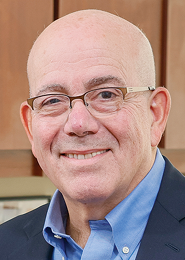
Dr. Victor M. Fornari
Doing The Right Thing
Editors’ Note
Victor Fornari is the Vice Chair, Child & Adolescent Psychiatry at Long Island Jewish Medical Center, including the Zucker Hillside Hospital & the Cohen Children’s Medical Center. He is also Professor of Psychiatry & Pediatrics at the Donald & Barbara Zucker School of Medicine at Hofstra/Northwell. Fornari is the Co-Editor of the books: Evidence Based Treatments for Eating Disorders: Children, Adolescent & Adults, Psychiatric Nonadherence: A Solutions Based Approach, and Pediatric Nonadherence: A Solutions Based Approach. Fornari was the President of the American Association of Directors of Child & Adolescent Psychiatry (2018-2020).
Institution Brief
Northwell Health, named a Time100 most influential company of 2025, (northwell.edu) is a clinical, academic, and research enterprise with a workforce of more than 104,000 and annual revenue of $24.7 billion. Northwell is the largest non-for-profit healthcare provider in the Northeast caring for more than four million people annually through a vast network of 28 hospitals, more than 1,100 outpatient facilities, including 70 urgent care centers, as well as home care, rehabilitation, and end-of-life programs. Northwell also pursues pioneering research at the Feinstein Institutes for Medical Research and a visionary approach to medical education highlighted by the Zucker School of Medicine, the Hofstra Northwell School of Nursing and Physician Assistant Studies, and one of the nation’s largest medical residency and fellowship programs.
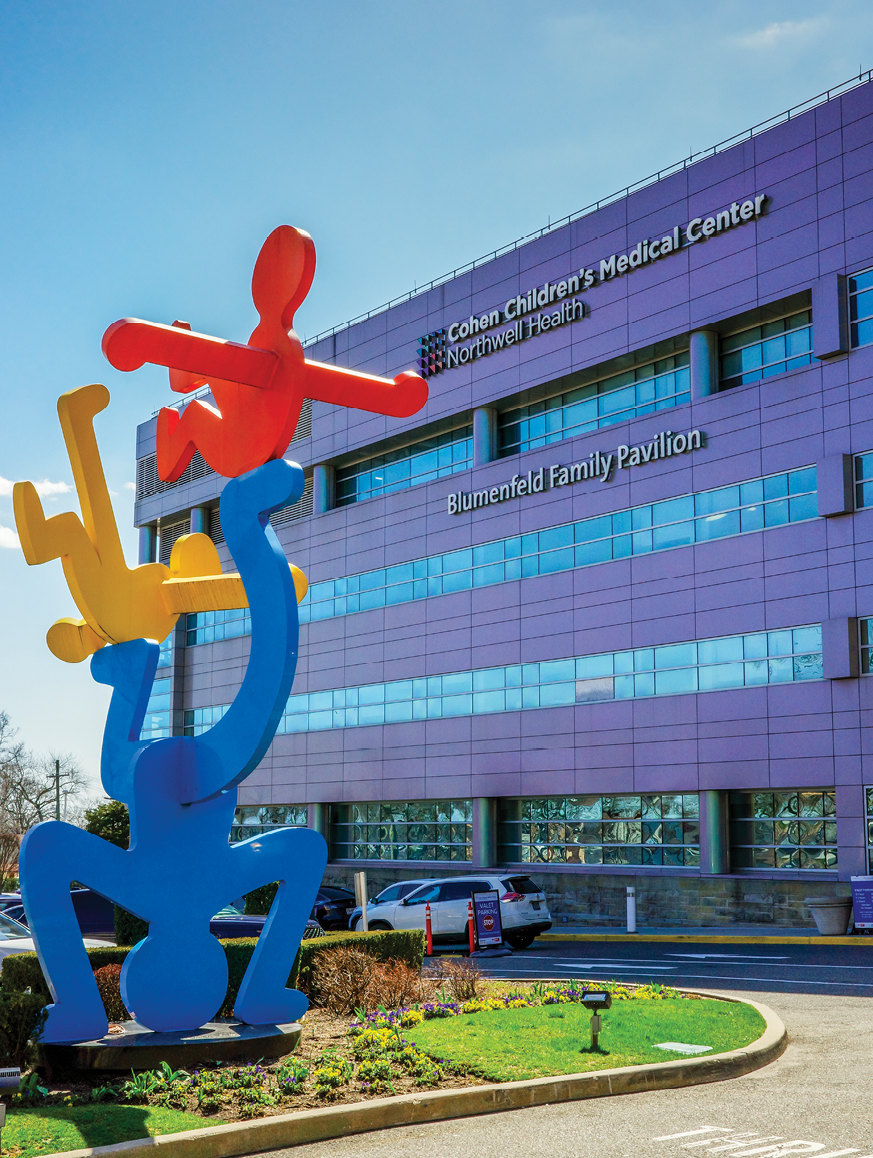
Cohen Children’s Medical Center has a Pediatric Behavioral
Health Urgent Care Center that provides timely access
to pediatric mental health services for children and adolescents.
The program is designed as an alternative treatment setting
for those who need urgent intervention, but do not
necessarily require the services of the emergency room.
Will you discuss your career journey, and what led to your passion to pursue a career in medicine?
I always wanted to be a pediatrician, but when I was in medical school and I was rotating in pediatrics, it somehow didn’t do it for me. I went to my advisor who said, why don’t you pursue some of the pediatric specialties, and so I did electives in adolescent medicine, pediatric neurology, child development – but it still didn’t resonate. I thought, this was strange. I didn’t know what to do.
I then did my surgical rotation, and I loved it which blew me away because when I went to medical school, I was set on being a pediatrician and had no inclination to become a surgeon. I went back to my advisor and said that while pediatrics didn’t do it for me, surgery was amazing. My advisor asked what it was about surgery that I enjoyed, and my answer was that the patients were incredible – to hear their stories and what they were going through really resonated with me. When my advisor asked about my experience in the operating room, I said it was okay. She said, Victor, you don’t want to be surgeon – you want to be a psychiatrist. So, I then did my psychiatry clerkship, and that didn’t do it for me either. I went back to my advisor who told me to do an elective in child psychiatry, which I was not familiar with. I did the elective and the light bulb went off. I knew that was it.
When I graduated, I did a pediatric internship and became a child psychiatrist. My passion was really taking care of medically sick kids in a children’s hospital and helping them deal with their adaptation to their medical illness, whether they had a malignancy or diabetes or cystic fibrosis. That’s what I did, and I loved it. Along the way, I discovered adolescents with eating disorders and have devoted the last 40 years to caring for these youth.
After doing pediatric consultation in the children’s hospital for a number of years, I became the program director for training child psychiatrists. I really wanted this opportunity, but I missed taking care of the medically sick kids. I tried to do both, but eventually ended up being the program director to train the next generation of child psychiatrists and did that for many years. It has been amazing to recruit, teach, supervise and mentor them. I have trainees from the past 40 years who continue to call me or email me or text me with questions.
About 20 years ago, when North Shore and LIJ merged, including the child psychiatry departments, I was asked what position I wanted in the newly formed department. I wanted to be the program director of child psychiatry for both of these institutions which would now be a large, merged program. I was told that they wanted me to be the division director which was more administration and budgets and hiring and probation which was not my first choice, but begrudgingly I agreed. I have done that for the last 20-plus years and, I must say, the only reason I agreed to do it was that they let me teach and supervise the trainees. For me, still my main passion has been caring for medically sick kids, although now my passions have expanded and include taking care of all youth and teaching the next generation, which has been perhaps the most rewarding. Along the way, the new medical school, Zucker, opened at Northwell, and I was very involved with the curriculum – teaching communication skills, teaching introduction to psychiatry – which has also been very rewarding.
“The children’s mental health crisis began long
before the pandemic, although the pandemic really accelerated it.”
Will you discuss your views on the children’s mental health crisis?
The children’s mental health crisis began long before the pandemic, although the pandemic really accelerated it. When I arrived at LIJ in 1982, 44 years ago, we saw about 250 child and adolescent emergencies per year – about 20 a month. Some days there was one, some days there were two, some days there were none. By the year 2000, 18 years later, we were seeing 2,000 kids a year. That was a huge increase. In fact, by the year 2000, I was already getting heat from the pediatric emergency room that our kids were taking up too many spaces in the emergency room. By the year 2010, we were seeing 4,000 kids a year in the emergency room for behavioral health issues, and pediatrics was really complaining. I would get calls from the chairman of pediatrics and the chairman of psychiatry saying that we had to do something about this crisis. There were too many psychiatric patients in the pediatric emergency room. Fortunately, with a supportive administration and some seed money from the state, around ten years ago we developed the first behavioral health, urgent care, walk-in clinic for kids at the children’s hospital. I am not sure how we would have managed the volume during the pandemic had that not already been opened.
That first year we saw about 1,200 kids – these were kids who needed to be seen that day, but did not need an emergency room. The model was so successful that, fortunately, the decision was made to commit resources to develop other behavioral health urgent care centers in the community in partnership with local school districts. Once that first center opened up in partnership with our local school districts, many other school districts wanted to partner with us as well. By the year 2020, just as the pandemic was unfolding, we were seeing 6,000 kids a year. Now remember, just 38 years earlier, we were seeing 250 a year. It was critical to find linkage for them to have ongoing treatment in the community, and this was really challenging because resources were so scarce. It’s not enough to say, here’s the evaluation and we’re going to treat and release you. It is necessary to follow these kids and their families to provide outpatient services and care.
Around this time, we also opened a New York State program called Project Teach to train pediatricians and family physicians to care for the mild to moderate behavioral health problems of their patients, including assessment and treatment. Once we knew that we had a cadre of pediatricians in the communities throughout New York State whom we had trained, we could then refer these relatively stable patients seen in urgent care centers to them. We encouraged families to arrange follow-up, once stabilized, and go back to their pediatrician, or the family physician, for ongoing care. The safety of this program was reinforced with the Project Teach telephone line Monday through Friday from 9:00 AM to 5:00 PM to support all the primary care doctors in the State of New York: if they had one of these patients in their office and they didn’t feel confident about what to do, they could call in real time and we would advise them and support these primary care physicians. We have continued to support primary care physicians through Project Teach and expanded the program now throughout the state, and feel very good about that program which has received a lot of recognition for its innovation. The program is now the collaboration of seven medical schools around the State of New York, and this collaboration has worked because we all share the mission. This isn’t about anybody’s ego. We know that we have to work together to take care of these kids by supporting pediatricians. It is really about making a commitment to taking care of the community and doing what’s right.
Northwell is doing the right thing, and I think that level of support from leadership has made all the difference. Our trainees want to stay with us after they complete their training and work in our programs, and I think that speaks volumes because trainees vote with their feet. They want to stay here and make this their professional home.
“If you ask a child, are you anxious or depressed, the child is the best person who knows how they feel, not the parent.”
What more can be done to attract the needed professionals to the industry?
This is a critical question. Some of the strategies that we’ve tried to use at our own institution, at least for physicians, is to try to have many of our psychiatry and child psychiatry faculty teach at the medical school early in the curriculum. The very first course that the medical students take when they arrive is an introduction to communication skills. How do you speak? How do you talk to patients? How do you interview them? Having psychiatrists and child psychiatrists as their first teacher can have a big impact. Oftentimes these students come and they are uncomfortable and anxious, since many of them have no idea what a psychiatrist does. Then they come back and rotate with us in the second year on the introduction to clinical experience where they watch us interview real patients, and then we watch them and supervise them, so they’ve spent a lot of time with us. The first few graduating classes of our new medical school had a higher percentage of students going into psychiatry than the national average, and I believe it’s because we paid a great deal of attention to making certain that these students were exposed to mentors and role models early in their professional development, when many other medical schools might not think that exposure to psychiatry is important.
We’ve also made sure that the quality of teaching in their clinical experiences is excellent, and throughout the last 16 years of our medical school, our clinical clerkship is the highest rated of all the clerkships because it’s designed with such attention to educational skills. We don’t let just anybody teach the medical students. Everybody has to be supervised and trained because we want to make sure that the medical students are getting the best experience they can. I think that the students appreciate the level of teaching that they’re getting, and they develop relationships with many of these faculty which results in many of them going on to train in psychiatry, and now child psychiatry, and several we’ve been able to hire to stay on at Northwell which has really been exciting and something which we take great pride in.
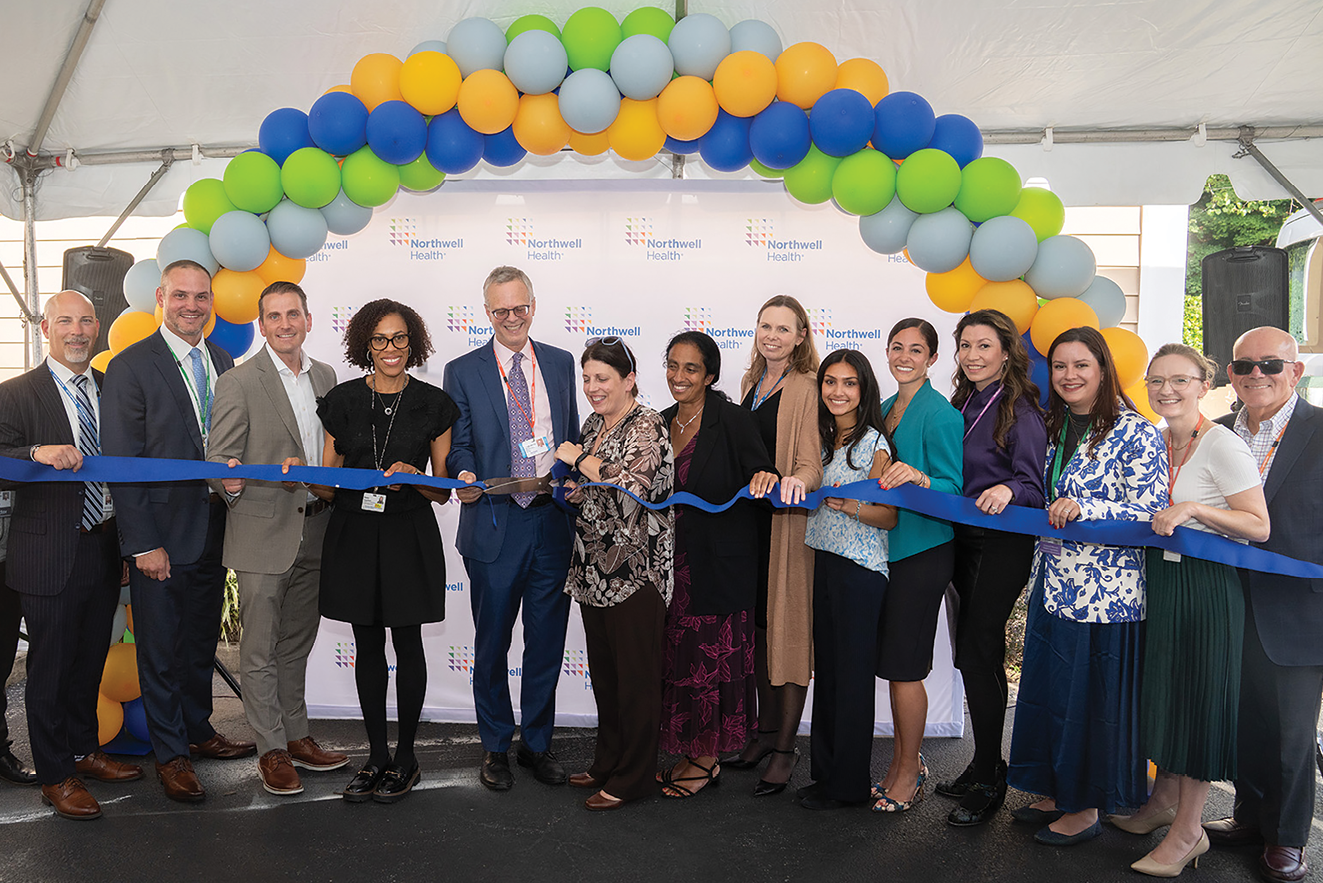
Northwell Health recently expanded access to vital children’s
mental health services in Westchester County with two new
pediatric behavioral health practices offering same-day
crisis assessments and ongoing care for youth aged 5 to 21.
Both practices accept all major insurance plans
thanks to donor support.
Has there been progress made around the stigma of children’s mental health, and mental health more broadly?
Stigma is something which long predates the mental health crisis. I teach a course on the history of child psychiatry, and I would say that until about 1965, the infinite wisdom said that children don’t develop mental health problems. Of course, that was a myth, but the question is, why is it that people thought that children didn’t develop mental health problems. The answer is – because until about 1965, if you wanted to find out if a child had a mental health problem, the methodology was to ask the parents, and if you ask parents if their child has a behavioral health problem or mental health problem, they’d say, no, not my child. It wasn’t until the mid-1960s that they began to say, we better do epidemiology studies that involve asking teachers and pediatricians, and studying hospital records. They then did something really novel – they asked the kids themselves. If you ask a child, are you anxious or depressed, the child is the best person who knows how they feel, not the parent.
So, the methodology to determine the base rate of psychopathology in kids was transformed. That study was done by Michael Rutter in the United Kingdom, and it was called the Isle of Wight Study. Many people questioned the results because that study showed that about one in five kids met the criteria for at least one behavioral health diagnosis, and people couldn’t believe that because up until then, they said that’s impossible. The study was replicated around the world, and people got the same base rates. Michael Rutter went back to the island roughly 25 years later, and he repeated the same study. The second study is called the Isle of Wight Revisited, and the base rate was the same, one in five kids. So, one in five kids globally meet the criteria for at least one behavioral health diagnosis by the age of 18, if they’re in good physical health and they don’t have a developmental disorder. But if they have either a chronic medical condition, like diabetes or malignancy, or they have a developmental problem, like spina bifida or another developmental condition, that goes up to one in three. Then if you take kids who have a chronic medical condition and a developmental problem, it goes up to 50 percent, one in two. People will often be shocked, but it’s not shocking when you think about it. If a child has a chronic medical problem and a developmental problem, how can you expect them to be well adjusted and not anxious and not upset. It is counterintuitive.
Now, more and more youth are showing up with suicidal ideation. How much of that is related to other things – for example, a greater awareness about trauma, which is so ubiquitous. And then, of course, the development of the internet, social media, and handheld devices, which we call a phone, but it’s really a computer. Kids have access to all kinds of information. We can’t say specifically what the cause and effect is, but the dramatic increase in reports of suicidal ideation does coincide with the development of social media and the internet and handheld devices.
Australia is the first country to ban social media for youth under the age of 16 years old, so it’s going to become an experiment, a geopolitical experiment. Will it make a difference in the development of suicidal ideation if kids don’t have access to social media? I think the hypothesis is it will. We know that the last decade we’ve changed the way we ask questions on evaluations. The questions on evaluations always now include, what is your experience with social media? Have you been targeted or bullied by anyone on social media? The answers are astounding. Kids are victimized. Kids will say things on social media to one another that they wouldn’t say face to face. We know it can be so traumatic to be bullied on social media. We tell families not to take the phone away from their child because that too can precipitate suicidal ideation since the phone is now their oxygen. They’re accustomed to having it. But, recognize that you might need to limit what’s on that phone, whether it’s access to social media, the way the country of Australia is suggesting, or access to the internet in general. And I know some parents have said we’ve tried putting all the blocks on, but it just doesn’t work. We need to figure out how to protect our kids from some of the things that are on the smartphone, which really is not in their best interest.
“We need to figure out how to protect our kids from some of the things that are on the smartphone, which really is not in their best interest.”
How important is it when you’re doing this type of work to take moments to appreciate the impact you are making and to celebrate the wins along the way?
The work is emotionally depleting, so we work a lot with our teams to discuss our cases – the ones that go well and the ones that don’t – in order to support one another. I’m a storyteller, and I tell people that we learn so much by sharing our stories. I’ll tell you an interesting anecdote that I have shared with a lot of people. In 1990, there was a plane crash on Long Island, the Avianca plane crash. I was on call that night. It was around 8:30 PM when the plane crashed. The hospital called with the disaster plan and I headed there. What was so unusual about that plane crash was that the plane had run out of fuel, and because of that, there was no fire when the plane crashed. Because of this, 86 people survived, and among them were 21 kids. I took care of many of these kids following the crash and followed them for many years after. As they recovered, many of them went back to Colombia, which is where the plane was coming from. About two years ago. I received an email from someone who said, “Dear Dr. Fornari, you took care of me in 1990, but you won’t remember me.” I immediately saw the name and with tears in my eyes, I wrote back, remember you? Of course I remember you. In fact, I have your photograph in my desk drawer. This was a little girl who had survived the plane crash where her mother and brother had died. She was 8 at the time and for me, at the time, I had an 8-year-old child. I thought to myself, I can’t even imagine what this child is going through. Fortunately, her father was alive, and she went back to Colombia. I had not heard from her since the crash, and so I wrote back to her and asked, why now – it’s 35 years later? We immediately did a Zoom call, and she’s crying and I’m crying. She said, because it was my daughter’s 8th birthday, and I realized that I fell out of the sky and you caught me. I tell that story to my staff, to my students, to my trainees – to show that everything we do has a meaning. We often don’t ever find out the outcome of what we do when we help a child in crisis. We do our best to help, hoping to do the right thing, but we often don’t find out, but ,periodically, we do – like this email 35 years later. Stories like this sustain us.