- Home
- Media Kit
- MediaJet
- Current Issue
- Past Issues
- Ad Specs-Submission
- Reprints (PDF)
- Photo Specifications (PDF)
- Contact Us
- PRIVACY POLICY
- TERMS OF USE
Loading

ONLINE

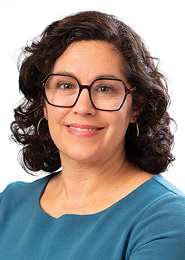
Dr. Sarah Wood
A Model Of Excellence In Adolescent Healthcare
Editors’ Note
Dr. Sarah Wood is a physician scientist with a career mission to improve quality and equitable delivery of sexual and reproductive healthcare for adolescents and young adults. A former community health worker and HIV tester, Wood received her undergraduate degree at DePaul University and her MD at Drexel University College of Medicine. After completing residency at the Children’s Hospital of Philadelphia (CHOP), Wood continued her training as an Adolescent Medicine fellow and received an MS degree in Health Policy Research at the University of Pennsylvania Perelman School of Medicine. After finishing her training, Wood joined the faculty at Penn and CHOP, conducting research to develop innovative healthcare delivery strategies through the Craig Dalsimer Division of Adolescent Medicine and CHOP’s PolicyLab. She was the Co-Director of the Clinical Core of the Penn Center for AIDS Research and the Assistant Director of Adolescent HIV Services. In 2024, she joined the faculty at Mount Sinai Health System to carry on the mission and the vision of the Division of Adolescent Medicine and the AHC.
Institution Brief
Mount Sinai Health System (mountsinai.org) encompasses the Icahn School of Medicine at Mount Sinai and seven hospitals, as well as a large and expanding ambulatory care network. The seven hospitals – The Mount Sinai Hospital, Mount Sinai Brooklyn, Mount Sinai Queens, Mount Sinai Morningside, Mount Sinai South Nassau, Mount Sinai West, and New York Eye and Ear Infirmary of Mount Sinai – have a vast geographic footprint throughout the New York metropolitan region. The Mount Sinai Hospital has been listed in the U.S. News & World Report Honor Roll for the last ten years. The New York Eye and Ear Infirmary of Mount Sinai is also ranked nationally in ophthalmology.
The Icahn School of Medicine at Mount Sinai advances science, medicine, and healthcare delivery for the benefit of humanity through a culture of excellence, innovation, collaboration, and belonging. It conducts groundbreaking research; educates and nurtures the next generation of exceptional clinicians, researchers, teachers, and leaders; and delivers the most advanced compassionate care with an unwavering commitment to health equity.
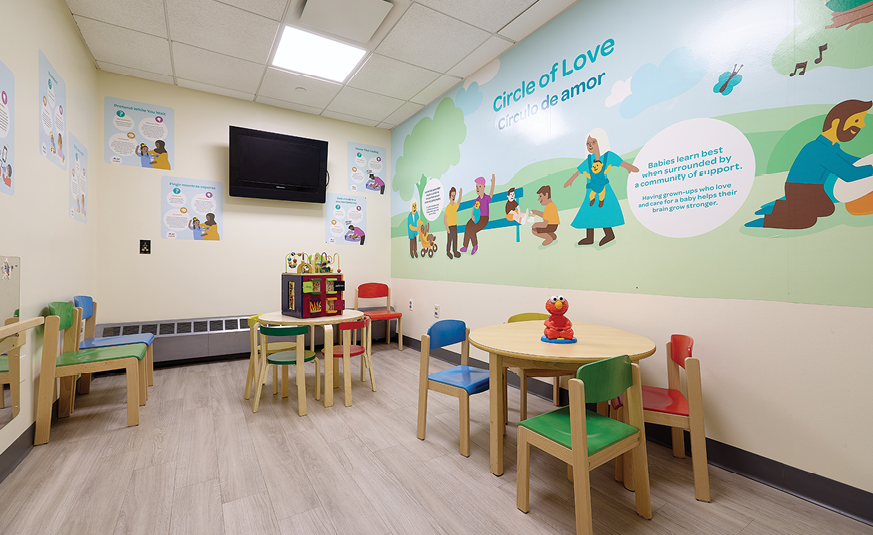
A room at the Mount Sinai Adolescent Health Center
Will you discuss your career journey and your interest in pursuing a career in medicine?
I have a fairly nontraditional background for a leader in medicine. I started my interest in health at 16 years old when I left home and became involved in doing some health work in my community. I was a community health educator at a small women’s community health center in Chicago where I grew up, and over time I fell in love with healthcare. The arc really came around during my mid-20s when I knew that I wanted to affect change in the lives of young people, and the best way to do that was to go to medical school and become a doctor. I ended up moving to Philadelphia where I attended medical school, fell in love with pediatrics, and was awarded a Doris Duke Fellowship to get training on how to conduct patient-centered research. I loved that experience. I did my residency at Children’s Hospital of Philadelphia (CHOP), had two children along the way, and stayed with CHOP for about 10 years.
I saw that the Mount Sinai Adolescent Health Center was looking for a new leader, and it is such a legendary place in the work it does to care for young people, so I decided it was time to take the leap. While I loved my time at CHOP, I wanted to have the opportunity to grow into a leadership role, and that brings me to where I am today.
Will you highlight the Mount Sinai Adolescent Health Center and how you define its mission?
The Mount Sinai Adolescent Health Center was founded in 1968, and its mission is to break down barriers to health and wellness for adolescents and young adults. We do this by offering a unique care model that emphasizes being high-quality and truly integrating all health elements for young people, providing services that are youth-centered, removing traditional barriers to access. All our services are offered at no direct cost to the patient.
“The Mount Sinai Adolescent Health Center was founded in 1968, and its mission is to break down barriers to health and wellness for adolescents and young adults.”
What are your views on the children’s mental health crisis?
We saw dramatic shifts in mental health diagnoses and mental health hospitalizations during and after the COVID-19 pandemic. We also saw that not all youth were affected equally, and Black and Latino youth were seeing higher rates of hospitalization and suicide. This was happening while health systems were already underprepared to deal with even the pre-pandemic levels of mental health diagnoses in young people, so we went into this crisis with national shortages of child and adolescent psychiatrists and psychologists, and with pediatricians who were on the front lines of this fight not having the training needed to address this crisis.
We hear a lot about anxiety and depression, but along with that we have seen incredible rises in eating disorders in young people leading to hospitalization, and this is an area where we see one of the biggest mismatches between available resources in terms of providers who are trained to meet this need for our youth, available hospital beds, and skilled pediatricians who can diagnose eating disorders.
When thinking about solutions, we have to recognize that the drivers of these trends are multifaceted. We hear a lot about the impact of social media, but it is a complex intersection of those social media factors along with the ability to do early detection, provide resources for parents, and have the providers necessary to address this crisis. We need to focus on access to quality mental health services, early detection, and parental support. We also need to find a way to destigmatize mental health in young people so that they will be willing to come forward when they may be struggling.
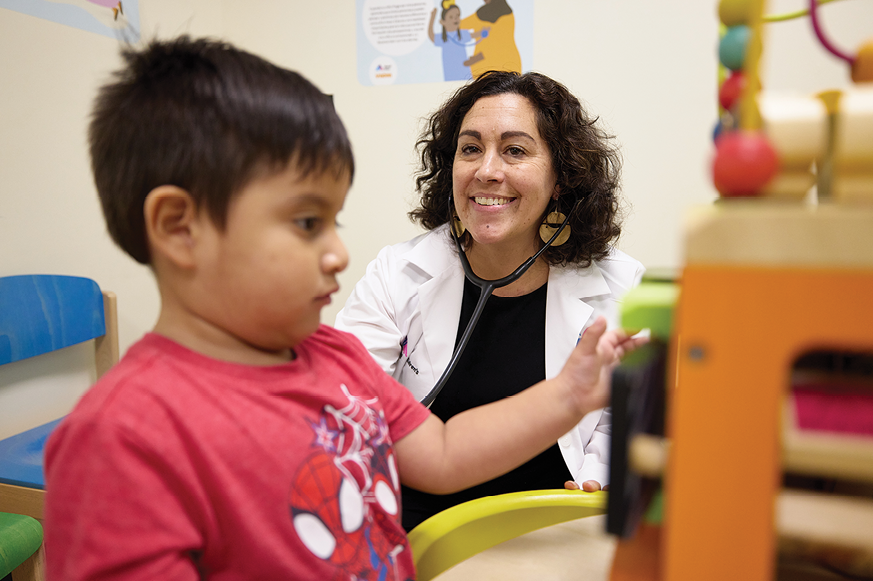
Dr. Sarah Wood interacting with a patient at the
Mount Sinai Adolescent Health Center
How critical is it for leading health systems to work together and collaborate to most effectively address this crisis?
This goes beyond a health system by health system approach. What we see when we look at it this way is that well-resourced health systems can do a phenomenal job because this is part of their mission, vision, and values. However, there are many health systems in big geographic swaths of the country, particularly in the rural south, where there aren’t the resources and the training to be able to do this work. This needs to be addressed at a national level with investments in training systems for providers, as well as looking at payment reform since many healthcare providers do not get paid sufficiently for the services and quality of care they provide. We also have opportunities to put federal dollars into supporting this work.

Staff supplying a packet at the
Mount Sinai Adolescent Health Center
As a leader of Mount Sinai Health System, how do you define its culture?
I have been so impressed with the culture since I came to Mount Sinai. I think our tagline, “We Find A Way” is truly emblematic of the institution. No one here is daunted by the many challenges in delivering healthcare – there is a real commitment at Mount Sinai to out-of-the-box thinking and innovating to tackle problems. At the highest levels of the institution, everyone is rolling up their sleeves to do everything possible to make sure our patients can have healthy and productive lives.
What advice do you offer to young people interested in pursuing a career in medicine?
There are two things that have been critical to me throughout my career. First was developing a mission statement early on for what I was going to do. My mission statement when I was 25 years old was incredibly simplistic – I wanted every young person to have a shot at the life they deserved – and while a lot has changed since I was 25, that has stayed consistent throughout my career. The second piece is to focus on the journey, not the destination. Think about and say yes to the opportunities ahead of you that will provide learning opportunities and experiences to fulfill your mission.