- Home
- Media Kit
- MediaJet
- Current Issue
- Past Issues
- Ad Specs-Submission
- Reprints (PDF)
- Photo Specifications (PDF)
- Contact Us
- PRIVACY POLICY
- TERMS OF USE
Loading

ONLINE

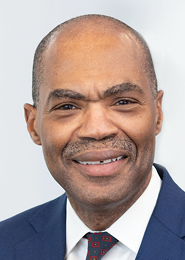
Dr. Kevin B. Churchwell
Improving The Health And Well-Being
Of Children
Editors’ Note
Kevin Churchwell is the Chief Executive Officer of Boston Children’s Hospital. Since joining Boston Children’s as its Executive Vice President of Health Affairs and Chief Operating Officer in 2013, Churchwell has been instrumental in leading the hospital’s work to become a High Reliability Organization, one where zero avoidable harm impacts any patient, family member, or employee. He has brought to Boston Children’s the same passion for enhancing the patient family experience that defined his tenure as CEO of both Nemours/Alfred I. duPont Hospital for Children in Wilmington, Delaware, and Monroe Carell Jr. Children’s Hospital, part of the Vanderbilt University Medical Center in Nashville, Tennessee. Under Churchwell’s leadership, Boston Children’s opened the Hale Family Building, significantly expanding the hospital’s capacity, adding state-of-the-art inpatient and procedure spaces, and cutting-edge facilities to meet the growing demand for pediatric care in the region. Boston Children’s has also established a strategic affiliation with Franciscan Children’s, strengthening the region’s ability to respond to the growing pediatric behavioral health crisis – ensuring more children and families can access timely, specialized mental health and crisis intervention services. With the opening of locations in Weymouth and Needham, families across the South Shore and MetroWest regions of Massachusetts now have access to the same exceptional pediatric expertise and care that Boston Children’s is known for, without the need to travel to Boston. A graduate of Massachusetts Institute of Technology and Vanderbilt Medical School, Churchwell completed his pediatric residency and a clinical fellowship in Pediatric Critical Care at Boston Children’s Hospital. He is currently an Associate Professor of Pediatric Anesthesia as well as the Robert and Dana Smith Associate Professor of Anesthesia at Harvard Medical School. Churchwell is also a member of the Massachusetts Business Roundtable, a board member of the Boston Chamber of Commerce, Massachusetts Health and Hospital Association, the Whitehead Institute, Advisory Board for The Boston University School of Public Health, and the Boys and Girls Club of Boston.
Institution Brief
Boston Children’s Hospital (childrenshospital.org) is dedicated to improving and advancing the health and well-being of children around the world through its life-changing work in clinical care, biomedical research, medical education and community engagement. Boston Children’s is ranked among the best in the nation by U.S. News and World Report and among the best specialized hospitals in the world by Newsweek. It is home to the world’s largest pediatric research enterprise and is the primary pediatric teaching hospital for Harvard Medical School. Boston Children’s treats more children with rare diseases and complex conditions than any other hospital. For more than 150 years, Boston Children’s Hospital has maintained the same vision: to advance pediatric care worldwide.
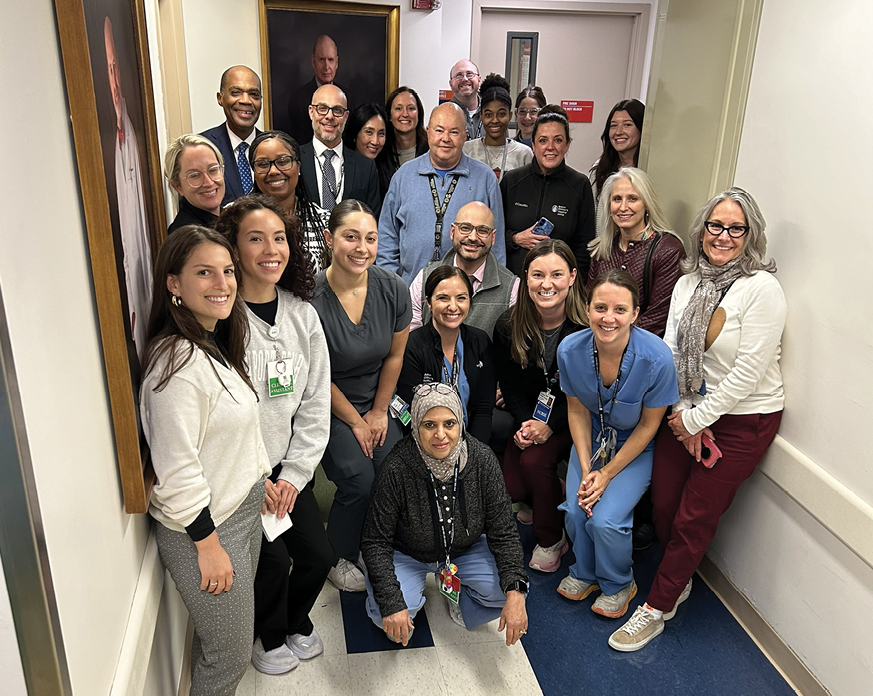
Kevin Churchwell celebrates the hospital’s 2026 U.S. News
rankings with the #1 ranked Urology team
Will you highlight your career journey, and when did you know that you had a passion to pursue a career in medicine?
I come from a family of five siblings, and as it turns out, three of us are physicians. When I first started out, I was clear that I didn’t want to go into medicine, since we already had two in the family following that road. I was very fortunate to be accepted into MIT, and went there to be an engineer, but realized that my interest and passion was really in medicine. I was a little late to the game, but it worked out.
What have been the keys to Boston Children’s Hospital’s consistent leadership in the industry?
The most important factor has been our people and their commitment to both providing the highest level of care, and to the innovation of that care. That’s what drives our decision making, not what’s happening in the economy or the government. That’s also led to a consistency in our recruitment of faculty, physicians, nurses, and researchers. We are committed to the research which feeds back to our ability to provide the highest level of care.
Boston Children’s has one overarching goal: to advance and improve the health and well-being of children – all children, regardless of their race, ethnicity, where they live, or who pays for their care. We’re continually making investments to support that mission.
Will you discuss how Boston Children’s is addressing the youth mental health crisis?
This is a crisis that we are still in the middle of addressing. It really became self-evident during COVID when it presented at all children’s hospitals, and we were all so behind in having the systems and professionals needed to meet the demand. When we first started dealing with the crisis, we were overwhelmed in our emergency departments with kids coming in with anxiety or depression or other mental health needs. We were boarding patients in our emergency department while they waited for behavioral health beds to open. The emergency room is not conducive to long-term behavioral care, and we simply were not meeting their needs. While we are now handling this crisis more effectively and our emergency departments are not overwhelmed, the number of children presenting with these issues has not changed. This means we have not solved the problem yet. Understanding what the issues are and putting systems and programs in place to address them is the challenge, and also the opportunity we’re addressing today.
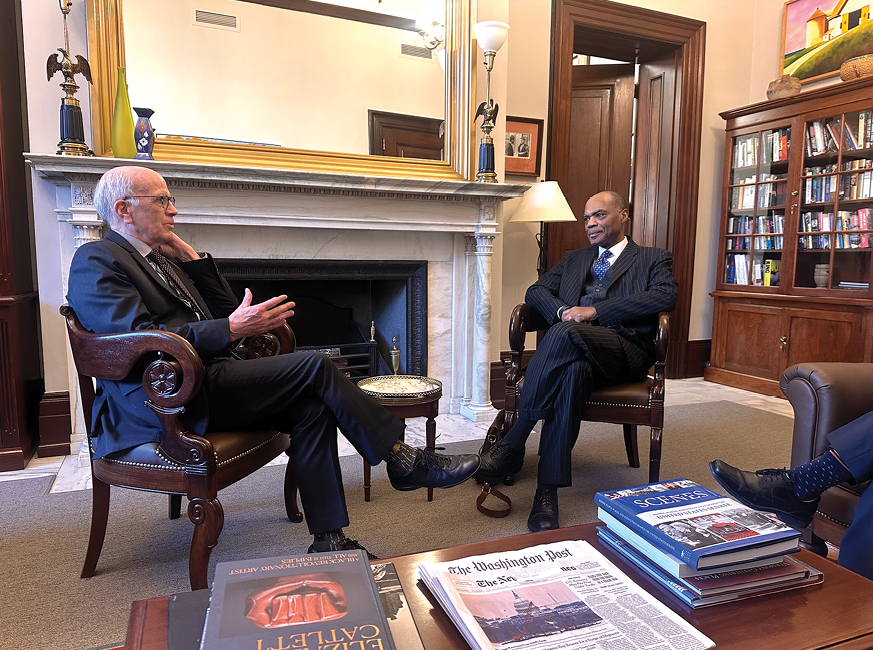
Kevin Churchwell meets with Vermont Senator Peter Welch
in Washington DC, while advocating for Boston Children’s
patients and families
How important is it to focus on inpatient as well as outpatient services to effectively address this crisis?
This is the only way to meet the challenge. This is about a continuum of care with the hospital at the center and we are coordinating with the community, pediatricians, psychologists, social workers, school systems, and connecting them with the families. Without collaboration, it’s not manageable. It is critical to create a system of programs where we are embedded in the community so that we are able to provide the support necessary to address these issues as early as possible.
It’s also so important that we continue to develop outpatient care, like our early childhood clinic. We have identified that when an adolescent presents to us, it has been upwards of eleven years since they first encountered the problem. By the time they get to inpatient, we’re already far behind. By that point, care delayed is as detrimental as care denied, so the question is how you get to them early, and this comes down to providing families with the necessary information, tools and services.
The other challenge is that there are not enough professional caregivers to meet the needs in this environment. We need more psychiatrists, psychologists, nurses, social workers – we must invest in building the pipeline now to make sure we have the talent needed for the future.
In this regard, Boston Children’ s recently received a transformational gift from Rob and Karen Hale that will name a signature building in Brighton on the campus of Franciscan Children’s, which became part of the Boston Children’s health system in 2023. The campus will expand inpatient and outpatient behavioral health and rehabilitation services and support groundbreaking research that informs our understanding of the complex roots of behavioral health challenges. It will also enable Boston Children’s to train more clinicians, strengthen community partnerships, and ensure that mental healthcare is seamlessly integrated into every aspect of pediatric medicine.
We’ve really built a level of excitement around what we’re doing in this area that has increased our recruitment of behavioral health specialists, physicians, nurses, psychologists, over the last few years. People who are committed to this work see that we’re committed to it.
“We need more psychiatrists, psychologists, nurses, social workers – we must invest in building the
pipeline now to make sure we have the talent
needed for the future.”
How critical is it to address the stigma around children’s mental health?
This is a key question. It is important to understand that physical health and mental health are intertwined – these are not two separate issues. You cannot have true physical health without mental health. At Boston Children’s, our team has made it a priority to work to alleviate the stigma around mental health.
How do you approach your management style?
I’m not one to get too emotional – my style is consistent and steadfast. I’m guided by our mission to enhance the health and well-being of children and families everywhere. When that’s what you’re working to achieve, it inspires you to stay focused. It’s important to articulate and model that. I also believe a leader must come with a point of view that can bring the enterprise together. We’re facing a lot of headwinds right now, but panic is not something I’m associated with – what I try to show as a leader is focus, discipline, and commitment to what we’re working to accomplish together.
With the impact that Boston Children’s makes on a daily basis on the lives of children, how important is it for the team to take moments to celebrate the wins?
It is important to take moments to celebrate the wins, since our people joined the profession to impact lives and improve children’s health. While our focus remains on improving the care we provide, continuing to innovate, and changing children’s lives, we must not lose sight of the incredible things that take place at Boston Children’s each and every day. It is about recognizing the great work done by our team while maintaining a commitment to continuous improvement.