- Home
- Media Kit
- MediaJet
- Current Issue
- Past Issues
- Ad Specs-Submission
- Reprints (PDF)
- Photo Specifications (PDF)
- Contact Us
- PRIVACY POLICY
- TERMS OF USE
Loading

ONLINE

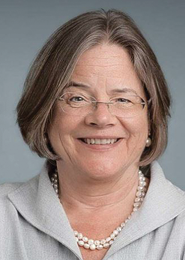
Dr. Jennifer Havens
The Cradle Of American
Child Psychiatry
Editors’ Note
Jennifer Havens is the Arnold Simon Professor and Chair of the Department of Child and Adolescent Psychiatry at NYU Grossman School of Medicine, Director of the Child Study Center at Hassenfeld Children’s Hospital, and Director of Child and Adolescent Behavioral Health Strategy & Growth in the Office of Behavioral Health at NYC Health and Hospitals. Until October 2018, she was the Director and Chief of Service of the Department of Child and Adolescent Psychiatry at Bellevue Hospital Center, where she oversaw New York City’s most comprehensive continuum of mental health services for children and adolescents. There she opened New York State’s only dedicated Children’s Comprehensive Psychiatric Emergency Program, expanded Bellevue’s inpatient child psychiatric service to 45 beds, and opened New York City’s only Partial Hospital Program serving both children and adolescents. She also established and oversees a public psychiatry initiative providing mental health services at the New York City Administration for Child Services’ secure and non-secure juvenile detention sites. Havens is an expert in the treatment of behavioral and mental health issues in children and adolescents who have experienced complex trauma. She has been active in public psychiatry innovation since the early 1990s, when she founded and led New York City’s first mental health clinic serving children and families affected by HIV. Havens serves on numerous public sector committees, and is active in many of New York State’s major child mental health initiatives.
Institution Brief
NYU Langone Health (nyulangone.org) has a diverse team of mental health professionals offering a wide range of services for children, adolescents, young adults, and families in the New York metropolitan area. It is committed to advocating for prevention and early intervention, as the sooner treatment begins, the greater the impact. NYU Grossman School of Medicine is one of only two medical schools in the country with an independent child and adolescent psychiatry department. It is dedicated to training future leaders in mental healthcare, combined with its integrated approach to research and clinical services. NYU Langone remains focused on providing high-quality mental healthcare to children in need while continuing to collaborate with community partners to drive systematic change and address the youth mental health crisis at every level.
When did you know that you had a passion to pursue a career in medicine?
My father was a fairly famous American psychiatrist in the Harvard system, so I think it’s part environment, part genetics. I grew up in the late ’60s, and I found myself helping kids and teenagers that were having issues when they took drugs. I knew then that I was going to go to medical school. I was pretty sure I was going to be a psychiatrist since it was the area I found the most interesting in medical school. I very much enjoy people, and I like talking to them.
What led to your position at NYU Langone?
I was at Columbia for 18 years, and I came down to NYU Bellevue in 2008 for a very specific reason. There are two medical schools in the United States where child psychiatry is a separate department, as opposed to a division of adult psychiatry. That happened in 2006 at the NYU School of Medicine, which is now the NYU Grossman School of Medicine. I was recruited here to separate the child psychiatry service at Bellevue from the adult psychiatry service. I looked at Bellevue a couple of times during my career, and it is an amazing place for a child psychiatrist. We call it the cradle of American child psychiatry. It was an opportunity that I really couldn’t pass up.
What are your views on the children’s mental health crisis?
Most mental illness starts at least in adolescence and often in childhood, and if you don’t have really good identification and intervention as early as possible, kids get sicker and sicker as they get older. It is a lot easier and often more effective to work with kids earlier in their illness, but we have tremendous access problems that have only worsened over the last 20 years. We have seen very clear increases in the number of kids with suicidal ideation. We’ve seen dramatic increases in ER utilization. There was a study a year ago that showed that 13 percent of all pediatric emergency room visits are related to behavioral health, and half of those kids are suicidal. So, these problems have been in the making.
For years, I have been encouraging children’s hospitals around the country to develop more robust behavioral health services. It was challenging for them to do this because behavioral health services don’t make any money. As a matter of fact, they often lose money, and this really disincentivizes the development of these services. The COVID pandemic changed all that because the numbers went through the roof everywhere, including the children’s hospitals, with many thousands of psychiatric visits per year. There is progress with building real acute care continuums, which every city should have because there are many kids who need that.
Another big challenge is that the majority of the attention and the majority of the resources go to taking care of mentally ill adults living on the streets who’ve committed violence, which is obviously a very important public safety problem. But we don’t have enough emphasis on how to make people better when they are younger. We know that many of the people that end up on the streets have had significant histories of early child adversity which is one of the major drivers of mental illness in kids – not the only one, but certainly a major driver. Over the last 20 years, we have figured out how to intervene in these problems within families very early in life, with young children and parents, much more effectively than you can ever do when the kids are 10, 15 or 25. We have to focus on how we move the resources into earlier intervention, both on a population basis in terms of prevention, and also on how we develop models of care for families where the kids are really at very high risk from abuse or neglect or exposure to domestic violence or parental mental illness or substance abuse.
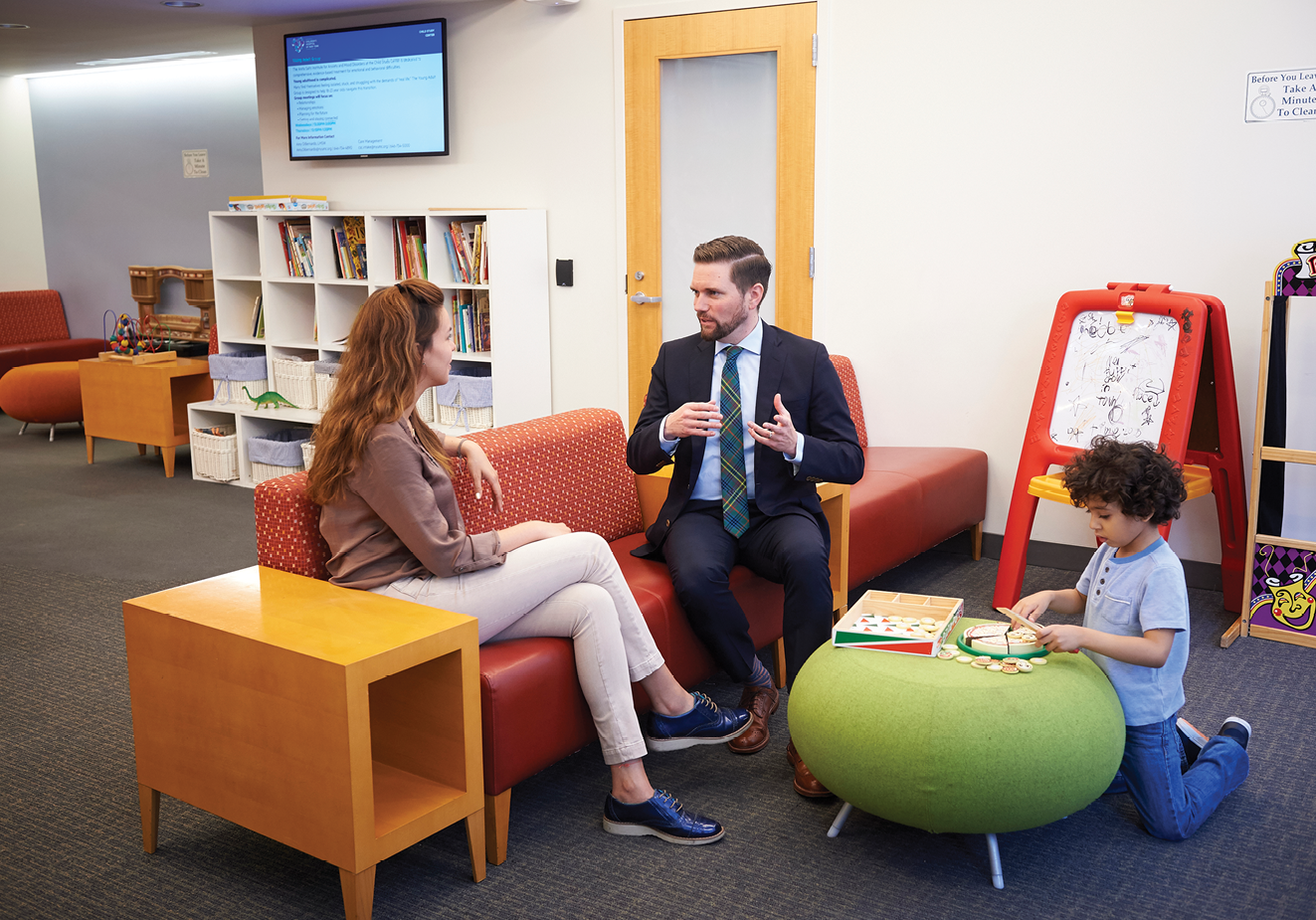
NYU Langone psychologist, Dr. Timothy Verduin, helps parents
and their children manage anxiety, disruptive behavior,
and attention issues
How critical is it to focus on prevention?
The problems in emergency rooms are directly the result of the lack of a coherent and effective preventive mental health system. If you think about pediatrics, most of what’s done in pediatrics is preventive, especially in early childhood. We don’t do that enough, but we’re doing it more, with mental health. We’ve built whole systems in primary care where we identify kids and families with challenges early. At Hassenfeld Children’s Hospital, we provide integrated behavioral health supports both on the inpatient side and outpatient side for kids with medical complexity.
We must identify kids and families who are at risk early, and we should support them in the least intensive environment. We know that home-based interventions are very effective. I recently read that the new NYC commissioner of the Department of Health is going to invest in the nurse/family partnership which sends nurses into the homes of women having their first baby and it’s an incredibly effective program in keeping young children as healthy as possible. So, we know what to do – we just have to do it at scale.
When I grew up, we had one phone in our home, and we all shared it. Now, kids are connected to the entire world; they see everything, they know everything. They are exposed to things much younger, and it is a much more challenging environment, so we need to focus on how to support our kids as effectively as possible. Interventions in schools are really crucial. They are not necessarily as robust as they need to be, because they usually have one clinician in a school with hundreds of kids, and since we know that the overall prevalence of mental illness in kids is about one in five with 5 to 10 percent of kids having moderate to severe mental health problems at all ages, we should have a system that routinely screens for that and has the integrated behavioral health supports to take care of the kids wherever they are, whether it be in school or in primary care.
What needs to be done to attract the needed professionals to the profession?
I think there are a lot of people who are excited about this field. The challenge is how to compensate them enough for them to make a living. I think a big problem in the delivery of mental health services is that we don’t pay enough for the services delivered. For example, we have a lot of young people with a master’s degree that are going into counseling roles, either social workers or licensed mental health counselors. However, they are paid $60,000 to $70,000 a year, which is not enough to pay off their debt from college and graduate school. We have to raise the standards for the field so we can pay people a living wage so that they enter and stay in the field.
There is no lack of interest in young people going into this field. In our department, we are working on the pipeline – we teach an undergraduate minor at NYU called Child & Adolescent Mental Health Studies; we see strong ongoing interest in the field from undergraduates.
When you are doing this type of work, how important is it to find moments to reflect on the impact you are making with your team?
At NYU, we work in teams. I am always so proud of the work our teams do, and it is so gratifying. We don’t have to worry about having meaning in our work – helping kids and families is what we do every day. It takes a certain kind of courage to do this work, but the reward is so immense. I’ve been doing this for a long time and when I talk to people about what I do, they ask, isn’t that depressing? My answer is a resounding no – the only thing that would be depressing would be to do nothing.