Loading

ONLINE
ONLINE
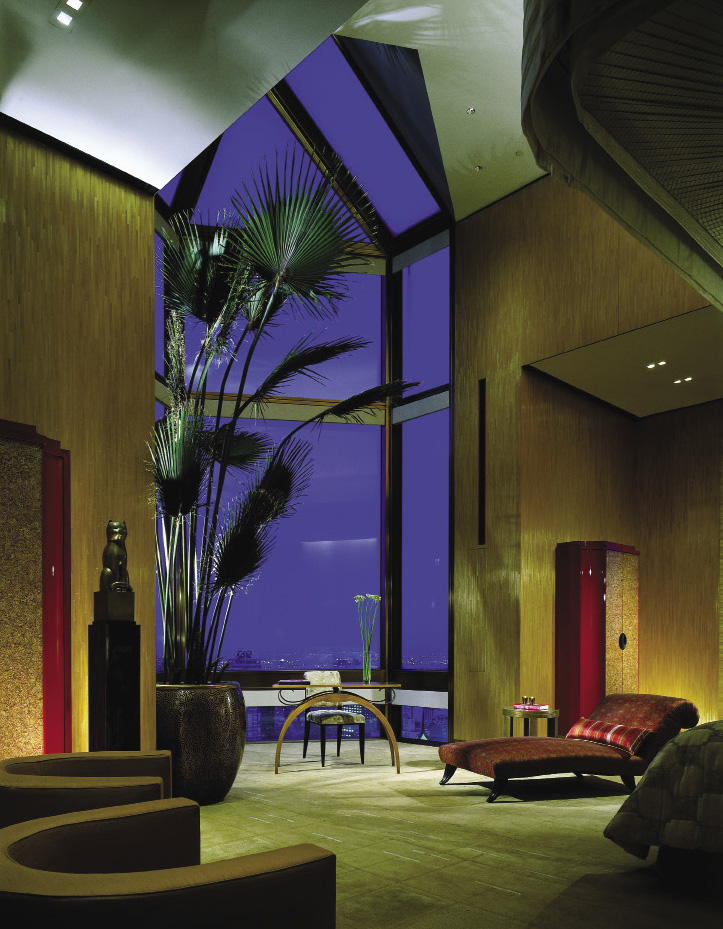
The brand new Ty Warner suite

Christoph Schmidinger
Service Delivery
Editors’ Note
Most recently the General Manager of The Ritz-Carlton in Chicago – a Four Seasons hotel – Christoph Schmidinger formerly served as General Manager of Four Seasons Hotel Atlanta, and for eight years in managerial positions at the parent company’s and Regent International properties in Asia. A native of Austria, he is active in numerous industry organizations. In his current role, he oversees Four Seasons Hotel Atlanta, New York, and Philadelphia.
Property Brief
At 52 stories, the I. M. Pei-designed Four Seasons Hotel New York (www.fourseasons.com/newyorkfs) rises above the city’s premier shopping and business districts. A Mobil five-star, AAA five-diamond property, it is known for its 368 oversized guest rooms (among New York’s largest) and similarly spacious bathrooms, all completely remodeled in 2004. It also offers a redesigned spa and fitness center. The hotel’s numerous property upgrades in recent years have included the newly-created Presidential Suites; the addition of 57 and TY, two new lobby dining outlets; the celebrated L’Atelier de Joel Robuchon (given three stars in the New York Times and the recipient of the 2007 James Beard Foundation’s Best New Restaurant); and the opening of the world’s most expensive hotel suite, the $30,000-a-night Ty Warner Penthouse. The hotel is managed by Toronto-based Four Seasons Hotels and Resorts.
Over the past several years, you have had a tremendous amount of work done to the property, including creating new suites and restaurants. What is the next step for the property? How are you planning to further enhance the guest experience?
After the renovations, the property is now clearly ahead of the competition, not only in New York, but nationwide. In my view, it’s even ahead of hotels in the international territory, some of which I see as competitors. With the support of the owners, I was able to fully upgrade the property, so it’s not like anything else in New York or in many places in the world. We upgraded three restaurants and four suites in one year.
Now it’s time for me to focus on the delivery of the service. For a luxury hotel, this is what really makes the difference, in addition to your location and your hardware. At the end of the day, customers stay with us not only because we have a wonderful hotel, but because of the service they receive. They’re willing to pay rates that, these days, are above $1,000 per night, provided you still give them the service they expect – from a personality point of view, a caring point of view, and an anticipatory point of view. Ultimately, they just want it right.
Going through major renovations is bound to be disruptive for your staff. Was it challenging to get them onboard with the changes?
Renovating and upgrading an existing hotel while it’s in operation is very disruptive for customers, and it’s very disruptive for the staff as well, because it impacts the natural flow of service. You constantly have to adjust what you’re doing. In order to provide high-quality service on a consistent basis, you need to have a quiet environment. If the hotel is constantly hectic, if it’s constantly filled with noise, it’s very difficult for staff to stay focused. In 2007, we had practically no construction, and we’re looking forward to 2008, when we can focus purely on the delivery of a more personalized service. We believe that’s the key.
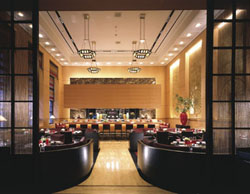
L’Atelier de Joël Robuchon,
the Four Seasons New York restaurant
Everybody in the hospitality industry likes to use the term “personalized service,” especially in the luxury segment. Yet, it’s a hard concept to measure. How do you make sure you really are delivering the level of service to which you aspire?
It is more difficult than just building a nice suite or creating a nice restaurant. In the case of tangible improvements, if you have a good designer and if you have a supportive owner, at the end of the day, you can touch and see the product, and you can assess whether or not it will be to the liking of the majority of your guests. However, service is not as visible, and it’s also much more diversified. What is perceived as good service by one customer might not be perceived as good service by another customer. So you have to develop a certain sensitivity, in order to gauge what customers really believe is good service. Service is much more multifaceted than the room product itself. So it’s not as clear cut, and is much more about finesse.
All that having been said, you can make sure you have the right set-up to deliver the best service. You can structure your service standards, your cultural standards, and delivery, and you can make sure your training program is in line with those goals and objectives. We constantly check that our product is in line with what we call our core service standards and cultural standards. If the feedback that you give to your staff is always in line with your standards, it is a very manageable task to both elevate your service and to try to deliver it on a consistent basis. You can get on top of it. It’s tedious work – it takes months, even years, to really make an impact – but it works.
Over the last few years, as the property has undergone extensive renovations, your focus must have shifted through the different stages of the project. Now that the renovations are completed, has your focus changed again?
I would say that my focus is now, and has always been, on service delivery. That is clearly my main objective. But all of our competitors are not asleep either – they are doing a lot to their products, hardware-wise as well as service-wise. If you really want to stay ahead, you need to work with your people. You have to train them better and you have to give them better tools. You also have to prepare them for the challenge ahead of them. Just take the last few months of last year. We are riding record results for that time. Neither the hotel, nor the industry as a whole, has seen the kind of results we have seen, in terms of occupancy as well as retention. While it is nice to enjoy this wonderful success, it also increases the expectations of our customers. You have to prepare yourself for that. You cannot expose yourself or your staff to this huge expectation unprepared. If you don’t prepare your staff psychologically for the stress, if you don’t prepare them with the tools they need to deal with that stress, you are bound to fail. In my view, the last thing you want is for customers who pay your prices not to see the value for the money.
To what extent is that value dependent on the quality of service the guests receive?
We are selling value in service, and that definitely boils down to the service delivery, which is done by nobody else but your own staff. We have established service standards, which we have developed over the years at the Four Seasons company, which we deliver and execute in every Four Seasons hotel. We believe those core standards are what make the difference, in terms of quality, for our type of customer. These core standards are broken down by department and by shift. Let’s take a server in the restaurant as an example. I could welcome him to the team and say, “Great to have you on the team. Do a good job, and I’ll see you in three months. At that time, I’m going to decide whether or not to prolong your probationary period.” That would put a lot of pressure on this guy. He’d say, “What does the hotel really know about good service?” So I go one step further. I’ll train him on 18, 25, or 30 standards, clearly spelled out, and if he just focuses on those standards, he will do a good job. In other words, my standards for my staff are a stress reliever for them. I tell them exactly what good service is, and I test them according to the standards. I evaluate them according to the standards, and I make modifications to my training – in terms of software, hardware, and all the tools I use – to achieve those standards. That’s what you have to do.
In other words, you’re providing the framework your staff needs to succeed.
Very much so. You have to. Your staff is an extension of yourself. You have to give them the tools they need, so they can be successful in the moment of truth – the moment when the customer and employee get together for a service exchange.
As an example, take the hotel’s revolving door at the entrance on 57th Street. If the hotel is full, there will be about 550 people staying in the hotel overnight. So that revolving door will turn at least 550 times for those people who are staying with us, and that’s provided they’re only going in and out of the door once, which is not the case. So let’s assume they go in and out for shopping and meetings three or four times – that revolving door will turn 2,000 times. Then there are the people who come to the bar, the people who come to the restaurant, the people who come to meetings, the people who come to make deliveries – you can add another 1,000 or 2,000 revolutions of the door. So that revolving door turns at least 3,000 or 4,000 times per day. Each time the door goes around, the doorman who is there is supposed to have a positive interaction with the person who is going through. “Welcome to the Four Seasons. Is there anything I can do for you? Do you need any directions? Can I call you a car?” That’s only the doorman. The same is true for the concierge, the receptionist, the staff in the restaurant and the bar, the telephone operator, the laundry staff, the valet, the housekeeping staff, the people in the business center – you name it. There are 38 departments in this hotel, all of which are interacting with customers. How do I facilitate this interaction? After all, I’m never part of it, because I’m not there when it happens. I do it by giving the staff the tools they need to be successful. It is in these moments that the customers form their opinions about the hotel and the service. An important part of my job is facilitating positive experiences between customers and staff members when they get together.
And you call that the “moment of truth.”
It’s the moment of truth for me, because it’s when your staff member can either make it or break it for you. If someone wants to work against me, he can easily do it right there. Fortunately, most of my staff don’t come to work in the morning and say, “Okay, I’m going to mess up my operation today.” Rather, they come in with a very positive mindset, and they want to do their very best. Generally, they try to make all their interactions positive ones. It’s for themselves, as well as for the company and the guests. After all, who wants to work in an environment where interactions are not positive?
The only difficulty is that you don’t necessarily know what the customers’ expectation levels are, or what they perceive as high value in terms of service. All cultures are different, and that affects all aspects of our service. For instance, people appreciate warm bread in some cultures, whereas in other cultures, people prefer cold bread. Neither one is right or wrong, but we need to be aware of both in the provision of bread in our restaurants. The same is true for the temperature of beverages. Some cultures drink beverages ice cold, and others prefer drinks at room temperature. Likewise, in some cultures it is considered offensive to make people wait at the entrance of a restaurant for a minute or two in order to seat them, while in other cultures, people couldn’t care less; they wouldn’t even mind going for a drink while the table was being prepared. That’s what I mean. Give your people the tools they need to understand all of this and prepare them mentally and psychologically. They need to understand the diversity of our customers, especially considering the volume of business we do, so that they are not crushed by the volume of different reactions.
Nowadays, people talk a lot about the technology a hotel has to offer, both in service delivery and customer facilities. It seems as if the true success of a property is still going to come down to that moment of truth you talk about, and the experience guests have when they visit.
Just picture this: You stay in a suite built at a cost of millions of dollars, but your interactions with the staff who service that suite don’t meet your expectations, aren’t friendly, and aren’t service-oriented. You could double the cost to build the suite and still not be successful. All around the world, there are stunning hotels in the most stunning locations, and they’re wonderfully designed and equipped, but they’re not popular. Then you have the other hotels that have been there for many years, which are not necessarily stunning in terms of design, but are popular. Why are they popular? If you nail it down, it’s always because of the service experience. It’s always about the feel of the hotel.